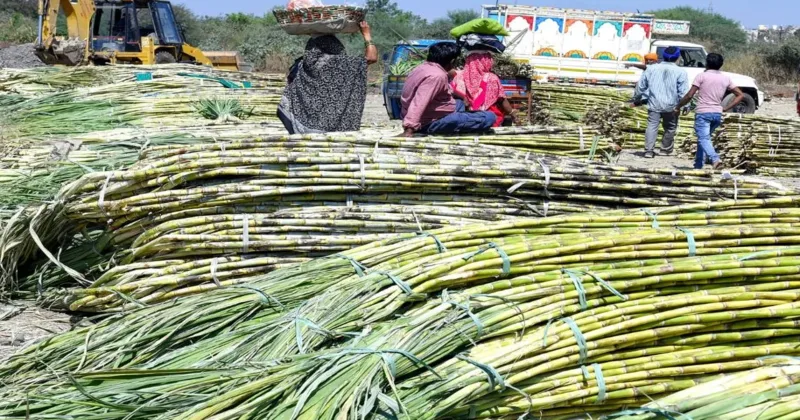
LUCKNOW: In a sweet start to the new year, Uttar Pradesh (UP) has achieved the highest average sugar recovery rate in the country during the current cane-crushing season, surpassing Maharashtra, which has long been India’s largest sugar-producing state. According to data released by the state’s sugar department, UP recorded a sugar recovery of 9.5 per cent, significantly higher than last year’s 8.9 per cent and the current national average of 8.67 per cent. This improvement marks a milestone for the state’s sugar industry, reflecting sustained efforts to modernise cane cultivation, improve mill performance, and enhance sugar extraction techniques.
The sugar recovery rate, which measures the percentage of sugar extracted from crushed cane, is a key indicator of the efficiency of the sugar sector. Higher recovery means more sugar from the same quantity of cane, leading to greater profitability for mills and higher payouts for farmers.
Uttar Pradesh’s 9.5 per cent sugar recovery placed it ahead of Telangana (9 per cent) and Bihar (8.75 per cent), while Maharashtra, despite its high production volume, recorded only 8.25 per cent recovery. Experts attribute this improvement in UP’s recovery to the adoption of high-yielding, high-sucrose sugarcane varieties and better agronomic practices, including improved irrigation, pest control, and timely harvesting.
The data show that UP’s total sugar production has already reached 92.75 lakh metric tonnes (LMT) in 2024-25, up from 80.95 LMT in the previous season. The state’s sugar industry is expected to witness further growth as cane crushing intensifies in the coming months.
The increase in both recovery percentage and production volume highlights Uttar Pradesh’s transformation into a high-efficiency sugar economy, driven by a combination of research, technology, and farmer-centric reforms. In contrast, Maharashtra also recorded a rise in production this season from 80.95 LMT to 110 LMT but its sugar recovery percentage remains comparatively lower.
Despite having fewer sugar mills than Maharashtra, Uttar Pradesh has shown stronger efficiency and yield performance. Currently, UP operates approximately 120 sugar mills, compared with 190 in Maharashtra. Yet, the total cane crushed in UP touched 263.68 LMT, up from 257.87 LMT in 2024-25. According to industry experts, this growth reflects consistent high crushing capacity, steady operations, and technological improvements across mills. “Uttar Pradesh’s mills have improved their efficiency through automation, better maintenance, and use of modern machinery for juice extraction,” said a senior official from the UP Sugar Federation.
Higher sugar recovery directly translates into more sugar per tonne of cane, boosting revenue for mills and increasing farmers’ payment capacity. Farmers benefit from higher prices and faster payments when mills earn higher returns from improved recovery rates. “Every fraction of a percent increase in recovery means thousands of tonnes more sugar, which improves cash flow for the entire value chain,” said an industry analyst. “Achieving a 9.5 per cent recovery rate this year is a remarkable milestone, highlighting Uttar Pradesh’s growing strength in India’s sugar industry,” an official said. The improved financial position of sugar mills has also enabled them to clear cane dues more quickly and extend better support to farmers for the next planting season.
Officials attributed the success to the state government’s continued support for cane farmers through modern farming practices, better-quality seed distribution, and training in soil health and pest management. Under the guidance of Chief Minister Yogi Adityanath, the government has prioritised sugarcane development as a key pillar of rural prosperity. Programmes promoting the use of early-maturing and high-sucrose varieties such as Co-0238, Co-15023, and Co-98014 have played a major role in increasing yield and sugar content.
In addition, several mills have adopted drip irrigation systems, bio-fertilisers, and mechanised harvesting to improve efficiency. The focus on sustainable, eco-friendly farming practices has also helped maintain consistent sugarcane quality even during climatic challenges. Unlike other sugar-producing states that faced erratic weather, heavy rainfall, or pest attacks, Uttar Pradesh benefited from relatively stable climatic conditions during the growing season. This helped farmers maintain crop quality and ensured better juice purity, which is essential for higher sugar recovery.
Experts said that UP’s emphasis on disease control and timely harvesting also reduced sucrose losses, thereby improving mill extraction rates. “Many mills crushed fresh cane within 24 hours of harvest, which helped preserve sucrose levels and enhance recovery,” said a sugarcane expert from the Indian Institute of Sugarcane Research, Lucknow.