
The Shri Ram Temple stands at Ayodhya, revered as the birthplace of Bhagwan Shri Ram, a central figure in Hindu civilisation and the embodiment of dharma, justice, and ideal governance. For centuries, Ayodhya has occupied a sacred place in India’s spiritual geography, drawing pilgrims, saints, and scholars who regarded the city as one of the seven most holy sites in the Sanatan tradition.
The construction of the Ram Temple is the result of a prolonged historical and legal process that spanned several decades. Generations of devotees carried the belief that a grand temple would one day rise at Ram Janmabhoomi, symbolising not only devotion but also cultural self-respect. The culmination of this journey through constitutional means reinforced faith in India’s democratic and judicial institutions, making the temple not just a religious structure but also a marker of civilisational perseverance.
Pran Pratishtha: The Sacred Act of Infusing Divine Presence
In Sanatan Dharam, Pran Pratishtha is among the most sacred rituals performed in temple worship. The term literally means “infusion of life,” signifying the moment when a deity’s divine presence is ritually invoked into the idol, transforming it from a crafted form into a living embodiment worthy of worship.
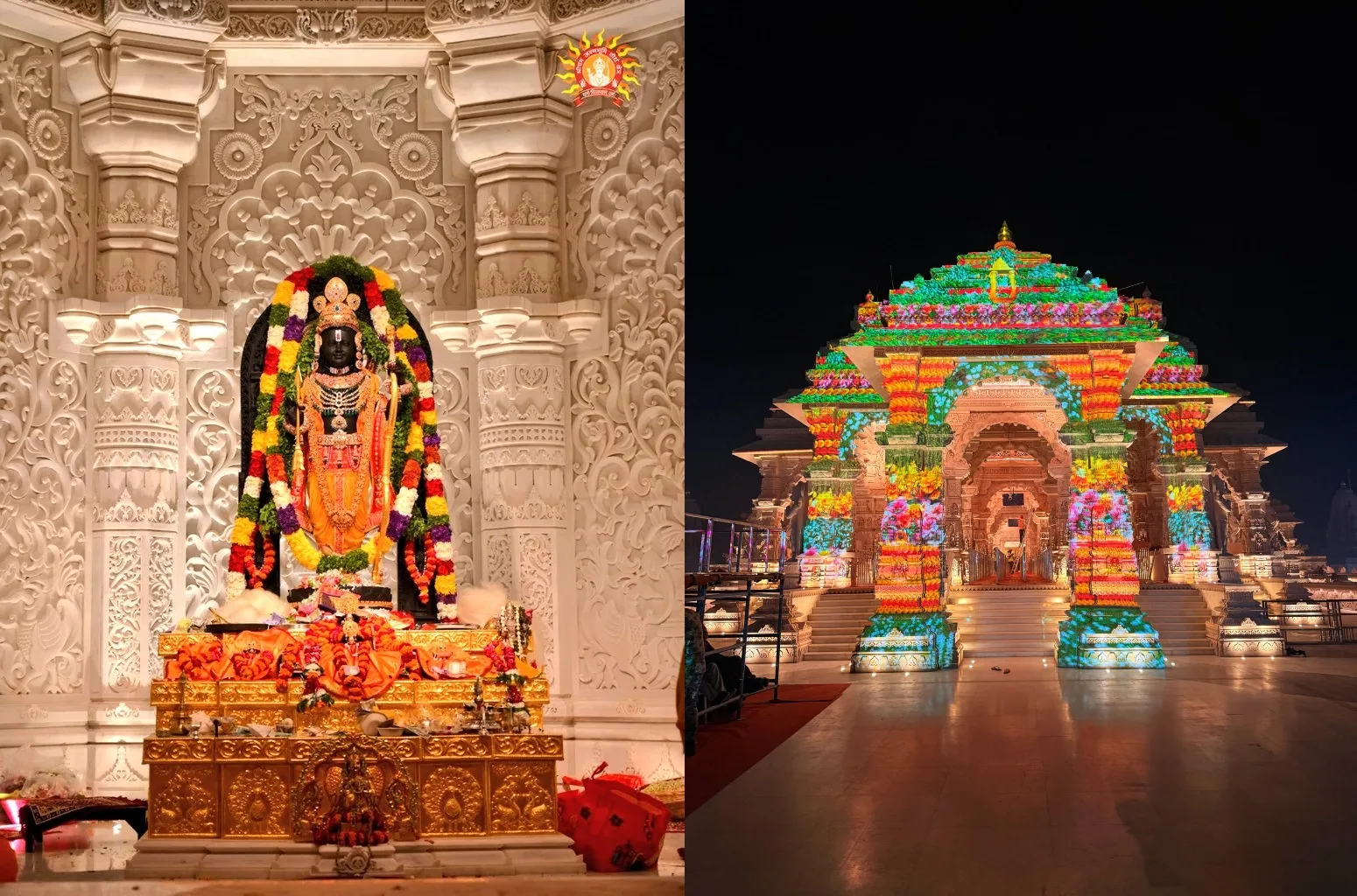
The Pran Pratishtha ceremony at the Shri Ram Temple in 2024 was conducted in strict adherence to ancient scriptures and Vedic injunctions. It marked the moment when Bhagwan Shri Ram was ceremonially स्थापित in the sanctum sanctorum (garbhagriha), allowing devotees to establish a direct spiritual relationship with the deity.
This ritual elevated the temple from an architectural marvel to a living centre of faith, where daily worship, rituals, and collective devotion could flourish for generations to come.
The Purpose and Significance of Pran Pratishtha
Pran Pratishtha holds deep theological and philosophical importance in Hinduism. It is believed that through this ritual, divine consciousness is awakened within the idol, enabling devotees to experience spiritual connection and divine grace.
At the Shri Ram Temple, this ceremony carried layered significance:
Religious Significance: It completed the temple’s spiritual foundation, enabling full-scale worship in accordance with Sanatan traditions.
Cultural Significance: It reaffirmed India’s ancient ritual practices and preserved continuity with millennia-old traditions.
Civilisational Significance: It symbolised the resilience of Bharatiya civilisation, which sustained faith and identity despite historical disruptions.
For devotees, Pran Pratishtha is not symbolic theatre; it is a profound moment of communion between the human and the divine.
The Multi-Stage Ritual Process
The Pran Pratishtha ceremony followed a meticulously structured sequence of rituals:
1. Purification of the Idol
The idol of Bhagwan Shri Ram was ceremonially cleansed using sacred water, Panchamrit (a mixture of milk, curd, ghee, honey, and sugar), and Vedic chants. This step signified physical and spiritual purification.
2. Abhishek
The deity was bathed with Gangajal and other sanctified substances, symbolising divine consecration and spiritual awakening.
3. Mantra Recitation and Yagnas
Vedic scholars performed elaborate yajnas, offering oblations into sacred fire while chanting powerful mantras meant to invoke divine energies and blessings.
4. The Pran Pratishtha Proper
This central ritual involved the symbolic transfer of life force into the idol, conducted strictly according to shastric procedures by learned priests and saints.
5. Installation in the Sanctum
Following Pran Pratishtha, the idol was formally established in the garbhagriha, accompanied by aarti, bhajans, and devotional hymns.
Each step underscored discipline, sanctity, and reverence, reflecting the ritual’s seriousness.
Religious, Cultural, and Social Impact
The Pran Pratishtha of Shri Ram has had far-reaching implications beyond temple walls.
Religious Impact
For Hindus worldwide, the ceremony strengthened collective faith and devotion, reinforcing belief in dharma and spiritual discipline.
Cultural Impact
The event highlighted India’s living traditions, reminding younger generations of rituals, values, and civilisational narratives rooted in Ramayana.
Social Unity
The temple has emerged as a unifying symbol, drawing devotees from across regions, castes, and linguistic backgrounds, fostering a shared spiritual identity.
Additionally, Ayodhya is witnessing a resurgence in religious tourism, infrastructure development, and cultural exchange, contributing to regional growth and global visibility.
Understanding the Concept of Ram Rajya
The idea of Ram Rajya occupies a central place in Indian philosophical thought. Described in the Ramayana as an era of justice, moral governance, and collective well-being, Ram Rajya represents an ideal social order rather than a theocratic state.
Key principles associated with Ram Rajya include
Justice and Equality: Fair treatment of all citizens, irrespective of social status.
Primacy of Dharma: Governance guided by moral and ethical values.
Prosperity and Welfare: Economic well-being combined with social harmony.
Environmental Balance: Respect for nature and sustainable living.
Human Dignity: Absence of fear, hunger, and exploitation.
Tulsidas, in the Ramcharitmanas, vividly describes this ideal society as one free from sorrow, fear, disease, and inequality—an aspiration rather than a historical claim.
Shri Ram Temple and the Renewed Discourse on Ram Rajya
The construction of the Shri Ram Temple has revived discussions on how Ram Rajya’s principles can inspire contemporary governance and social conduct. Rather than a political doctrine, Ram Rajya is increasingly interpreted as a moral framework emphasising accountability, compassion, and justice.
In an era marked by social fragmentation and ideological conflict, the temple stands as a reminder of shared values that transcend divisions. It encourages introspection on ethical leadership, social responsibility, and collective harmony.
Societal Impact of the Pran Pratishtha
The Pran Pratishtha has generated a renewed sense of cultural confidence among many Indians. It has strengthened national cohesion by reaffirming respect for heritage while operating within constitutional boundaries.
Religious practices associated with the temple are expected to influence cultural expressions across India, reinforcing shared traditions while encouraging dialogue on coexistence and mutual respect.
Importantly, the event has also opened avenues for global engagement, allowing India to present its civilisational ethos on the world stage through culture, spirituality, and tourism.
A Symbol of Continuity and Renewal
Ultimately, the Pran Pratishtha of Shri Ram Temple represents continuity rather than rupture. It bridges ancient faith with modern governance, spiritual aspiration with social responsibility. While rooted in devotion, its broader message lies in ethical living, unity, and respect for cultural diversity.
As devotees offer prayers in the sanctum at Ayodhya, the temple serves not only as a place of worship but also as a living symbol of India’s enduring civilisational journey—one that seeks harmony between tradition and modernity, faith and reason, and individual devotion and collective well-being.