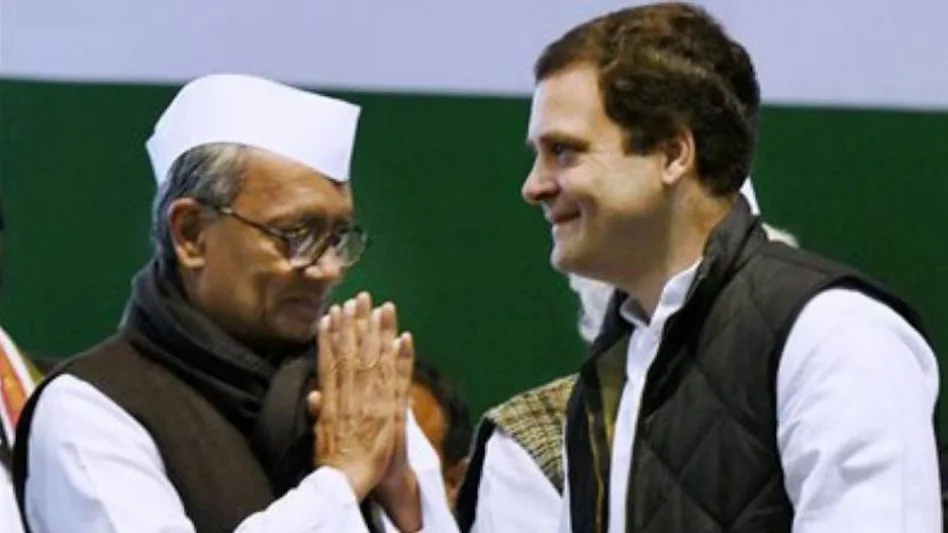
Digvijaya Singh’s brief acknowledgment of the RSS-BJP’s organisational strength should have sparked a mature internal debate. Instead, it triggered panic at the top of the Congress, followed by damage control, public humiliation, and ideological chest-thumping aimed at appeasing the Gandhi family’s rigid worldview.
Within hours of Singh’s comments gaining traction, the message from the high command was unmistakable: fall in line or face consequences. The episode once again demonstrated how the Congress, under the Gandhi family’s dominance, treats even its senior-most leaders not as colleagues, but as suspects.
For decades, the Congress has projected itself as a party of democratic values. Yet, the Digvijaya Singh episode shows how little space remains for independent thought. Singh, a former chief minister and a five-decade-long party loyalist, was effectively forced into a humiliating retreat, not because he praised ideology, but because he dared to acknowledge reality.
The Gandhi family’s discomfort was evident. Rahul Gandhi’s reported reaction, accusing Singh of “misbehaviour”, was less about ideology and more about authority. The message was clear, no Congress leader, regardless of seniority or experience, is allowed to speak outside the script.
The controversy exposed visible fault lines within the Congress. While party loyalists rushed to amplify the Gandhi family line by invoking Nathuram Godse and recycling decades-old talking points, others, like Shashi Tharoor, chose their words carefully, aware of the risks of speaking too freely.
That Tharoor had to clarify that “Digvijaya Singh can speak for himself” speaks volumes about the climate inside the party. Leaders are increasingly cautious, aware that a single unscripted remark can invite reprimand, sidelining, or worse.
Party spokesperson Pawan Khera echoed Singh’s later clarification, stating that there was “nothing to learn from the RSS” and linking the organisation to Nathuram Godse.
The irony of the episode lies in what the Congress chose to attack and what it chose to ignore. Instead of introspecting on why the party continues to lose elections, bleed cadre, and struggle at the grassroots, the leadership chose to vilify a veteran leader for pointing out a structural truth.
The RSS-BJP’s ability to nurture long-term workers is not a secret. It is a political fact acknowledged even by critics. But under the Gandhi family’s stewardship, the Congress prefers denial over reform, slogans over structure, and loyalty tests over competence.
The Congress’s reaction revealed how ideological dogma has replaced political realism. By equating organisational discussion with ideological betrayal, the party leadership showed its inability to distinguish between learning and surrender.
Digvijaya Singh’s forced clarification, laced with exaggerated denunciations, was less a personal conviction and more a survival tactic. It reflected the reality that in today’s Congress, leaders are expected to perform ideological outrage to prove loyalty to the first family.
At its core, the controversy shows a deeper malaise, the Congress’s transformation from a national movement into a family-run establishment. Decisions flow downward, dissent is crushed upward, and accountability never reaches the top.
Repeated electoral defeats have not led to leadership introspection. Instead, failures are blamed on workers, allies, EVMs, or institutions. The Gandhi family remains insulated, while experienced leaders like Digvijaya Singh are publicly disciplined to send a warning signal to others.
What binds today’s Congress is not ideology or hope, but fear. Fear of speaking honestly, fear of acknowledging political realities, and fear of displeasing the Gandhi family. This culture has hollowed out the party, turning once-formidable leaders into cautious spokespeople reading from prepared lines.
The Digvijaya Singh episode will be remembered not for what he said, but for how quickly the Congress leadership shut him down.
If a senior leader with five decades of service can be publicly cornered for expressing a mild, factual observation, what hope does the Congress offer to younger leaders, thinkers, or reformers?
Until the party confronts the Gandhi family’s stranglehold and replaces fear with openness, such controversies will keep erupting, followed by the same cycle of pressure, retreat, and denial. Digvijaya Singh was merely the latest reminder that the Congress’s biggest crisis is not ideological, it is structural, dynastic, and self-inflicted.