Nearly two decades ago, Direct cash transfers to women were viewed as an experimental policy tool, often dismissed as fiscally risky or politically opportunistic. Today, they stand at the heart of India’s welfare architecture. What began as a limited initiative in a handful of states has grown into one of the largest gender focused social security commitments in the world.
In 2005, India’s total expenditure on such cash transfers stood at around Rs 1,300 crore. By 2025, this figure has expanded to Rs 2.46 lakh crore. According to consolidated state level estimates, more than 13 crore women across 15 states now receive direct financial assistance credited straight into their bank accounts. The pace of expansion underlines how quickly direct cash transfers have moved from novelty to norm.
The shift has been particularly rapid over the last five years. In 2020, only one state had a large scale cash transfer scheme for women. By 2025, that number has risen to 15. This growth signals a deeper change in how states now conceptualise welfare delivery, moving away from fragmented subsidies towards direct income support.
Why states are placing women at the centre
The principle behind these schemes is simple but powerful. Money is transferred directly into a woman’s bank account, allowing her to decide how best to use it. The results, however, go far beyond household consumption.
Unlike traditional welfare programmes linked to assets, employment status, or in kind subsidies, direct cash transfers are predictable and transparent. For beneficiaries, this means certainty of income support. For governments, it ensures measurable outcomes and visible delivery, reducing leakages and administrative complexity.
Beyond electoral considerations, evidence suggests these schemes are delivering meaningful social outcomes. Studies across states indicate that regular cash transfers improve household financial stability, strengthen food security, and increase women’s role in household decision making. In many cases, women report greater confidence in managing expenses related to children’s education, healthcare, and daily necessities.
In an economy where average monthly per capita expenditure in low income households ranges between Rs 4,000 and Rs 6,000, a transfer of Rs 1,000 to Rs 2,500 every month constitutes a substantial addition to household resources. Far from being symbolic, these payments often bridge critical gaps in monthly budgets.
Different state designs, one common goal
While the core idea of cash transfers remains uniform, states have customised scheme designs based on their demographic and fiscal realities. Telangana’s Mahalakshmi Scheme offers Rs 2,500 per month to eligible women, with an annual outlay estimated at Rs 49,200 crore. Maharashtra’s Mukhyamantri Majhi Ladki Bahin Yojana provides Rs 1,500 per month, costing the state around Rs 36,000 crore annually.
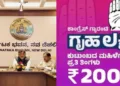
Karnataka’s Gruha Lakshmi Yojana grants Rs 2,000 per month to women heads of households, with a budget of Rs 20,608 crore. West Bengal’s Lakshmir Bhandar Scheme, launched in 2021, provides between Rs 1,000 and Rs 1,200 every month and has become one of the most extensive women focused welfare programmes in eastern India. Madhya Pradesh’s Ladli Behna Yojana, among the earliest large scale initiatives, offers Rs 1,250 per month and has served as a reference point for several newer schemes.
Some states, including Bihar and Andhra Pradesh, have opted for annual lump sum payments instead of monthly transfers. Others prefer regular monthly support that aligns with household spending cycles. Eligibility criteria also vary. While some schemes focus on married women, others include widows, single women, or women heads of households. Despite these differences, the underlying objective remains consistent, to enhance women’s economic autonomy.
A big yet manageable fiscal commitment
The fiscal footprint of cash transfers to women is undeniably large. In several states, these schemes now account for between two percent and three percent of Gross State Domestic Product. In Maharashtra, Andhra Pradesh, and Karnataka, spending on women focused cash transfers forms a dominant share of the overall welfare budget, sometimes exceeding allocations for multiple traditional programmes combined.
At the national level, these cash transfers accounted for around zero point two percent of India’s Gross Domestic Product in 2023 to 24. This marks a sharp rise from zero point zero four percent in 2020 to 21, reflecting rapid institutionalisation of the policy.
Many note that while the scale of spending is significant, it does not necessarily translate into wasteful consumption. Instead, these transfers act as stabilising income support, helping households cope with inflation, seasonal income fluctuations, and unexpected expenses.
How women actually use the money
One of the most consistent findings across state level studies is how women utilise the transferred funds. Contrary to sceptical assumptions, the money is rarely spent on discretionary or non essential items. Instead, it becomes a vital component of household budgeting.
Food expenditure accounts for nearly half of the spending in states such as Maharashtra and Tamil Nadu, and rises to nearly seventy eight percent in Karnataka. Other major areas of expenditure include children’s education, healthcare costs, electricity and water bills, and repayment of informal debts.
In rural areas, the monthly cash transfer often equals thirty to forty percent of per capita expenditure. This makes it a critical buffer against economic shocks, especially for households dependent on agriculture or informal labour. For many women, the predictability of the transfer matters as much as the amount itself.
Quiet transformation in household power dynamics
Beyond economic metrics, the direct cash transfers have begun to alter social dynamics within households. By recognising women as direct recipients rather than secondary beneficiaries, these schemes challenge long standing gender hierarchies.
Women beneficiaries report greater say in household decisions, ranging from grocery purchases to education related spending. The psychological impact of having a regular income stream in one’s own name is significant, particularly in rural and semi urban settings where women’s financial independence has traditionally been limited.
This shift is also visible in the political sphere. Women are increasingly vocal about welfare delivery, accountability, and continuity of schemes. As a result, women focused cash transfers have contributed to the emergence of a distinct and influential voting bloc, reshaping electoral strategies across states.
Opposition raise concerns about fiscal strain and opportunity costs. While budgetary trade offs are real, many policy experts argue that direct cash transfers should be viewed as long term social investments rather than short term giveaways.
Improved nutrition, better school retention, enhanced healthcare access, and deeper financial inclusion are outcomes that compound over time. When combined with digital banking infrastructure and direct benefit transfer systems, these schemes also strengthen state capacity and governance.
As India continues to debate the future of welfare delivery, such cash transfers to women stand out for their simplicity, efficiency, and dignity. What began as a politically cautious experiment has matured into a central pillar of India’s welfare state, one bank transfer at a time.