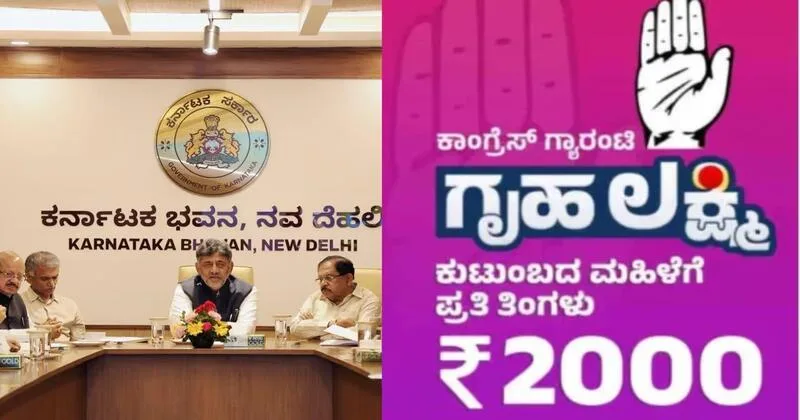
Bengaluru: The Karnataka government’s flagship Gruha Lakshmi scheme, one of the most ambitious and expensive welfare programmes launched under the Congress government’s five guarantees, has come under serious scrutiny after the Comptroller and Auditor General (CAG) reportedly uncovered large-scale technical and administrative irregularities in the implementation of the scheme.
The findings, revealed through a special audit conducted by the CAG’s data analytics wing, have raised concerns over possible financial leakages and weaknesses in the Direct Benefit Transfer (DBT) system. The scheme, which provides Rs 2,000 per month to women heads of households, has so far disbursed nearly Rs 75,000 crore to beneficiaries across the state.
According to the audit findings, several anomalies have been detected in the beneficiary database and fund transfer mechanism. The most striking revelation is that as many as 19,020 beneficiaries were found to be linked to a single bank account. Under DBT norms, every beneficiary is expected to have an individual and verified bank account to receive government benefits directly. The discovery of thousands of beneficiaries sharing the same account has triggered questions about verification procedures and monitoring mechanisms adopted by the implementing agencies.
The CAG report has also highlighted another major discrepancy involving beneficiaries who allegedly did not possess valid bank accounts. The audit found that around 23,262 beneficiaries, despite having no active bank account details, were shown as having received benefits amounting to Rs 46.52 crore. Officials and experts have expressed concern over how such transactions could have been processed when the scheme is entirely dependent on digital fund transfers.
In addition, the audit reportedly identified repeated payments to several beneficiaries. A total of 8,995 accounts were found to have received duplicate or multiple transfers amounting to nearly Rs 1.80 crore. These repeated transactions have raised concerns about the effectiveness of internal checks and safeguards within the payment system.
Sources indicate that the CAG also expressed dissatisfaction over the response of the Department of Women and Child Development during the audit process. The report is said to have noted that the department failed to furnish complete information and supporting records sought by auditors. The alleged delay and reluctance in providing documents have further intensified concerns regarding transparency and accountability in the implementation of the welfare scheme.
The revelations have reportedly prompted serious discussions within the government. Sources in the administration said the issue was recently reviewed at a high-level meeting chaired by the Chief Minister, where officials were directed to examine the audit observations and initiate corrective measures.
As part of the follow-up action, the government is expected to undertake a statewide verification drive to identify ineligible beneficiaries and rectify discrepancies in beneficiary records. Officials have also been instructed to re-examine the details of more than 10 lakh beneficiaries who have changed their bank account information since the launch of the scheme.
The Gruha Lakshmi scheme has been one of the Congress government’s flagship welfare initiatives and has played a key role in providing financial assistance to women across Karnataka. However, the audit findings have raised concerns over whether the benefits have reached only genuine beneficiaries and whether public funds have been adequately safeguarded.
Financial experts note that while large-scale welfare programmes often face implementation challenges, robust verification systems and periodic audits are essential to prevent misuse of public money. The latest findings are likely to increase pressure on the government to strengthen monitoring mechanisms and improve data validation processes.
The government is yet to issue a detailed public response to all the observations made in the audit report. Meanwhile, questions remain over the extent of financial loss caused by the irregularities and whether any officials or intermediaries will be held accountable.