“Christmas wasn’t Christian. Pagan(Idolaters/Hindu) festivals were absorbed so completely that within two generations, people forgot they ever existed. And we have the letter from 601 AD that proves it was intentional. But here’s what changed everything for me: I realised that this exact strategy is being used today on the last ancient civilisation still standing. Once you see it, you can’t unsee it”.– Shawn Binda
This is written on YouTube by Shawn Binda, a young (Gen Z) Hindu whose ancestors were taken as slaves to the Caribbean nations by the Christian British.
Sanatan Hindu Dharma (‘Hinduism’ is a Misnomer) is the oldest when compared to religions like Christianity and Islam! People almost all over the world, including those of BhArat, were Karma-bound, Nature worshippers, Idolaters, Polytheists, called as Pagans. Moreover, Christians have historically referred to Hindus in Bharat as pagans, idolaters and polytheists, etc.
While in the United States for an IT project, I observed how Christians there celebrate Christmas.
Christmas is the main festival for Christians worldwide, celebrated, according to their belief, to commemorate the birth of their prophet Jesus Christ. However, many historians and scholars believe that this festival is inspired by, or directly copied from, ancient Pagan (Polytheistic Hindu) festivals.
It is particularly closely associated with the Roman festivals of ‘Saturnalia’ and ‘Sol Invictus’! These festivals celebrate the winter solstice, an astronomical event related to the sun. The date of Christmas, December 25th, coincides with the festival of Sol Invictus (Sol=Sun, Invictus=Invincible), and many customs, such as gift-giving, feasting, and decorating trees, are linked to these original Pagan festivals. This article examines this claim, including historical evidence, customs, and contexts.
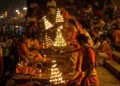
Many references, including books, articles, Videos and Pictures, are also available on the internet! In India, Hindus also consider trees like Tulsi, Banyan, Peepal, and Fig sacred and worship them. Sankranti and Chhath Puja are also festivals associated with the Sun! There are many Hindu Temples dedicated to the Sun God, e.g., Konark, Modhera, Martand, Multan (Pakistan), Egypt, China, Japan, Peru, etc. Hindus offer Ardhya (water) to the sun and perform Surya Namaskar (Sun Salutations)! During festivals like Diwali, Kartik Purnima, Karthigai Deepam, etc. Hindus illuminate their homes with lamps and DeepaMaalaa (Rows of Lamps), DeepaSthambh (Pillar) of lamps! These festivals were celebrated with the same sentiment by people in Europe during the pre-Christian era!
Saturnalia: Saturnalia was an ancient Roman festival celebrated in honour of Saturn, the God of agriculture! Initially a one-day festival on December 17, it expanded to a seven-day festival (December 17 to 23) in the first century. During this period, the festivities were characterised by home decoration, decorating trees, giving gifts to farm labourers (often humorous or clay figurines called Sigillaria), feasting, and the joyful exclamation of “Io Saturnalia!” (pronounced “Yo Saturnalia”) Public celebrations were also held. This festival commemorated the ‘Golden Age’ in which there was no slavery!
Connection to Christmas: The customs of Saturnalia are seen in Christmas. For example, decorations, gift-giving, feasting, etc. This is a direct influence. The Christian church adopted these festivals in the fourth century to convert the Pagan (Idolater, Polytheist, Hindu) Romans! The Saturnalia festival is associated with the sun’s transition from the southern to the northern solstice! Since days grow longer at the northern solstice, bringing more sunlight, Christians associated Christmas with the ‘Birth of Light’ (Jesus meaning ‘the light of the World’).
Sol Invictus: The Birth of the ‘Invincible Sun’: Sol (Sun) Invictus(Invincible) was the Sun God of the Roman Empire. Emperor Aurelian instituted the festival of Dies Natalis Solis Invicti (Birthday of the Invincible Sun), which was celebrated on December 25th. This festival was celebrated because during this time the sun’s power increases again (the duration of daylight increases). Chariot races (30 races), feasts, and gift-giving were characteristic features. Emperor Constantine also promoted Sol Invictus and depicted the Sun God on his coins.
Connection to Christmas: It is believed that the date December 25 was directly taken from Sol Invictus. The Church chose this date to fix the date of Jesus’ birth, so that the Pagan (polytheistic, Idolaters, Hindus) festival could be transformed into a Christian celebration. In ancient Christian Texts, Jesus is referred to as the ‘Sun of Justice’ (Sol Iustitiae), and Saint Augustine urged people to celebrate Jesus, not the Sun, on December 25th. This makes it clear that Christians Christianized a Pagan (polytheistic, idolatrous Hindu) festival.
Yule and other pagan customs: Christmas Tree, Yule log, and mistletoe. The Yule festival of the Germanic people of Northern Europe celebrates the winter solstice and includes burning the Yule log, Decorations, Feasting, etc. These Ancient Pagan festivals became part of Christmas after the people there converted to Christianity. Burning the Yule log symbolises the return of the Sun, and even today, Christmas cakes or sweets are often shaped like a log.
The Christmas tree has its origins in ancient Pagan (polytheistic) traditions. The Egyptians, Romans, and Celts used evergreen trees, which symbolised eternal life. In the Roman Saturnalia festival, evergreen branches were decorated. The custom of decorating Christmas Trees began in Germany in the 16th century, with a legend claiming that Martin Luther placed lights on a tree to represent the stars.
Historical evidence and influence: According to historians, in the fourth century, Roman Emperor Constantine, while promoting Christianity, incorporated Pagan Festivals. For example, the ‘Chronograph of 354’ mentions both ‘Sol Invictus’ and ‘Christmas’ on December 25.
Many scholars say that the Christian Church did this to attract pagans (Idolaters/ Polytheistic Hindus), such as associating the Sun God with Jesus. Gifts, feasting, and revelry came from Saturnalia, while the light and astronomical event of the Sun came from Sol Invictus. In Europe, Yule and Celtic customs contributed to the use of trees and greenery.
Some critics reject these claims, saying that the date of Christmas was determined independently (nine months from March 25).
However, Historical coincidences and similarities in customs show that Christmas is an imitation of Pagan (polytheistic Hindu) festivals, intended to facilitate the spread of Christianity.
Christmas, in its current form, is a beautiful festival, but its origins lie in ancient pre-Christian Pagan (Idolatrous, Polytheistic, and Hindu) Festivals. Saturnalia, Sol Invictus, and Yule contributed elements such as gift-giving, feasting, trees, and decorations with lights. Christians worldwide will surely be delighted to learn how they are fundamentally connected to the ancient Paganism or Sanatana Hindu Dharma (Hinduism).
This shows how cultures blend. Festivals are still celebrated worldwide today, but their history should not be forgotten.