AI, work, & dignity: Why the future of labour is a question of justice
July 16, 2026
  • Read Ecopy
  • Circulation
  • Advertise
  • Careers
  • About Us
  • Contact Us
Android AppiPhone AppArattai
Organiser
  • ‌
  • Bharat
    • Assam
    • Bihar
    • Chhattisgarh
    • Jharkhand
    • Maharashtra
    • View All States
  • World
    • Asia
    • Europe
    • North America
    • South America
    • Africa
    • Australia
  • Editorial
  • International
  • Opinion
  • RSS @ 100
  • More
    • Op Sindoor
    • Analysis
    • Sports
    • Defence
    • Politics
    • Business
    • Economy
    • Culture
    • Special Report
    • Sci & Tech
    • Entertainment
    • G20
    • Azadi Ka Amrit Mahotsav
    • Vocal4Local
    • Web Stories
    • Education
    • Employment
    • Books
    • Interviews
    • Travel
    • Law
    • Health
    • Obituary
  • Subscribe
    • Subscribe Print Edition
    • Subscribe Ecopy
    • Read Ecopy
  • ‌
  • Bharat
    • Assam
    • Bihar
    • Chhattisgarh
    • Jharkhand
    • Maharashtra
    • View All States
  • World
    • Asia
    • Europe
    • North America
    • South America
    • Africa
    • Australia
  • Editorial
  • International
  • Opinion
  • RSS @ 100
  • More
    • Op Sindoor
    • Analysis
    • Sports
    • Defence
    • Politics
    • Business
    • Economy
    • Culture
    • Special Report
    • Sci & Tech
    • Entertainment
    • G20
    • Azadi Ka Amrit Mahotsav
    • Vocal4Local
    • Web Stories
    • Education
    • Employment
    • Books
    • Interviews
    • Travel
    • Law
    • Health
    • Obituary
  • Subscribe
    • Subscribe Print Edition
    • Subscribe Ecopy
    • Read Ecopy
Organiser
  • Home
  • Bharat
  • World
  • Operation Sindoor
  • Editorial
  • Analysis
  • Opinion
  • Culture
  • Defence
  • International Edition
  • RSS @ 100
  • Magazine
  • Read Ecopy
Home Bharat

AI, work, and dignity: Why the future of labour is a question of justice, not hours

The rise of AI exposes that changing work metrics from hours to outcomes means little unless power imbalances, worker dignity, and fair sharing of productivity gains are addressed

Virjesh UpadhyayVirjesh Upadhyay
Dec 24, 2025, 09:00 pm IST
in Bharat
Follow on Google News
FacebookTwitterWhatsAppTelegramEmail

The renewed debate over work hours in the age of artificial intelligence, sparked by arguments that “hours worked” are an outdated performance metric, appears progressive at first glance. Yet, beneath this managerial conversation lies a far deeper concern: what happens to the meaning, dignity, and fairness of work when technology accelerates productivity but power equations remain unchanged?

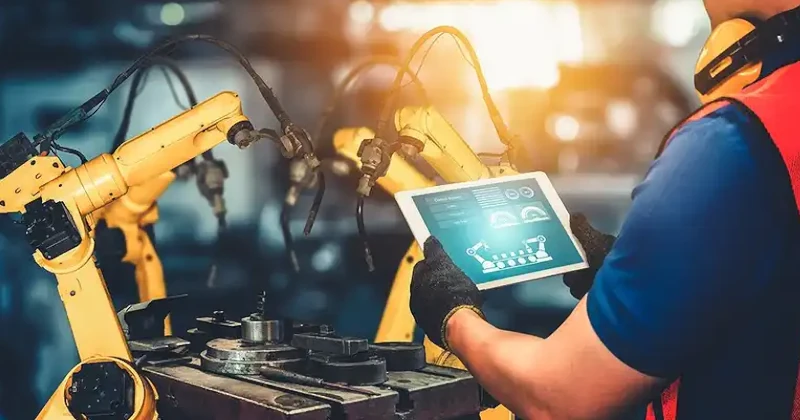
AI was expected to liberate human beings from drudgery. Instead, in many workplaces, it has quietly intensified expectations. Tasks are completed faster, deadlines shrink, and performance bars keep rising. The result is a paradox: machines save time, but humans seem to have less of it.

This is not a failure of technology. It is a failure of economic and organisational philosophy. Hours are a Crude Metric, but outcomes alone are risky.

Critiquing work hours as a performance indicator is valid. Time spent at a desk does not equal value created. However, replacing hours with “outcomes” without safeguards can be even more dangerous, especially for workers with weak bargaining power.

India’s informal, gig, and contract workers already live in an outcome-based world: paid per delivery, per task, per piece. For them, outcome metrics have meant:

  • Invisible effort
  • No recognition of fatigue or learning time
  • Transfer of all risk from the employer to the worker
  • In such contexts, outcome-based performance becomes digital piece-rate labour, not empowerment.

Historically, labour movements fought for limits on hours not to glorify inefficiency, but to protect human life from being reduced to a commodity. Abandoning this hard-won wisdom in the name of AI-driven efficiency would be a serious regression.

Work Is Not a Burden to Be Minimised

A seductive narrative accompanies AI optimism: machines will work so humans don’t have to. This idea is profoundly flawed. Work is not merely a means of survival. It is:

  • A source of dignity and self-worth
  • A way of contributing to society
  • A foundation of social identity

A future where work becomes “optional” for the many, while ownership of technology—and therefore power—rests with a few, does not lead to liberation. It leads to dependence, loss of agency, and social fragility.
The real goal should not be less work, but better work.

AI Should Civilize Work, Not Erase It

From a worker-centric perspective, AI must be judged by a simple moral test:

Does it strengthen the worker’s dignity and bargaining power—or weaken it? Used wisely, AI can:

  • Reduce physical and mental drudgery
  • Improve safety and health
  • Enhance skills and decision-making
  • Used poorly, it becomes a tool for surveillance, work intensification, and silent exploitation—regardless of whether performance is measured in hours or outcomes.
  • Changing metrics without changing power relations changes nothing.
  • The Indian Reality Cannot Be Ignored
  • For most Indian workers, the debate is not about long office hours versus flexible schedules. It is about:
  • Low and uncertain incomes
  • Absence of social security
  • Lack of collective voice

Importing elite global discussions on four-day workweeks or productivity dashboards without addressing these fundamentals risks becoming a conversation among the privileged, about the unprivileged, without them.

The Right Question

The age of AI forces society to confront uncomfortable truths. The correct questions are not:

  • How many hours should people work?
  • How do we redefine performance metrics?

The real questions are:

  • What kind of work sustains human dignity?
  • Who controls technology and who benefits from its gains?
  • How are productivity gains shared between capital and labour?

Until these are answered, debates on hours versus outcomes will remain cosmetic. And:

  • AI does not make labour obsolete.
  • It exposes the ethical choices of our economic system.

If machines advance and human lives become more insecure, the problem is not technology; it is justice.
If productivity rises and dignity falls, the crisis is not about efficiency; it is about values. The future of work is not about working more or working less. It is about working right.


Topics: Artificial IntelligenceaiJusticeWorker dignityWork hours
ShareTweetSendShareSend
✮ Subscribe Organiser YouTube Channel. ✮
✮ Join Organiser's WhatsApp channel for Nationalist views beyond the news. ✮
Previous News

Atal Modi Suparipalana Yatra: Andhra Pradesh’s tribute to a timeless statesman

Next News

Is Christmas a copy of Hindu festivals?

Related News

Representatives of the national trade union centers of the BRICS member and partner countries at BRICS Trade Union Forum

Declaration of 15th BRICS Trade Union Forum calls for human-centric AI, universal social security & labour cooperation

World Youth Skills Day 2026

World Youth Skills Day 2026: Equipping young people for a shared future in an AI-driven world

National Conference on Human-centric Technology & Artificial Intelligence: Implications for the Future of Work

BRICS trade union forum Bhartiya Majdoor Sangh charts roadmap for human-centric at national Conference in DU

Japanese Prime Minister Sanae Takaichi and Prime Minister Narendra Modi

Indo-Japan Summit: Tech & AI are the pillars of partnership; MoUs inked on defence, critical minerals & clean energy

Central Sanskrit University launches India's First AI engineering Programme

Central Sanskrit University launches India’s 1st AICTE-approved AI engineering programme with Indian knowledge systems

Mann Ki Baat: PM Modi Celebrates India's Scientific Progress, Defence Self-Reliance and Yoga

Mann Ki Baat: PM Modi highlights indigenous innovation, defence strength, yoga & people’s participation

Load More

Latest News

The Union Cabinet has approved the MPMS and Semicon 2.0 schemes to strengthen electronics manufacturing

Modi Government’s Twin Tech Revolution: India eyes Rs 40 lakh crore electronics manufacturing boom

Demonstrators rally for justice for 13-year-old Christian girl Maria Shahbaz and other religious minority girls in Pakistan

Pakistani court sends 13-year-old Christian girl Maria back to 30-year-old Muslim abductor, sparking global outrage

UP govt's crackdown on ISIS network; NIA court awards five years of sentence to Rakib Imam Ansari (This image is generated by AI)

Uttar Pradesh: UP tightens grip on ISIS ecosystem; NIA court convicts Rakib Imam Ansari

Tamil Nadu Kudankulam data leak: NPCIL says nuclear safety not compromised, issues clarification

Hyderabad's iconic Taj Banjara hotel is being demolished after nearly four decades

Taj Banjara Demolition: Hyderabad’s iconic luxury hotel ends its journey after nearly four decades

ED

ED cracks down terror funding & infiltration network, raids across UP, Delhi, Haryana & West Bengal

A Hyderabad private school has terminated teacher Farhat Sultana after she allegedly asked a Hindu student to recite the Kalma & Surah Fatiha

Hyderabad School Row: Teacher Farhat Sultana terminated for asking a Hindu student to recite the Kalma & Surah Fatiha

Representative Image

Cabinet approves Rs 62,500 crore mobile phone manufacturing scheme to boost domestic production

Pouchalung Panmei passes away

Manipur: RSS condoles demise of Tamenglong Pracharak’s father Pouchalung Panmei

Dignitaries on the stage along with Telangana Governor at the 15th BRICS Trade Union Forum (BTUF) Summit-2026

15th BRICS Trade Union Forum | Hyderabad declaration charts new path for labour rights: Telangana Governor Shiv Pratap

Load More
  • Privacy
  • Terms
  • Cookie Policy
  • Refund and Cancellation
  • Delivery and Shipping

© Bharat Prakashan (Delhi) Limited.
Tech-enabled by Ananthapuri Technologies

  • Home
  • Search Organiser
  • Bharat
    • Assam
    • Bihar
    • Chhattisgarh
    • Jharkhand
    • Maharashtra
    • View All States
  • World
    • Asia
    • Africa
    • North America
    • South America
    • Europe
    • Australia
  • Editorial
  • Operation Sindoor
  • Opinion
  • Analysis
  • Defence
  • Culture
  • Sports
  • Business
  • RSS @ 100
  • Entertainment
  • More ..
    • Sci & Tech
    • Vocal4Local
    • Special Report
    • Education
    • Employment
    • Books
    • Interviews
    • Travel
    • Health
    • Politics
    • Law
    • Economy
    • Obituary
  • Subscribe Magazine
  • Read Ecopy
  • Advertise
  • Circulation
  • Careers
  • About Us
  • Contact Us
  • Policies & Terms
    • Privacy Policy
    • Cookie Policy
    • Refund and Cancellation
    • Terms of Use

© Bharat Prakashan (Delhi) Limited.
Tech-enabled by Ananthapuri Technologies