Will Hindus in Bharat learn from the bloodshed in Bangladesh
June 10, 2026
  • Read Ecopy
  • Circulation
  • Advertise
  • Careers
  • About Us
  • Contact Us
Android AppiPhone AppArattai
Organiser
  • ‌
  • Bharat
    • Assam
    • Bihar
    • Chhattisgarh
    • Jharkhand
    • Maharashtra
    • View All States
  • World
    • Asia
    • Europe
    • North America
    • South America
    • Africa
    • Australia
  • Editorial
  • International
  • Opinion
  • RSS @ 100
  • More
    • Op Sindoor
    • Analysis
    • Sports
    • Defence
    • Politics
    • Business
    • Economy
    • Culture
    • Special Report
    • Sci & Tech
    • Entertainment
    • G20
    • Azadi Ka Amrit Mahotsav
    • Vocal4Local
    • Web Stories
    • Education
    • Employment
    • Books
    • Interviews
    • Travel
    • Law
    • Health
    • Obituary
  • Subscribe
    • Subscribe Print Edition
    • Subscribe Ecopy
    • Read Ecopy
  • ‌
  • Bharat
    • Assam
    • Bihar
    • Chhattisgarh
    • Jharkhand
    • Maharashtra
    • View All States
  • World
    • Asia
    • Europe
    • North America
    • South America
    • Africa
    • Australia
  • Editorial
  • International
  • Opinion
  • RSS @ 100
  • More
    • Op Sindoor
    • Analysis
    • Sports
    • Defence
    • Politics
    • Business
    • Economy
    • Culture
    • Special Report
    • Sci & Tech
    • Entertainment
    • G20
    • Azadi Ka Amrit Mahotsav
    • Vocal4Local
    • Web Stories
    • Education
    • Employment
    • Books
    • Interviews
    • Travel
    • Law
    • Health
    • Obituary
  • Subscribe
    • Subscribe Print Edition
    • Subscribe Ecopy
    • Read Ecopy
Organiser
  • Home
  • Bharat
  • World
  • Operation Sindoor
  • Editorial
  • Analysis
  • Opinion
  • Culture
  • Defence
  • International Edition
  • RSS @ 100
  • Magazine
  • Read Ecopy
Home Bharat

Will Hindus in Bharat learn from the bloodshed of their brothers in Bangladesh?

The sharp demographic decline of Hindus in Bangladesh, recurring episodes of targeted violence, and the state’s apparent inability—or unwillingness—to ensure their safety have transformed an old historical wound into an open, bleeding present. Recent incidents of brutal lynching, arson, displacement, and attacks on cultural symbols reveal a pattern that can no longer be dismissed as sporadic unrest or political fallout

Diganta ChakrabortyDiganta Chakraborty
Dec 24, 2025, 08:30 am IST
in Bharat, World, Asia, West Bengal
Follow on Google News
FacebookTwitterWhatsAppTelegramEmail

The lament of Bengali poet Satyendranath Dutta still echoes in our ears today:

“Where lies the dust of our forefathers’ feet?
That is our Bangladesh, that is our Bengal!” (Translated by Author from original Bengali poem)

Will these lines remain nothing more than nostalgic poetry? In the land of Chandidas and Ramprasad, once synonymous with devotion, humanism, and tolerance; the very existence of Bengali Hindus now stands questioned. With every passing year, the situation grows grimmer. The wounds we once read about in history books are no longer historical memories; they have become a living, burning reality. While writing about the Noakhali riots of 1946, historian Ramesh Chandra Majumdar described them as a ‘Hindu holocaust’ . That phrase no longer belongs to the past alone. What is unfolding today in Bangladesh through relentless attacks, persecution, displacement, and targeted killings of Hindus can scarcely be described by any other term. This is not exaggeration; it is the repetition of history, unfolding before our eyes, while we remain largely indifferent spectators.

Statistics themselves testify to this truth. In 1947, Hindus constituted nearly 22–23 percent of East Bengal’s population. Today, that figure has fallen to single digits. Is this decline the result of natural demographic change, or the outcome of sustained fear, land-grabbing, forced conversions, violence, and killings? We all know the answer. Yet evasion of this question has become the norm, both at the National level and in international forums.

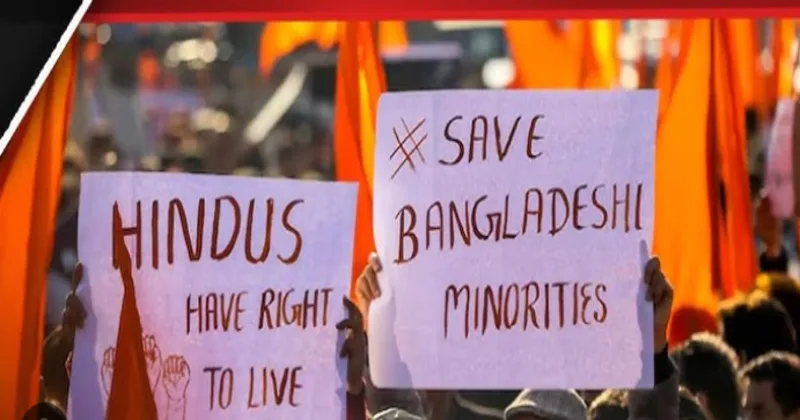
The recent death of Osman Hadi, a popular student leader and convenor of the Inquilab Mancha, has triggered widespread violence across Bangladesh. As always, the primary targets have been Hindu minorities. The brutal killing of Dipu Das, a Hindu youth from Mymensingh and an Awami League supporter, who was tied to a tree and burned alive is enough to shake the conscience of any civilized society. After killing him, his body was hung and set ablaze. This is not merely cruelty; it is medieval barbarism. Asking what the administration was doing at the time may be futile, but one fact stands out clearly: in the land of Masterda Surya Sen and Pritilata Waddedar, this is how a Bengali Hindu lives today.

Equally painful is another reality. When Hindus are murdered in a neighbouring country, a certain section on this side of the border maintains a deafening silence. They proudly identify as intellectuals and preach humanism. Their compassion overflows when deaths occur in Gaza, yet they remain unmoved by unspeakable atrocities against Hindus next door. During the Left era, they chose not to see Bantala, Birati, or Kaliachak like horrifying incidents. Today, Sandeshkhali and Murshidabad also escape their vision. This silence is not neutrality; it is selective morality in its most naked form. Strikingly, the same voices detect ‘communalism’ instantly when the Ram Temple is rebuilt or when Hindus participate in religious observances. This double standard is no longer subtle; it is glaringly obvious.

Also Read: ‘Bangladesh-style brutality’: BJP slams Bengal police action on Kolkata protests over Dipu Chandra Das lynching

Recent events in Bangladesh have also underscored how films like The Kashmir Files or The Bengal Files are rooted in lived realities. Those who dismissed these works as “propaganda” now find reality itself delivering the rebuttal. The same reality answers those who question why the Citizenship Amendment Act (CAA) extends refuge specifically to persecuted Hindus from Bangladesh. When a state fails to protect the lives and dignity of its minorities, offering refuge is not charity; it is a moral obligation.

Notably, the wave of violence has now engulfed the media as well. Offices of leading newspapers like Prothom Alo and The Daily Star have been vandalized and set on fire. Reports have emerged of a journalist being shot dead in Khulna. Those who once mocked Indian media by citing press freedom rankings must now ask themselves: how real are these indices? Events on the ground have exposed how hollow and detached such rankings can be.

A question must also be posed to those who wax lyrical about Mughal architecture and music, claiming that without the Mughals we would have known nothing. Why were harmoniums and musical instruments burned? Why are cultural symbols among the first targets? Because culture is identity and destroying identity is the surest way to render a society spineless. The events in Bangladesh brutally demonstrate the gap between chanting secular slogans in air-conditioned rooms and confronting the fire of reality.

The question, therefore, is simple: will we once again merely recite poetry and sigh, or will we transform Satyendranath Dutta’s lament into political, social, and moral consciousness? More importantly, will Hindu Bengalis in this country (specially West Bengal) learn anything from the existential crisis of Hindus in the neighbouring country? Or will they continue, trapped in pseudo-secular illusions, to strike at their own roots? History suggests that the cost of repeated neglect is ultimately paid with existence itself.

None of this is new. Dr. B. R. Ambedkar wrote with remarkable clarity in Pakistan or the Partition of India: “The brotherhood of Islam is not the universal brotherhood of man. It is the brotherhood of Muslims for Muslims only.” This was not born of hatred, but of a dispassionate analysis of the subcontinent’s political and social realities. Observing the condition of Hindu minorities in present-day Bangladesh, one cannot help but acknowledge the enduring relevance of Ambedkar’s words.

Rabindranath Tagore, too, issued a stark warning in his Bengali essay Kalantar: “There are two religious communities in the world whose hostility toward all other faiths is extreme—Christianity and Islam. They are not content merely with observing their own religion; they are intent on destroying others. Therefore, apart from accepting their religion, there is no other way to coexist with them.” (Translated by Author from original Bengali essay)

For decades, these words were dismissed as ‘uncomfortable truths’. Today’s events have dragged their relevance back into the open. When temples are demolished, Hindu idols desecrated, musical instruments burned, and Hindus lynched or burned alive solely for their religious identity, these can no longer be dismissed as isolated incidents. What we are witnessing is a systematic mindset, aimed not merely at suppression, but at erasure. The time has come to tear away the veil of pseudo-secularism cultivated by the Leftists and confront reality as it is. Secularism does not mean denying one’s existence or surrendering the right to self-defence. Humanism does not mean one-eyed morality. History, statistics, and the blood-soaked present demand only one thing: acknowledgment of the truth. Otherwise, someday someone may once again ask— “Where lies the dust of our forefathers’ feet?” But by then, there may be no one left to answer.
Topics: Hindu Man LynchedIslamistsBangladeshMurshidabadSandeshkhaliDipu Chandra Das
ShareTweetSendShareSend
✮ Subscribe Organiser YouTube Channel. ✮
✮ Join Organiser's WhatsApp channel for Nationalist views beyond the news. ✮
Previous News

J&K terror funding: Delhi HC rejects appeals filed by Syed Salahuddin’s sons Shahid Yousuf & Shakeel

Next News

‘Trapped in a Slaughterhouse’: Vidhii Setu Foundation moves UN over brutal burning of Dipu Chandra Das in Bangladesh

Related News

MEA spokesperson Randhir Jaiswal highlights India's resolve to deport illegal Bangladeshi migrants via bilateral mechanisms

India reiterates strong resolve to deport illegal Bangladeshis; Flags delay of bilateral procedures from Dhaka

FIR filed against the Islamists in the Love Jihad case in Bhopal

Love Jihad again in Bhopal: Minor Hindu girl forced to drink beer, trapped and pressured to convert by Islamists

Bangladesh’s reported JF-17 push has triggered fresh scrutiny after India’s Ops Sindoor exposed the vulnerabilities of Pakistani-Chinese defence systems and precision strike capabilities

Shadows of Operation Sindoor: Questions loom over Bangladesh’s JF-17 ambitions amid Sino-Pakistani tech vulnerabilities

Land transfer to BSF in West Bengal: Securing the porous border

West Bengal Chief Minister Suvendu Adhikari

West Bengal: CM Suvendu Adhikari announces 142.79 acres land transfer to BSF for strengthening border security

Dr Surendra Jain, Joint General secretary, VHP

Cow slaughter & insult to Sanatan is unbearable; Hindus ready to go to any extent for cow protection: Dr Surendra Jain

Load More

Latest News

Mansoor Ahmed and daughter Shamshad Begum arrested for Rs 5.3 cr government job scam

Karnataka Job Scam Busted: Mansoor, daughter Shamshad Begum arrested for Rs 5.3 crore fraud; 40+ aspirants duped

Shamli Conversion Case: Delhi Nikahnama, Name Changes and Pakistan-Based Preacher Videos Under Scanner; Father Awaits Ayush Malik’s Return Home

Shamli Conversion Case: How a Delhi nikahnama, Pakistani cleric’s lectures and an affair changed Ayush Malik’s life

CM Suvendu Adhikari announces 125-ft Syama Prasad Mookerji statue in Kolkata on 125th birth anniversary

CM Suvendu Adhikari announces 125-foot Syama Prasad Mookerjee statue in Kolkata to mark his 125th birth anniversary

“They Took My Son Away”: Ayush Malik’s Father Accuses Chandni Qureshi of Conversion Plot and Property Grab in Shamli

“They ruined my family, took my son away”: Ayush Malik’s father says changes began when he started growing a beard

Back-to-Back Love Jihad Cases in Lucknow: PGI Woman Goes Missing, Another Alleges Conversion Pressure After Marriage Promise

Back to back Love Jihad in Lucknow: PGI woman missing after meeting Irshad, Another alleges conversion by Zubair Ansari

New update in Nashik TCS Coporate Jihad Case as accused were asked to read a book titled The Life of Muhammad

Nashik TCS Corporate Jihad: Investigators probe claims victims were asked to read book ‘The Life of Muhammad’

MEA hails 12 years of Modi government

MEA celebrates PM Modi’s 12 years in office, says India “witnessed remarkable transformation” in foreign policy

Hawkers protest in West Bengal

The Left’s Selective Morality: From Sainbari to Hawker protests

Odisha CM Mohan Charan Majhi and Union Minister of Law and Justice Arjun Ram Meghwal along with other dignitaries on the stage on the occasion of completion of 12 years of the Central Government

PM Modi’s 12-years of governance marks era of transformation, growth & global recognition: Odisha CM Mohan Majhi

Modi govt clears Rs 13,000 Crore Great Nicobar Airport Project (This is an AI generated image)

India’s strategic move in Great Nicobar: Rs 13,000 crore airport to double strength in the Indian Ocean

Load More
  • Privacy
  • Terms
  • Cookie Policy
  • Refund and Cancellation
  • Delivery and Shipping

© Bharat Prakashan (Delhi) Limited.
Tech-enabled by Ananthapuri Technologies

  • Home
  • Search Organiser
  • Bharat
    • Assam
    • Bihar
    • Chhattisgarh
    • Jharkhand
    • Maharashtra
    • View All States
  • World
    • Asia
    • Africa
    • North America
    • South America
    • Europe
    • Australia
  • Editorial
  • Operation Sindoor
  • Opinion
  • Analysis
  • Defence
  • Culture
  • Sports
  • Business
  • RSS @ 100
  • Entertainment
  • More ..
    • Sci & Tech
    • Vocal4Local
    • Special Report
    • Education
    • Employment
    • Books
    • Interviews
    • Travel
    • Health
    • Politics
    • Law
    • Economy
    • Obituary
  • Subscribe Magazine
  • Read Ecopy
  • Advertise
  • Circulation
  • Careers
  • About Us
  • Contact Us
  • Policies & Terms
    • Privacy Policy
    • Cookie Policy
    • Refund and Cancellation
    • Terms of Use

© Bharat Prakashan (Delhi) Limited.
Tech-enabled by Ananthapuri Technologies