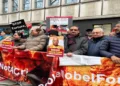
The Vidhii Setu Foundation (VSF), a legal and civil rights advocacy body, has taken the issue of escalating violence against Hindus in Bangladesh to the United Nations, submitting a formal Urgent Representation to the UN Special Rapporteur on Freedom of Religion or Belief. The dossier was physically delivered and received at the United Nations Information Centre (UNIC) in New Delhi and addressed to Ms. Nazila Ghanea, Special Rapporteur, through the Office of the United Nations High Commissioner for Human Rights (OHCHR), Geneva. The move follows the killing of Dipu Chandra Das in Mymensingh on the night of December 18-19, 2025, an incident VSF describes as the “apotheosis of state-enabled barbarism”.
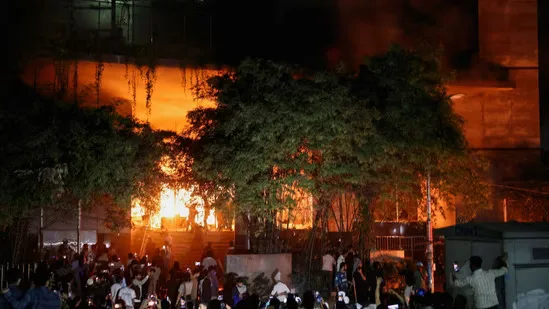
According to the representation, Dipu Chandra Das was subjected to a brutal sequence of violence after a weaponised allegation of blasphemy, what the Foundation characterises as a “standard pretext for ethnic cleansing.” The document details that Das was beaten by a mob, bound to a tree, and set on fire while still alive. VSF asserts that the act was not a spontaneous outburst but a deliberate execution carried out in full view of bystanders, underscoring what it calls the collapse of law, order, and moral restraint in the region.
The Foundation’s language is unambiguous. It states that the perpetrators “forfeited their claim to humanity” and argues that crimes of such magnitude must be met with the harshest rigours of the law, not only domestically but through international accountability mechanisms.
‘A Descent into Medieval Savagery’
In its submission, VSF calls the killing as emblematic of a broader and deepening pattern of violence against Bangladesh’s Hindu minority. The representation describes the episode as a “descent into medieval savagery,” warning that the continued misuse of blasphemy allegations has created a climate where mobs act with impunity and minorities live under permanent threat.
The Foundation contends that the victim “was executed not for a crime, but for his faith,” adding that when a human being is incinerated because of their religious identity, the concept of human rights itself becomes meaningless unless international institutions act with “crushing force”.
One of the most pointed sections of the representation accuses the United Nations of becoming a “mute spectator” to what VSF terms the existential erasure of Hindus in Bangladesh. The document argues that democratic safeguards in the country have effectively collapsed for minorities, leaving them “trapped in a slaughterhouse, waiting for their turn to be butchered.”
VSF notes that repeated incidents of mob violence, desecration of temples, forced displacement, and targeted killings have not been met with proportionate international response. The Foundation warns that continued silence risks legitimising the violence and emboldening perpetrators, thereby eroding the credibility of global human rights frameworks.
Demand for Urgent UN Action
The Foundation has sought immediate, concrete steps from the UN system. Chief among its demands is the issuance of a Category-1 Urgent Appeal by the Special Rapporteur on Freedom of Religion or Belief, the strongest form of intervention available within the UN’s special procedures.
Additionally, VSF has called for an Emergency Fact-Finding Mission to Mymensingh to independently assess ground realities, meet victims’ families, and document patterns of persecution. The representation argues that only direct observation can cut through official narratives and expose the scale of intimidation and violence faced by Hindu communities in the region.
Reflecting what it describes as growing anger and frustration within India, the Foundation has issued a stark warning to the global community about the limits of restraint. Drawing on India’s historical tradition of Kshatra, the martial duty to defend righteousness, the representation cautions that sustained international failure could trigger a shift in India’s civil society and policy stance.
“The world must not mistake India’s restraint for weakness,” the document states, warning that if multilateral mechanisms fail, Indian civil society will press the Government of India to abandon diplomatic niceties and exercise “all available options, diplomatic, economic, strategic, and unlisted to subjugate hostile elements threatening our kin”.
While stopping short of advocating specific state actions, the language highlights a belief that continued inaction could have consequences beyond human rights discourse, potentially impacting regional stability and diplomatic equations.
VSF’s Message to Global Hindus
Addressing the Hindu community worldwide, VSF Director Adv. Abhijeet Kumar Bhatt reiterated the Foundation’s commitment to defending freedom of religion and conscience. He stated that VSF would not remain a “silent spectator” as Hindus face systemic abuse, exploitation, and persecution.
“An attack on one is an attack on the civilization,” Bhatt asserted, adding that freedom of religion is not a negotiable privilege but a fundamental human right. The Foundation pledged to stand as a legal and moral shield for Hindus in Bangladesh and elsewhere, ensuring that the right to profess and practice faith remains inviolable.
In a rare move, the representation explicitly places responsibility on the UN system for preventing further escalation. VSF has demanded a global press statement from the Special Rapporteur or the OHCHR, warning that failure to act would render the institution complicit in the unfolding crisis.
“If the region blows out of proportion because legitimate international avenues failed to act, the burden of history will lie with your office,” the document concludes, adding a stark line: “Do not let the ashes of Dipu Chandra Das be the obituary of your relevance”.
To ensure wider scrutiny and accountability, copies of the representation have been dispatched to the International Criminal Court (ICC) at The Hague, the Prime Minister’s Office (PMO), and the Ministry of External Affairs (MEA), Government of India. The Foundation says this multi-pronged approach is intended to keep diplomatic, legal, and political channels simultaneously engaged.
A Test Case for Global Human Rights
The killing of Dipu Chandra Das, and the forceful response by the Vidhii Setu Foundation, has emerged as a test case for the international human rights regime’s willingness to confront faith-based violence beyond rhetoric. By taking the issue directly to the UN and demanding urgent, visible action, VSF has signalled that civil society groups are no longer willing to accept procedural delays or symbolic condemnations.
As pressure mounts on international institutions to respond, the episode has intensified scrutiny of how effectively global mechanisms protect vulnerable religious minorities and whether silence, as VSF argues, has indeed become a form of complicity.