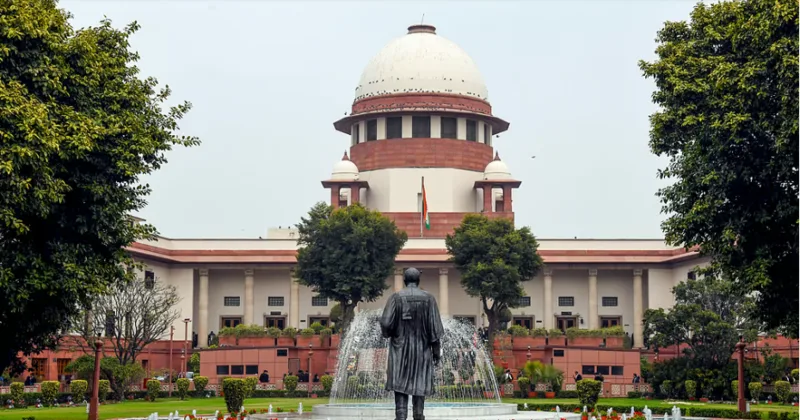
NEW DELHI: The Supreme Court’s decision to discontinue the long-standing practice of oral mentioning, under the stewardship of the Chief Justice of India Justice Surya Kant, marks a subtle yet significant moment in India’s judicial evolution. While the reform may appear procedural on the surface, its deeper implications strike at the heart of institutional fairness, judicial discipline, and the gradual dismantling of informal privilege within the justice delivery system.
For decades, oral mentioning, where senior lawyers verbally requested urgent listing of matters in open court had become an entrenched feature of Supreme Court functioning. Though never formally codified, it evolved into a parallel access mechanism, often dependent on visibility, seniority, or proximity to power. In practice, this blurred the line between genuine urgency and perceived importance, inadvertently nurturing a culture where access sometimes mattered more than merit.
Against this backdrop, the Chief Justice of India has clarified that the reform does not extinguish urgency-based access to the Court. Rather, it restructures it. Oral mentioning as a personalised, open-court practice has been stopped, but urgent mentioning continues through written submissions, assessed strictly on the basis of demonstrable urgency. This distinction is central to understanding the reform’s constitutional balance.
By shifting urgency requests to a written format, the Court has institutionalised objectivity. Written mentioning compels precision: the urgency must be articulated, substantiated, and justified. It curbs impulsive interruptions of court proceedings and ensures that judicial time is allocated through an orderly, transparent process. Importantly, it places all members of the Bar, senior or junior, well-connected or otherwise on an equal procedural footing.
This reform sends a clear normative signal: urgency will be heard, but privilege will not. In doing so, it quietly challenges the remnants of VIP culture that had seeped into courtroom practice. The Supreme Court, as a constitutional court, derives its moral authority not merely from its judgments but from the fairness of its processes. When access becomes structured and rule-based, public confidence in the institution is strengthened.
From a constitutional perspective, the move aligns with Article 14’s mandate of equality before the law. Procedural equality is an often-overlooked dimension of substantive justice. When urgency is filtered through uniform written standards rather than oral discretion, the system moves closer to neutral adjudication. It also resonates with modern principles of court management, where predictability and discipline are essential to handling ever-expanding dockets.
Critically, the reform does not impede access to justice. On the contrary, it refines it. Genuine emergencies matters involving liberty, irreparable harm, or constitutional urgency, remain fully capable of being listed expeditiously. What has changed is the elimination of performative urgency and the curtailment of informal hierarchies at the Bar.
The leadership shown by the Chief Justice in this regard reflects an understanding that institutional reform need not always be dramatic. Sometimes, quiet course corrections recalibrate culture more effectively than sweeping proclamations. By prioritising written urgency over oral privilege, the Supreme Court has reaffirmed that procedure is not a mere technicality, it is the architecture of justice itself.
In an era where public trust in institutions is closely scrutinised, this measured reform stands as a reminder that credibility is built not only through landmark judgments but through everyday fairness in process. The end of oral mentioning, coupled with a robust written urgency mechanism, is a step in that direction, modest in appearance, but profound in message.