National supercomputing mission deploys 37 systems; Total capacity reaches 40 petaflops in Bharat
June 29, 2026
  • Read Ecopy
  • Circulation
  • Advertise
  • Careers
  • About Us
  • Contact Us
Android AppiPhone AppArattai
Organiser
  • ‌
  • Bharat
    • Assam
    • Bihar
    • Chhattisgarh
    • Jharkhand
    • Maharashtra
    • View All States
  • World
    • Asia
    • Europe
    • North America
    • South America
    • Africa
    • Australia
  • Editorial
  • International
  • Opinion
  • RSS @ 100
  • More
    • Op Sindoor
    • Analysis
    • Sports
    • Defence
    • Politics
    • Business
    • Economy
    • Culture
    • Special Report
    • Sci & Tech
    • Entertainment
    • G20
    • Azadi Ka Amrit Mahotsav
    • Vocal4Local
    • Web Stories
    • Education
    • Employment
    • Books
    • Interviews
    • Travel
    • Law
    • Health
    • Obituary
  • Subscribe
    • Subscribe Print Edition
    • Subscribe Ecopy
    • Read Ecopy
  • ‌
  • Bharat
    • Assam
    • Bihar
    • Chhattisgarh
    • Jharkhand
    • Maharashtra
    • View All States
  • World
    • Asia
    • Europe
    • North America
    • South America
    • Africa
    • Australia
  • Editorial
  • International
  • Opinion
  • RSS @ 100
  • More
    • Op Sindoor
    • Analysis
    • Sports
    • Defence
    • Politics
    • Business
    • Economy
    • Culture
    • Special Report
    • Sci & Tech
    • Entertainment
    • G20
    • Azadi Ka Amrit Mahotsav
    • Vocal4Local
    • Web Stories
    • Education
    • Employment
    • Books
    • Interviews
    • Travel
    • Law
    • Health
    • Obituary
  • Subscribe
    • Subscribe Print Edition
    • Subscribe Ecopy
    • Read Ecopy
Organiser
  • Home
  • Bharat
  • World
  • Operation Sindoor
  • Editorial
  • Analysis
  • Opinion
  • Culture
  • Defence
  • International Edition
  • RSS @ 100
  • Magazine
  • Read Ecopy
Home Bharat

National supercomputing mission deploys 37 systems; Total capacity reaches 40 petaflops in Bharat

India’s National Supercomputing Mission (NSM) has crossed a major milestone with the deployment of 37 supercomputers across premier research institutions, pushing the country’s high-performance computing (HPC) capacity to 40 petaflops. The government says the mission is driving scientific innovation, self-reliance in critical technologies, and widespread adoption of supercomputing capabilities across academia, research and industry

Shashank Kumar DwivediShashank Kumar Dwivedi
Dec 12, 2025, 03:00 pm IST
in Bharat
Follow on Google News
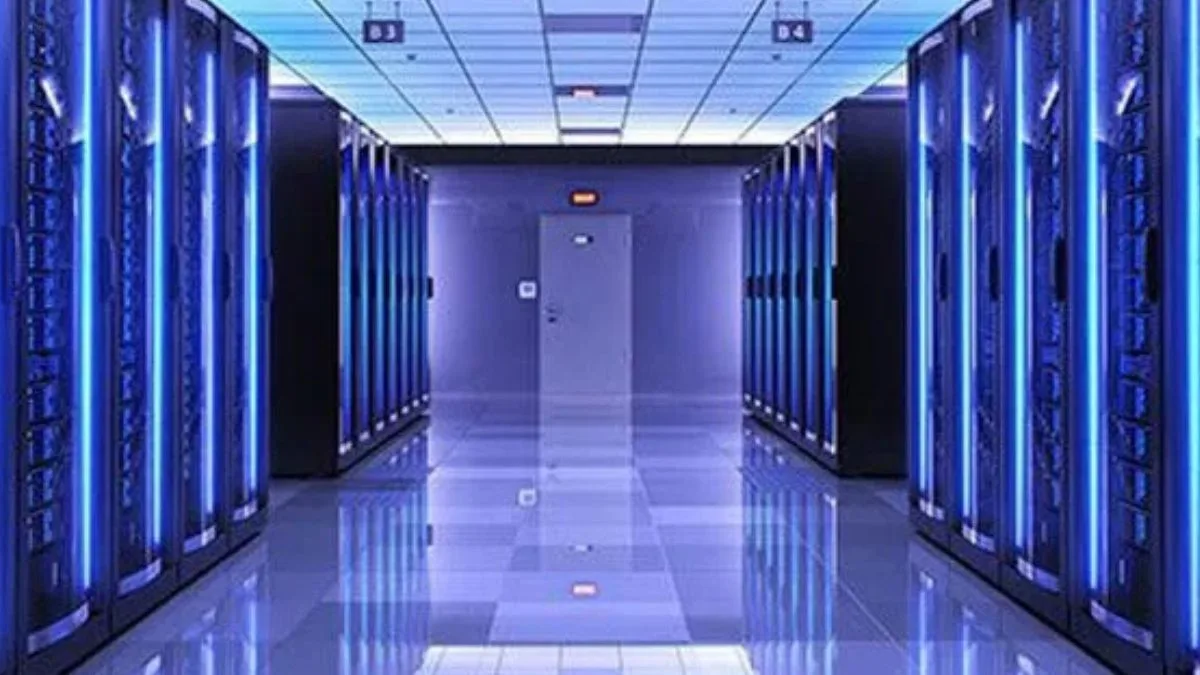
A representative image

A representative image

FacebookTwitterWhatsAppTelegramEmail

India’s ambitious National Supercomputing Mission (NSM) has taken a significant leap forward with the successful deployment of 37 supercomputers across premier institutions, collectively offering a computing capacity of 40 petaflops. The information was shared in the Lok Sabha by Minister of State for Electronics and Information Technology Jitin Prasada, who noted that the mission has now entered a phase of rapid expansion and technological maturity.

The NSM was launched in 2015 with an outlay of Rs 4,500 crore and is jointly implemented by the Ministry of Electronics and Information Technology (MeitY) and the Department of Science and Technology (DST), with C-DAC Pune and the Indian Institute of Science (IISc), Bengaluru, as executing agencies. Its core objective is to reduce India’s dependence on foreign supercomputers by building a fully indigenous ecosystem for high-performance computing (HPC) research, development, deployment and advanced scientific applications.

Of the 37 supercomputers deployed so far, 34 have been installed in just the past five years, signalling accelerated progress despite global supply chain disruptions during the pandemic. These systems have been strategically placed across IITs, IISERs, NITs, C-DAC centres, universities and specialised scientific laboratories to ensure decentralised access to HPC infrastructure. In addition to the operational systems, six more supercomputers worth a combined outlay of Rs 680 crore are currently being installed across IISc, various IITs, C-DAC facilities, R&D labs and universities in Tier-II and Tier-III cities. Officials say that this wider institutional spread is designed to democratise access to supercomputing resources and foster high-end research capabilities beyond the major metropolitan centres.

A major milestone under the mission is the deployment of the PARAM Rudra series, India’s first indigenously built family of supercomputers. These systems are powered by Rudra servers designed and manufactured entirely in India, featuring a domestic hardware platform and a complete HPC software stack developed by Indian engineers. PARAM Rudra systems are now supporting sophisticated computational work in fields such as astrophysics, cosmology, fluid dynamics, earth sciences and computational chemistry.

According to officials, PARAM Rudra represents a key breakthrough in India’s journey toward self-reliance in supercomputing technology, significantly cutting down reliance on imported components and foreign architectures.

The operational supercomputers under the NSM are functioning at exceptionally high efficiency levels, with most systems registering utilisation rates above 81 percent and several exceeding 95 percent. This reflects both the strong demand for computational resources and the successful integration of these systems into various ongoing research projects.

More than 13,000 researchers have already used NSM facilities, including over 1,700 PhD scholars from 260 institutions. Together, they have executed over one crore computing jobs on NSM systems, contributing to more than 1,500 peer-reviewed research publications across scientific disciplines. Startups and MSMEs working in data-intensive domains such as artificial intelligence, materials engineering, drug design, fintech and advanced simulations are also increasingly leveraging these systems to support innovation and product development.

The NSM has significantly expanded India’s computational capacity in critical sectors. Supercomputing resources have supported advancements in drug discovery, genomics, climate modelling, weather forecasting, flood prediction, disaster management, materials research, energy systems, astronomy, seismic data processing, geological analysis, aerospace engineering and computational fluid dynamics.

The mission’s collaborations with agencies such as the Indian Meteorological Department (IMD), Oil and Natural Gas Corporation (ONGC), Central Water Commission (CWC), Central Pollution Control Board (CPCB) and the Ministry of Ayush have enabled the development of numerous specialised HPC applications tailored to address India’s scientific and developmental challenges.

Parallel to building capacity, the mission has driven breakthroughs in India’s domestic HPC manufacturing ecosystem. It has enabled the development of the indigenous Rudra Server Board, with technology transferred to three electronics manufacturing service partners for large-scale production. High-speed interconnect technologies have been successfully tested at 40 Gbps and 100 Gbps, while indigenous cooling technologies are being prepared for deployment.

A fully home-grown HPC system software stack has been integrated into NSM installations, strengthening India’s technological autonomy. The mission has also introduced PARAM Shavak, a compact “supercomputer-in-a-box” designed to help educational institutions run HPC workloads without requiring large data centre infrastructure. Work is ongoing to develop indigenous HPC processors, accelerators and advanced storage systems, an effort that could transform India from a consumer to a global supplier of advanced computational technologies.

According to the Ministry of Electronics & IT, the mission reflects Prime Minister Narendra Modi’s vision of achieving technological self-sufficiency by creating both capability and manufacturing capacity within the country. With supercomputers now installed across more than 15 states, including IITs, IISERs, C-DAC centres and research universities, the NSM has emerged as one of the most transformative scientific infrastructure initiatives in India’s recent history.

With a total deployed computing capacity of 40 petaflops and much more in the pipeline, the mission marks a defining step in India’s journey towards global competitiveness in supercomputing and high-performance research.

Topics: Indigenous TechnologyNational Supercomputing MissionPARAM RudraHigh-Performance Computing40 Petaflops
ShareTweetSendShareSend
✮ Subscribe Organiser YouTube Channel. ✮
✮ Join Organiser's WhatsApp channel for Nationalist views beyond the news. ✮
Previous News

Awami League rejects Bangladesh elections scheduled by the ‘killer fascist Yunus clique’s illegal Election Commission’

Next News

Uttarakhand: Bhowali Mosque allegedly encroaches 43 nali of government land; Role of forest dept & admin questioned

Related News

A representative image

Can Sarvam AI lead India’s Made in India Artificial Intelligence revolution?

Representative image

MoD invites comments on Defence Acquisition Procedure

Chief of Naval Staff Admiral Dinesh Tripathi

India to commission third ballistic submarine INS Aridaman soon: Chief of Naval Staff Admiral Dinesh Tripathi

Representative Image

IITs are shaping Indian scientific and environmental future through innovation led Bharat

Representative image

IIT Madras develops and deploys India’s first indigenous Vessel Traffic Management System for ports

Bharat Forecast System: A landmark achievement in Indian Meteorology guided by a team of five women scientists

Load More

Latest News

'Missing' Posters Surface in Delhi

‘Rahul Gandhi missing’ posters appear across Delhi; BJP steps up attack over reported foreign visit

Chief Minister of Bengal Suvendu Adhikari and Mamata Banerjee

West Bengal assembly braces for UCC battle; Split TMC faces first legislative test after electoral defeat

Mumbai cops uncover Muharram poisoning plot, seize 14,900 rat poison capsules

Mumbai Muharram Poison Plot Foiled: 50 Kg Rodenticide, 15,000 capsules recovered; Accused planned mass murder

Delhi CM Rekha Gupta Gives Coaching Centres One Month to Meet Fire Safety Norms

Delhi CM Rekha Gupta cracks down on coaching centres: Meet safety norms in one month or shut down

'Love Jihad' Case in Madhya Pradesh: Sayed Ishaq Asrar, accused of concealing identity to trap Hindu women

‘Love Jihad’ Case in Madhya Pradesh: Sayed Ishaq Asrar fakes identity, entraps Hindu Women; VHP seeks action

RSS Sarasanghachalak Dr. Mohan Bhagwat at the valedictory address on the concluding day of the 3-day National Conference on "Operationalizing NEP 2020: Integrating Indian Knowledge Systems," held at Art of Living International Centre, Bengaluru organised by Bharatiya Shikshan Mandal.

Bharat’s complete & integrated vision holds the answers that the world today is seeking: Dr Mohan Bhagwat in Bengaluru

Remembering Sant Kabirdas on his Jayanti

Sant Kabir Jayanti: Remembering the mystic poet who challenged ritualism & championed love, equality and truth

Prime Minister Narendra Modi addressed Seychelles National Assembly

PM Modi addresses Seychelles Parliament; Advocates climate justice, maritime security & Global South prosperity

Cloud Burst in Arunachal Pradesh leads to massive destruction and landslide

Arunachal Pradesh Cloud Burst: BRO restores Kimin–Potin road amid heavy flood crises 

Keralam: CPM reviews collapse in Assembly but avoids leadership accountability

Load More
  • Privacy
  • Terms
  • Cookie Policy
  • Refund and Cancellation
  • Delivery and Shipping

© Bharat Prakashan (Delhi) Limited.
Tech-enabled by Ananthapuri Technologies

  • Home
  • Search Organiser
  • Bharat
    • Assam
    • Bihar
    • Chhattisgarh
    • Jharkhand
    • Maharashtra
    • View All States
  • World
    • Asia
    • Africa
    • North America
    • South America
    • Europe
    • Australia
  • Editorial
  • Operation Sindoor
  • Opinion
  • Analysis
  • Defence
  • Culture
  • Sports
  • Business
  • RSS @ 100
  • Entertainment
  • More ..
    • Sci & Tech
    • Vocal4Local
    • Special Report
    • Education
    • Employment
    • Books
    • Interviews
    • Travel
    • Health
    • Politics
    • Law
    • Economy
    • Obituary
  • Subscribe Magazine
  • Read Ecopy
  • Advertise
  • Circulation
  • Careers
  • About Us
  • Contact Us
  • Policies & Terms
    • Privacy Policy
    • Cookie Policy
    • Refund and Cancellation
    • Terms of Use

© Bharat Prakashan (Delhi) Limited.
Tech-enabled by Ananthapuri Technologies