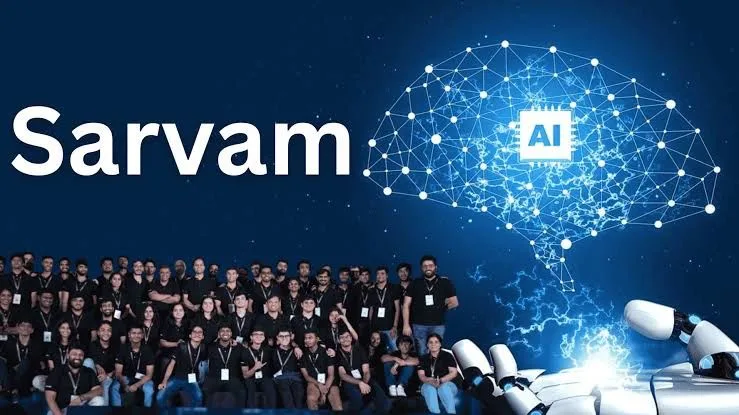
India’s ambition to emerge as a global digital power increasingly depends on its ability to build indigenous artificial intelligence systems that reflect national priorities and social realities. Artificial intelligence is transforming governance, healthcare, education, finance and industry and as these technologies expand into everyday life, the importance of technological sovereignty has become more pronounced.
For decades, India’s digital transformation has relied significantly on foreign-developed technological platforms, including artificial intelligence systems created primarily in Western countries. While these systems enabled rapid digital adoption, they often lacked the linguistic depth and cultural understanding necessary for a country as diverse as India. Most global AI models have traditionally been trained on English-language datasets and Western contexts, making them less effective in addressing India’s multilingual and socio-cultural complexity.
It is in this context that Sarvam AI has emerged as a significant player attempting to build a fully indigenous artificial intelligence ecosystem designed specifically for Indian users. The initiative aligns closely with India’s broader vision of a digitally empowered society and a knowledge-driven economy.
India’s artificial intelligence strategy is increasingly focused on inclusivity and accessibility, ensuring that technological innovation reaches citizens across linguistic and socio-economic backgrounds. Indigenous AI development is now viewed not only as a technological objective but also as a strategic necessity for economic resilience and national security.
Building domestic AI capabilities also reduces dependence on foreign technology providers, while simultaneously strengthening India’s innovation ecosystem involving startups, academic institutions and research organisations.
The IndiaAI Mission
Sarvam AI has received major institutional support under the government’s national artificial intelligence programme, the IndiaAI Mission, which seeks to establish India as a global leader in responsible and inclusive AI development.
Under the Innovation Centre pillar of the programme, Sarvam AI is among a select group of organisations tasked with building foundational AI models for India. The initiative includes financial and computing support worth Rs 246.72 crore, reflecting the government’s long-term commitment to indigenous artificial intelligence infrastructure.
This support shows the importance policymakers attach to building AI systems rooted in Indian languages and datasets. Officials believe that developing foundational AI models domestically will ensure that future technological progress remains aligned with India’s social and economic priorities.
Indigenous AI models are expected to play a transformative role in governance, improving the efficiency of public services, reducing bureaucratic delays and making government programmes more accessible to citizens.
Vision of a Sovereign AI Ecosystem
Sarvam AI was established with the explicit goal of building artificial intelligence systems designed specifically for India’s requirements. Unlike many technology companies that focus primarily on applications, Sarvam AI is developing a comprehensive technological ecosystem, spanning infrastructure, foundational models and end-user solutions.
The company describes its approach as a sovereign AI ecosystem, meaning that development, deployment and governance of the technology remain entirely within India.
This model addresses several longstanding challenges in India’s digital landscape, including linguistic diversity, accessibility barriers and dependence on foreign technological infrastructure.
India is home to hundreds of languages and dialects, making multilingual communication one of the most complex technological challenges in the world. Sarvam AI’s systems aim to bridge this gap by enabling seamless interaction across multiple Indian languages.
The organisation is building enterprise-grade platforms capable of operating at population scale, handling millions of interactions while maintaining reliability, speed and security.
Such capabilities are essential in a country where digital public infrastructure increasingly serves hundreds of millions of users.
AI Models Designed for India
A major part of Sarvam AI’s work involves developing foundational artificial intelligence models capable of understanding Indian languages and contexts.
Artificial intelligence models function like digital brains trained on vast quantities of data, allowing them to identify patterns, generate responses and make predictions.
Sarvam AI has developed several core technologies, each designed to address specific challenges in India’s digital ecosystem.
One of its major innovations is Bulbul a text-to-speech system that converts written content into natural-sounding speech. The technology currently supports multiple Indian languages and dozens of voice profiles, enabling voice-based digital services that can be used even by people with limited literacy.
Voice interfaces are increasingly recognised as essential for inclusive digital governance, allowing citizens to access services without needing advanced technological skills.
Another key system developed by the company is Saaras, a speech-to-text platform capable of converting spoken language into written text across multiple Indian languages. The system supports telephony audio and code-mixed speech, a particularly important feature in India where people frequently switch between languages during everyday conversations.
This capability allows AI systems to function more naturally in real-life environments, making digital interactions more intuitive for users.
Sarvam AI has also developed document-understanding models capable of reading and processing complex documents across multiple languages. These systems can interpret mixed scripts and even handwritten text, making them particularly useful for government departments that still rely heavily on paper-based records.
Automated document processing can significantly reduce administrative workloads, while improving accuracy and efficiency.
A full-stack AI platform
Sarvam AI has built what it describes as a full-stack artificial intelligence ecosystem, integrating computing infrastructure, software frameworks and deployment systems into a unified platform.
An AI stack refers to the complete set of tools required to build and operate artificial intelligence applications, ranging from foundational models to user-facing services.
Sarvam AI’s ecosystem includes conversational platforms designed for enterprise and government use, enabling human-like voice interactions across multiple Indian languages. These systems are capable of handling millions of user interactions with minimal delay, making them suitable for large-scale public service platforms.
The company has also developed enterprise-focused AI tools that help organisations adopt artificial intelligence more effectively. These systems support application development, debugging and optimisation, allowing institutions to customise AI solutions according to their specific needs.
Sarvam AI’s content tools enable multilingual communication across media formats, including video dubbing, voice cloning and document translation. These technologies preserve document structure and formatting, making them suitable for official and administrative use.
Such tools can help government agencies communicate with citizens in multiple languages more efficiently, improving transparency and accessibility.
The company is also investing in edge artificial intelligence systems designed to operate on local devices. These systems support real-time translation and on-device language processing, reducing dependence on cloud infrastructure.
Edge AI improves privacy and reliability and is particularly useful in remote areas where internet connectivity may be limited.
Public Sector Partnerships
Sarvam AI has partnered with several government institutions to deploy artificial intelligence in public services, transforming technological innovation into practical benefits for citizens.
One major collaboration involves efforts to enhance Aadhaar-based services using artificial intelligence technologies. These systems are expected to enable voice-based interactions, fraud detection and multilingual support, making services easier to access for citizens across the country.
The AI systems will operate within secure government infrastructure, ensuring data protection and reliability.
Such initiatives demonstrate how indigenous artificial intelligence can strengthen digital governance, while improving citizen experience.
Building AI Infrastructure Across States
Sarvam AI is also working with state governments to develop artificial intelligence infrastructure, creating long-term technological capacity.
In partnership with state authorities, the company is contributing to the development of large-scale computing facilities designed to support artificial intelligence applications in sectors such as industry and skill development.
These projects are expected to form part of a broader sovereign AI computing network, providing the computational resources required for advanced AI research and deployment.
Collaborations with academic institutions are also helping create research ecosystems where innovation can flourish. Planned initiatives include data centres, research facilities and startup incubation programmes, all aimed at accelerating India’s artificial intelligence capabilities.
Such infrastructure investments are expected to play a major role in strengthening India’s position in the global AI landscape.
Political Backing and National Vision
Sarvam AI has received strong political support, reflecting the strategic importance of indigenous artificial intelligence development.
At a major AI summit in New Delhi, senior government leaders highlighted the role of domestic AI innovation in national development. They emphasised that artificial intelligence must serve citizens and contribute to inclusive growth.
Support from policymakers shows the growing recognition that artificial intelligence is not merely a commercial technology but a critical component of national development.
Indigenous AI initiatives are increasingly seen as essential to achieving the broader vision of a technologically self-reliant India.
Strengthening digital sovereignty
Digital sovereignty has become a key policy priority as artificial intelligence evolves into strategic infrastructure.
AI systems now influence decision-making across sectors, making control over technological infrastructure an important national concern.
Developing domestic AI capabilities helps ensure that critical digital systems remain under national control, reducing strategic vulnerabilities.
Indigenous AI development also contributes to economic growth, creating new industries and employment opportunities.
Local AI ecosystems enable startups and researchers to innovate without relying heavily on expensive foreign technologies, encouraging broader participation in technological development.
Despite its progress, Sarvam AI faces significant challenges as it competes with global technology companies that possess vast computing resources and research capacity.
Sustained investment and innovation will be required to maintain competitiveness in the rapidly evolving field of artificial intelligence.
Another major challenge involves building large-scale datasets in Indian languages, a task that requires extensive data collection and processing.
Training advanced AI systems demands enormous computational resources, making infrastructure development essential.
Ensuring ethical AI development and data privacy will also remain critical as artificial intelligence becomes integrated into governance and public services.
Responsible AI frameworks will be necessary to maintain public trust.
A Foundation for the future
Sarvam AI represents an important step in India’s journey toward technological self-reliance.
By developing indigenous language models and artificial intelligence infrastructure, the organisation is helping build the foundations for future innovation.
Its emphasis on accessibility and public service reflects a broader vision of technology as an instrument of social transformation.
If successful, Sarvam AI could become a cornerstone of India’s digital future, demonstrating how indigenous innovation can support inclusive development.
As India continues its transition toward a knowledge-driven economy, platforms such as Sarvam AI may play a decisive role in shaping the country’s technological destiny.