Timelines cannot be fixed for grant of assent for Governor
July 14, 2026
  • Read Ecopy
  • Circulation
  • Advertise
  • Careers
  • About Us
  • Contact Us
Android AppiPhone AppArattai
Organiser
  • ‌
  • Bharat
    • Assam
    • Bihar
    • Chhattisgarh
    • Jharkhand
    • Maharashtra
    • View All States
  • World
    • Asia
    • Europe
    • North America
    • South America
    • Africa
    • Australia
  • Editorial
  • International
  • Opinion
  • RSS @ 100
  • More
    • Op Sindoor
    • Analysis
    • Sports
    • Defence
    • Politics
    • Business
    • Economy
    • Culture
    • Special Report
    • Sci & Tech
    • Entertainment
    • G20
    • Azadi Ka Amrit Mahotsav
    • Vocal4Local
    • Web Stories
    • Education
    • Employment
    • Books
    • Interviews
    • Travel
    • Law
    • Health
    • Obituary
  • Subscribe
    • Subscribe Print Edition
    • Subscribe Ecopy
    • Read Ecopy
  • ‌
  • Bharat
    • Assam
    • Bihar
    • Chhattisgarh
    • Jharkhand
    • Maharashtra
    • View All States
  • World
    • Asia
    • Europe
    • North America
    • South America
    • Africa
    • Australia
  • Editorial
  • International
  • Opinion
  • RSS @ 100
  • More
    • Op Sindoor
    • Analysis
    • Sports
    • Defence
    • Politics
    • Business
    • Economy
    • Culture
    • Special Report
    • Sci & Tech
    • Entertainment
    • G20
    • Azadi Ka Amrit Mahotsav
    • Vocal4Local
    • Web Stories
    • Education
    • Employment
    • Books
    • Interviews
    • Travel
    • Law
    • Health
    • Obituary
  • Subscribe
    • Subscribe Print Edition
    • Subscribe Ecopy
    • Read Ecopy
Organiser
  • Home
  • Bharat
  • World
  • Operation Sindoor
  • Editorial
  • Analysis
  • Opinion
  • Culture
  • Defence
  • International Edition
  • RSS @ 100
  • Magazine
  • Read Ecopy
Home Bharat

Timelines cannot be fixed for grant of assent for Governor; SC restores constitutional authority of pocket veto

The Supreme Court has clarified that no fixed timelines can be imposed on Governors for granting assent to Bills, which effectively preserves their ability to hold a Bill without approval – a form of “pocket veto.” This decision reaffirms the constitutional autonomy and discretionary space that the Governor’s office enjoys under the Indian constitutional framework.

Adv Karan ThakurAdv Karan Thakur
Nov 20, 2025, 03:45 pm IST
in Bharat, Law
Follow on Google News
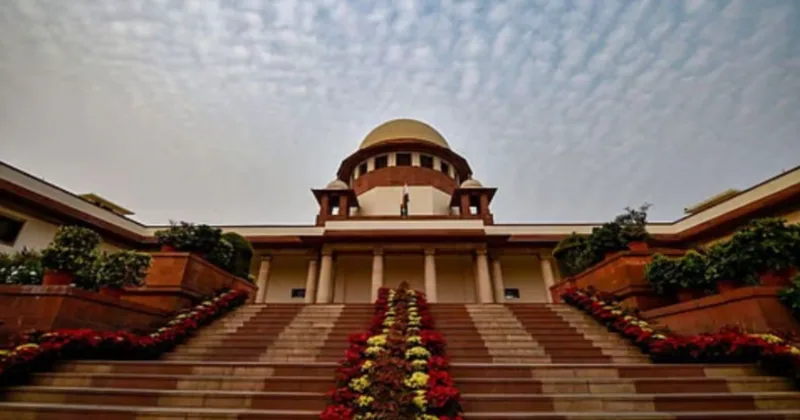
The Supreme Court of India

The Supreme Court of India

FacebookTwitterWhatsAppTelegramEmail

The Supreme Court’s recent advisory under Article 143, sought by the President, has done more than clarify the contours of gubernatorial and presidential discretion under Articles 200 and 201. It has, in effect, restored an institutional balance long advocated by the present Union Government, a balance where constitutional offices are allowed the deliberative space necessary to safeguard national interest, federal discipline, and legislative quality. By ruling that no judicially-imposed timelines can bind the President or Governors, and that “deemed assent” cannot be judicially manufactured, the Court has endorsed the foundational principle that constitutional functioning cannot be reduced to clerical speed or forced approvals.

For years, the Union Government has stressed that governance is not a mechanical relay race, especially when State legislatures, at times, push through bills with far-reaching consequences for national security, fiscal integrity, or inter-state subjects. The Court’s advisory echoes this concern: the Constitution deliberately gives the President and Governors a buffer of scrutiny, so that legislation is not rushed into force without adequate constitutional vetting. The present government has been emphasising this principle in multiple federal contexts, arguing that constitutional authorities must have the freedom to exercise their judgment without judicially created deadlines that could compromise due diligence.

At the same time, the Court has not permitted this discretion to fossilise into obstruction. It has clarified that indefinite inaction is not constitutionally acceptable, and that courts may, in exceptional circumstances, direct the Governor or President to “take a decision” within a reasonable period without dictating the outcome. This calibrated position aligns with the current Union Government’s long-standing call for “institutional responsibility with accountability”, where no office becomes a bottleneck but neither becomes a rubber stamp.

The political implications are equally instructive. Several contentious episodes, particularly where some State governments attempted to frame the Governor’s scrutiny as obstruction had turned constitutional mechanisms into political narratives. By rejecting the doctrine of “deemed assent,” the Supreme Court has effectively blocked the attempt by some States to bypass constitutional objections through judicial shortcuts. This protects the Union’s stance that every bill must undergo genuine constitutional, administrative, and legal vetting, especially when the legislation touches upon subjects that affect national cohesion, uniform standards, or public order. In doing so, the Court has reinforced the Union Government’s view that constitutional processes cannot be rushed merely for political expediency.

The Court’s reliance on Article 143 also indirectly strengthens the Centre’s institutional method: instead of allowing fragmented litigation across High Courts to create inconsistent standards, the President upon the advice of the Union Council of Ministers sought a uniform interpretation directly from the Supreme Court. This is governance by clarity, not confrontation. The advisory now provides a nationwide rulebook, reducing friction between Raj Bhavans and State Secretariats, and preventing the politicisation of constitutional discretion.

Crucially, the judgment acknowledges the complexities of modern governance. Many State bills now intersect with central statutes, fiscal structures, national security considerations, and inter-state matters. The Court’s refusal to impose rigid timelines implicitly recognises the Union Government’s position that such multilayered scrutiny cannot be rushed within an artificially carved judicial window. In a policy environment where hasty or populist legislation can impose long-term burdens on national institutions, this advisory serves as a stabilising mechanism.

The judgment also neutralises the narrative that Governors are bound to sign off on every bill. Instead, the Court has reaffirmed that the Governor is a constitutional safeguard, not a ceremonial postman, a position often articulated by the BJP-led Union Government in defending federal propriety. The Court has thus validated the third-tier review mechanism that the Constitution envisioned: (1) State Legislature, (2) State Executive, and where necessary, (3) a constitutional sentinel in the Governor or President.

By refusing to dilute this framework through concepts like “deemed assent,” the Court has ensured that States cannot legislate unchecked, and that national interests remain synchronised with State autonomy. Such equilibrium is at the heart of the Union Government’s governance philosophy, cooperative federalism, but with constitutional discipline.

In essence, the advisory strengthens the institutional architecture that the present government has consistently upheld: deliberation over haste, constitutional scrutiny over political expediency, and national coherence over fragmented unilateralism. It reinforces a stable federal balance, ensures quality legislation, and safeguards constitutional morality, principles that align naturally with the governance model pursued by the current Union Government.


Topics: PresidentSupreme CourtGovernorArticle 143Pocket Veto
ShareTweetSendShareSend
✮ Subscribe Organiser YouTube Channel. ✮
✮ Join Organiser's WhatsApp channel for Nationalist views beyond the news. ✮
Previous News

US: After eight years, Nazeer Hameed charged with shocking 2017 Maple Shade murders of Sasikala & her son Anish

Next News

J&K: SIA raids Kashmir Times office in Jammu, editor Anuradha Bhasin booked for anti-national activities

Related News

Supreme Court (Left), Ayodhya Ram Mandir (Right)

Ayodhya Ram Mandir Donation Row: Union, UP, Temple trust get notice as SC seeks SIT status report

Karur Stampede Case: Supreme Court refuses DMK plea, says court not forum for political disputes

Raja Raghuvanshi Murder Case: Supreme Court refuses to stay bail granted to Sonam Raghuvanshi

Akhil Bharatiya Adhivakta Parishad explores India’s early constitutional battles over free speech and judicial review

The First Amendment at 75: Revisiting Organiser’s historic free speech battle against the Nehru government

Tamil Nadu govt challenges High Court cow slaughter ban in Supreme Court; BJP slams CM Joseph Vijay

Alang's Comeback: How Modi Government Strengthened India's Maritime Economy

Congress’ assault on Alang China sponsored? How Modi’s vision saved India’s maritime lifeline

Load More

Latest News

J&K unit of BJP has filed the defamation case against the CM Omar Abdullah

J&K: BJP serves Rs 100-crore defamation notice to CM Omar for making allegations of bribery to NC legislators

(Left) CDS Gen N S Raja Subramani (Right) Union Defence Minister Rajnath Singh

Bharat’s bold leap towards Integrated Theatre Commands: CDS Gen Subramani pushes historic military reform

A delegation of Hindu Aikyavedi met Chief Minister VD Satheeshan

Keralam: Hindu Aikyavedi delegation meets CM, submits resolutions adopted at Hindu leadership conclave

IED blast targets Assam Rifles Convoy in Nagaland; One martyred

IED attack on Assam Rifles convoy in Nagaland; One soldier martyred, four injured; CM Rio terms it cowardly act

Representative Image

PoJK protests hit White House as Kashmiri diaspora shouts anti-Pakistan slogans; Muzaffarabad rises against abuse

Home Minister Amit Shah laying foundation stone for 125-foot Dr Syama Prasad Mookerjee statue in Kolkata

Dr Syama Prasad Mookerjee: Not just a statue but the foundation of Sonar Bangla

Indian mathematician T A Sarasvati Amma

The Woman Who Rewrote Mathematical History: The extraordinary journey of T A Sarasvati Amma

The people in Pakistan-occupied Jammu Kashmir (PoJK) are rising against Pakistan's brutality

POJK Unrest: Azad or gulam

Prime Minister Narendra Modi (Left) and Indonesian President Prabowo Subianto (Right)

PM Modi’s Indonesia Visit: Threads from the past, transformation for future

PoJK: Uprising against continued colonisation

Load More
  • Privacy
  • Terms
  • Cookie Policy
  • Refund and Cancellation
  • Delivery and Shipping

© Bharat Prakashan (Delhi) Limited.
Tech-enabled by Ananthapuri Technologies

  • Home
  • Search Organiser
  • Bharat
    • Assam
    • Bihar
    • Chhattisgarh
    • Jharkhand
    • Maharashtra
    • View All States
  • World
    • Asia
    • Africa
    • North America
    • South America
    • Europe
    • Australia
  • Editorial
  • Operation Sindoor
  • Opinion
  • Analysis
  • Defence
  • Culture
  • Sports
  • Business
  • RSS @ 100
  • Entertainment
  • More ..
    • Sci & Tech
    • Vocal4Local
    • Special Report
    • Education
    • Employment
    • Books
    • Interviews
    • Travel
    • Health
    • Politics
    • Law
    • Economy
    • Obituary
  • Subscribe Magazine
  • Read Ecopy
  • Advertise
  • Circulation
  • Careers
  • About Us
  • Contact Us
  • Policies & Terms
    • Privacy Policy
    • Cookie Policy
    • Refund and Cancellation
    • Terms of Use

© Bharat Prakashan (Delhi) Limited.
Tech-enabled by Ananthapuri Technologies