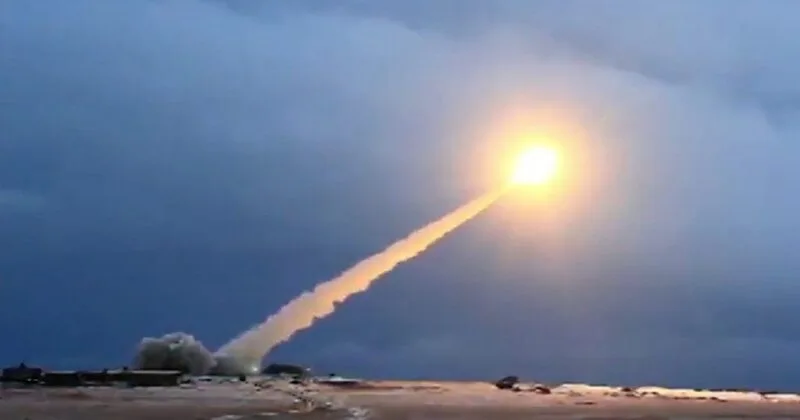
Decades ago, during the intense US-Soviet standoff in the Cold War, a deterrence competition was unleashed through both covert and overt means. From strategic firepower to nuclear deterrence, the Soviets and Americans were testing their best efforts to outdo each other. The world order witnessed an arms race, a space race and more, but what kept the bipolar global order on edge was the danger of nuclear calculations. However, beyond this, what was surprising was the Soviets’ success in achieving complete strategic deterrence against the US, which kept Americans on tenterhooks. Decades later, perhaps history repeated itself when the Russians outmanoeuvred in nuclear strategy rubrics by recently launching 9M730 Burevestnik- a nuclear-powered cruise missile.
The American desperation
The US fully entrusted its covert operations by organising secret programs to closely monitor Soviet military and nuclear plans. However, the US’s CIA often misinterpreted Soviet tactical behaviour and responses as strategic plans, leading to serious misjudgments and a drain on US military and economic resources. The first major instance was the bomber gap in the mid-1950s, when the US believed that the Soviets were building a large fleet of long-range strategic bombers, far exceeding US numbers. During the 1955 Soviet Aviation Day air show, Soviet pilots repeatedly flew the same Myasishchev M-4 Bison bombers past the reviewing stand to create the illusion of a large operational fleet. The Soviets staged a perfect deception, which the US CIA fell for, prompting the US to embark on a costly military buildup of its bomber forces. A second instance was the Missile Gap in the late 1950s, where the US again misjudged the Soviets’ ICBM strength and directed its resources and economic capacity toward heavy nuclear spending. Later, satellite intelligence revealed that the US had strategic superiority. From U-2 spy planes to satellites, the US’s CIA did everything to checkmate the Soviets in the deterrence game, but it failed, as the Soviets were reading the strategic nuclear picture differently than the US, which was only focused on the tactical nuclear picture—deploying counter responses and matching the nuclear race.
The gap in detterance thinking
The US has outlined its nuclear doctrine—Mutually Assured Destruction (MAD)—which is based on the idea that any nuclear attack by one superpower on the other would inevitably lead to the complete destruction of both nations. Overall, the MAD doctrine emphasizes nuclear survivability, creating deterrence through fear and preventing nuclear war. The US’s second-strike capability relies on two key principles: absorbing an attack and ensuring an annihilating counterstrike capable of potentially destroying the other superpower. This nuclear strategy aims to establish general deterrence and prevent a superpower from launching a first strike, thus providing a safeguard against nuclear crises in the global order. However, the Soviets had a different approach to nuclear strategy. While the US focused on the logic of un-survivability and un-winablity, the Soviets developed a warfighting doctrine that prioritized survivability and winning nuclear conflicts through pre-emptive nuclear actions.
US’s MAD doctrine challenge
US’s Mutual Assured Destruction (MAD) only becomes active when a first strike occurs; there was no pre-emptive element in MAD. While MAD is based on assured destruction, it also involves “pause and preventive diplomacy”, where, through MAD, the US can enforce credible deterrence via negotiations and diplomacy. This approach aims to instill fear of annihilation and un-survivability, which could eliminate the possibilities of a first strike or nuclear miscalculations from one side. Overall, MAD had both first and last options—de-escalation and escalation till annihilation.
The Soviet Union’s warfighting doctrine developed an automated nuclear strike system called Perimeter within the Soviet Union, codenamed Dead Hand by NATO. The Dead Hand system operates on a principle of automatic retaliation. First, in response to nuclear threats from the US, it can launch a preemptive nuclear strike if it detects seismic, radiation and atmospheric signals. Second, the Dead Hand system can fire ICBMs even if Soviet leadership and command centres are destroyed, thanks to its automation. In short, it guarantees mutual destruction even in a “decapitation” scenario, which MAD does not guarantee, as executing a second strike depends on the survivability of leadership and the absorption of the first strike. The Dead Hand system is said to be located deep underground in hardened bunkers, making it highly resistant to US strikes, even if the US attempts to destroy it in a first or second strike. Soviets successfully challenged the US’s nuclear strategy, which relied on eliminating preemptive nuclear warfare through doomsday logic—a credible second strike leading to annihilation.
The doctrine mismatch
The US’s nuclear and strategic thinking during the Cold War against the Soviets focused on two main goals: first, achieving superiority; and second, gaining complete dominance. Before adopting the MAD doctrine, the US proposed a massive retaliation strategy that included a first strike and preemptive massive retaliation, even involving nuclear attack if the Soviets invaded Europe or threatened to do so. The Massive Retaliation doctrine lacked credibility because it raised a serious question: would the US launch nuclear strikes over skirmishes and minor conflicts with the Soviets? A dilemma of suicide or surrender faced the US and its allies, as the Massive Retaliation doctrine was inflexible and failed to respond effectively when the Soviets launched their proxy warfare network during the Cold War.
The unrealistic nature of massive retaliation was addressed with a flexibility clause in 1961 that included conventional military and other unconventional responses to the Soviets, but that too failed to deliver the desired results and deterrence, as the Soviets upgraded their conventional military, nuclear and unconventional warfighting capabilities—US’s Vietnam failure against the Soviet proxy war being a classic example. Conversely, the Soviets had graded and planned response postures based on the long-warfighting and deep Battle doctrine. The Soviet thinking was based on two premises: survivability and winability during conflict, including nuclear ones. They focused on fighting in-depth, conventional and unconventional battles—multi-layered responses and systemic attrition, unlike the US’s doctrine, which capitalizes on instantaneous responses—speed and tempo as crucial elements of warfighting and conflict management. This speed-tempo thinking led the US to failures, ranging from overestimation to underestimation. Decades later, Russia perhaps outmanoeuvred the US in the strategic deterrence game as it successfully developed a nuclear-powered cruise missile, which the US failed to develop when it embarked on making nuclear-powered missiles under a highly classified program codenamed Pluto during cold war.
The Skyfall
Russia recently tested its nuclear-powered cruise missile capable of carrying a nuclear warhead—Burevestnik, codenamed Skyfall by NATO. This missile offers effective strategic deterrence against the US. Its lethality can be gauged from the fact that it can stay airborne for extended periods, potentially days, and has global reach due to its nuclear-powered design and independence from conventional fuel. The missile can fly very low to the ground (reportedly between 50 and 100 meters), allowing it to use terrain masking to stay below the radar horizon of ground-based detection or defense systems. With no fixed range, an unpredictable flight path and nearly zero detection, Russia has nearly developed an invincible nuclear-capable cruise missile (first in the world, as per Putin’s statement on the day of launch) that could alter war dynamics if used in battle or during nuclear escalation.
Although this missile is not yet fully operational and is largely seen as a strategic nuclear deterrent against the US, Russia has once again signaled to the West, especially the US, that it has the capability to effectively counter US deterrence strategies and challenge US’s full spectrum dominance in war—similar to its previous actions with the Dead Hand system, and now with Skyfall.