Birsa Munda’s 150th birth anniversary stands as a moment of deep national reflection, inviting India to revisit the courage, cultural pride, and steadfast resistance embodied in one of its most remarkable tribal leaders. His life emerged at a time when colonial encroachment disrupted traditional ways of living, when forest communities were stripped of land and autonomy, and when centuries-old systems of self-governance were being overturned by foreign rule and exploitative intermediaries. In this landscape of hardship and upheaval, Birsa Munda rose as a voice of defiance, unity, and spiritual awakening. His movement, remembered as Ulgulan or the Great Tumult, was not only a political revolt but a broader assertion of identity, dignity, and the cultural sovereignty of vanvasi societies. Celebrating his 150th anniversary is thus a tribute not only to a revolutionary leader but to the larger spirit of vanvasi resilience that has shaped the cultural and ecological landscape of India.
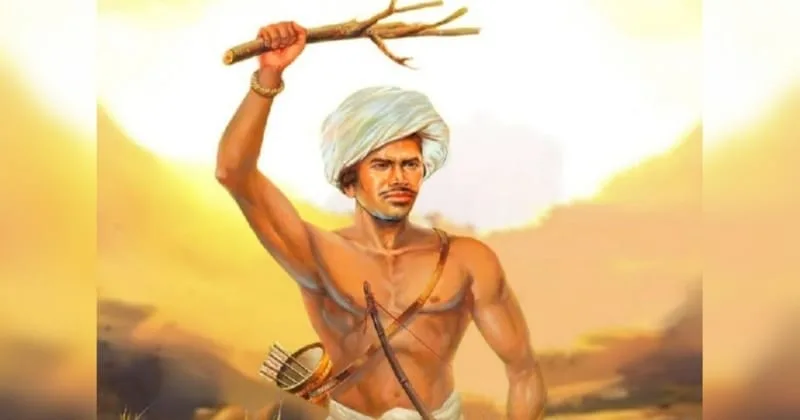
Born in 1875 in the village of Ulihatu in present-day Jharkhand, Birsa grew up deeply entrenched in the rhythms of Munda life, its communal systems, forest-based economy, and reverence for nature. However, the era was marked by the rapid disintegration of these systems due to British land policies that dismantled the khuntkatti tradition, in which land was collectively owned by clan lineages. The colonial administration, along with zamindars and moneylenders, imposed new taxes and practices that led to widespread dispossession and exploitation. Birsa’s rebellion was rooted in this lived reality. He rose not as an outsider but as a son of the soil, intimately aware of the pain his community endured. His leadership brought together economic grievances, spiritual revivalism, and social reform. Through his teachings, he instilled a renewed sense of identity among his people, encouraging them to rise above despair and reclaim their moral and cultural strength.
Birsa’s followers saw in him a protector, a healer, and a visionary. His spiritual charisma played a profound role in mobilising people across the Chota Nagpur plateau. He called for the restoration of the ancestral land, the purification of community life, and the rejection of practices that diluted traditional customs. His vision of “Birsa Raj” symbolised not only political freedom but the revival of a harmonious social order rooted in tribal values. This divine aura surrounding Birsa is central to understanding why he is revered as a god-like figure among many vanvasi communities even today. In the vanvasi worldview, a leader who defends land, culture, and community becomes more than a historical figure; he becomes a guardian spirit whose legacy is carried through generations. His life demonstrated how spiritual authority and cultural identity can come together to fuel resistance against injustice, turning personal suffering into collective awakening.
The Munda tribe, whose history is inseparable from Birsa’s story, is one of India’s most culturally rich indigenous communities. Spread across Jharkhand, Odisha, West Bengal, Chhattisgarh, and Assam, the Mundas belong to the Austroasiatic linguistic lineage and maintain deeply rooted traditions tied to land, forests, and ancestral worship. Their society is built on clan-based solidarity, communal decision-making, and a worldview that treats nature as a living entity. The khuntkatti system reflects their strong emphasis on shared ownership and harmonious coexistence, ensuring that no individual rises above the community and that land remains a collective resource rather than a commodity. This approach preserved ecological balance and community welfare long before concepts of sustainable development became prominent.
Culturally, the Mundas are known for their vibrant festivals like Sarhul and Karma, which honour the cycle of seasons, harvests, and nature spirits. Their dances, songs, and rituals form an intricate tapestry of storytelling and ancestral memory. These traditions not only reinforce social bonds but also serve as expressions of gratitude to the natural world. Their religious beliefs, rooted in Sarna Dharma, revolve around sacred groves, ancestral spirits, and rituals that celebrate life’s interdependence with forests and soil. This deep ecological consciousness gives vanvasi life a dimension of harmony and resilience that continues to inspire environmental thought today.
The Munda community’s ability to preserve their cultural identity despite waves of external influence is a testament to their resilience. Their society retains its distinct structure through customary laws, village councils, and a strong sense of kinship. At the heart of their cultural endurance lies their profound relationship with land, viewed not merely as property but as a living legacy tied to their ancestors, their identity, and their future. This unique relationship underscores why land alienation was experienced not only as economic loss but as a rupture of collective memory, prompting the emergence of leaders like Birsa Munda.
The legacy of Birsa Munda left a lasting impact on vanvasi regions, contributing to significant land protection measures in the Chota Nagpur area. His struggle laid the foundation for legal safeguards that recognised the rights of vanvasi communities to their ancestral territories. But his influence extends far beyond legislative reforms. He instilled pride in indigenous identity and demonstrated that vanvasi voices, deeply connected to nature and tradition, hold immense strength when united. His life continues to energise tribal movements across India that seek to protect land, culture, and dignity.
As India celebrates Birsa Munda’s 150th anniversary, it becomes an occasion to honour not just the man but the rich cultural universe he represented. Vanvasi communities across the country embody a heritage of ecological wisdom, communal harmony, and cultural diversity that enriches India’s identity. Their songs, forests, crafts, and customs form an irreplaceable part of the national fabric. Birsa Munda’s story is a reminder that the resistance of vanvasi societies has always been intertwined with their love for the land and their commitment to preserving their heritage. It stands as a celebration of their spirit, their sacrifices, and their irreplaceable contribution to India’s cultural and geographical landscape.
Remembering Birsa Munda today is a celebration of the enduring pride, resilience, and cultural brilliance of vanvasi communities. His legacy teaches that true strength lies in staying rooted to one’s identity, in honouring the wisdom of generations, and in standing firm against forces that threaten one’s land and way of life. As the nation reflects on his life, it acknowledges that the story of Birsa Munda is not only a chapter in history but a living symbol of the unbreakable bond between vanvasi people, their culture, and the sacred geography they have protected for centuries.