Jagannath Rath Yatra and Bharat's tribal heritage
July 16, 2026
  • Read Ecopy
  • Circulation
  • Advertise
  • Careers
  • About Us
  • Contact Us
Android AppiPhone AppArattai
Organiser
  • ‌
  • Bharat
    • Assam
    • Bihar
    • Chhattisgarh
    • Jharkhand
    • Maharashtra
    • View All States
  • World
    • Asia
    • Europe
    • North America
    • South America
    • Africa
    • Australia
  • Editorial
  • International
  • Opinion
  • RSS @ 100
  • More
    • Op Sindoor
    • Analysis
    • Sports
    • Defence
    • Politics
    • Business
    • Economy
    • Culture
    • Special Report
    • Sci & Tech
    • Entertainment
    • G20
    • Azadi Ka Amrit Mahotsav
    • Vocal4Local
    • Web Stories
    • Education
    • Employment
    • Books
    • Interviews
    • Travel
    • Law
    • Health
    • Obituary
  • Subscribe
    • Subscribe Print Edition
    • Subscribe Ecopy
    • Read Ecopy
  • ‌
  • Bharat
    • Assam
    • Bihar
    • Chhattisgarh
    • Jharkhand
    • Maharashtra
    • View All States
  • World
    • Asia
    • Europe
    • North America
    • South America
    • Africa
    • Australia
  • Editorial
  • International
  • Opinion
  • RSS @ 100
  • More
    • Op Sindoor
    • Analysis
    • Sports
    • Defence
    • Politics
    • Business
    • Economy
    • Culture
    • Special Report
    • Sci & Tech
    • Entertainment
    • G20
    • Azadi Ka Amrit Mahotsav
    • Vocal4Local
    • Web Stories
    • Education
    • Employment
    • Books
    • Interviews
    • Travel
    • Law
    • Health
    • Obituary
  • Subscribe
    • Subscribe Print Edition
    • Subscribe Ecopy
    • Read Ecopy
Organiser
  • Home
  • Bharat
  • World
  • Operation Sindoor
  • Editorial
  • Analysis
  • Opinion
  • Culture
  • Defence
  • International Edition
  • RSS @ 100
  • Magazine
  • Read Ecopy
Home Bharat

Jagannath Rath Yatra: How Bharat’s tribal heritage shaped one of Hinduism’s greatest civilisational traditions

The Jagannath Rath Yatra is more than a grand religious festival—it reflects Bharat's deep-rooted civilisational heritage shaped by centuries of cultural harmony. The enduring role of the Daitapati community highlights the invaluable contribution of tribal traditions to the Jagannath faith and the broader Hindu civilisation

Vivekananda NertamVivekananda Nertam
Jul 16, 2026, 01:00 pm IST
in Bharat, Culture, Odisha
Follow on Google News
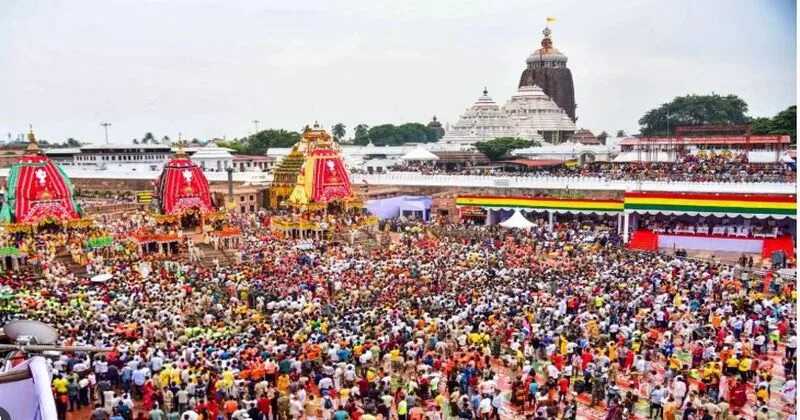
Rath Yatra at Puri

Rath Yatra at Puri

FacebookTwitterWhatsAppTelegramEmail

Jagannath Rath Yatra in Puri and elsewhere in Bharat and other parts of the world is one of the most magnificent religious festivals of Hindus. Millions of devotees participate in this festival across the world. As a result, the world’s attention naturally turns to it. Yet beyond the grandeur of the towering chariots, the chants of devotees, and the spiritual fervour lies a profound civilizational message. This aspect is something that deserves recognition. The Jagannath tradition reminds us that Bharat’s tribal communities have never stood outside the broader Hindu civilisational framework. Moreover, they have been among its indispensable custodians.

In other parts of the world, indigenous and settler populations evolved in opposition to one another. Bharat’s historical experience, however, has largely been one of interaction, coexistence, and cultural exchange. Communities inhabiting forests, villages, and towns continuously borrowed from one another’s beliefs, rituals, and ways of life. This exchange created a shared civilisational ethos while retaining their distinctive identities. The Jagannath tradition stands as one of the finest living examples of this historical process.

The origins of Bhagwan Jagannath are intimately connected with the Shabara tribal tradition. According to the Skanda Purana, the Daitapati community of the Bhagwan Jagannath Mandir traces its lineage to the legendary Shabara king Vishvavasu. He was the devoted worshipper of Bhagwan Nilamadhava. This association is not merely symbolic. It continues to shape the ritual life of the Mandir even today. The role of the Daitapatis becomes especially significant during the annual Rath Yatra. They occupy a significant importance in the sacred rituals surrounding it.

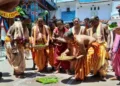
The Daitapati community performs some of the temple’s most sacred responsibilities, from the Snana Purnima ceremonies to the Anasara period. Snana Purnima marks the ceremonial purification of the deities, Bhagwan Jagannath, Balabhadra, and Subhadra, with 108 pots of sacred well water. This ritual initiates the 15-day seclusion (Anasara) where the gods symbolically rest before embarking on their famous chariot. The Daitapatis ceremonially bathe the deities, care for them during Anasara, carry them onto the chariots, accompany them throughout the procession, and oversee several important rituals associated with the festival.

At yet another important ritual called Navakalevara, loosely translated as “New Body”, is held approximately every twelve to nineteen years. The Daitapati community plays an important role in this ritual. In this, the wooden idols of Bhagwan Jagannath, Balabhadra, Subhadra, and Sudarshana are replaced. It symbolises death and rebirth, and the cyclical nature of life. The Daitapatis exclusively lead the search for the sacred neem trees, supervise the carving of the new idols, perform the sacred transfer of the divine essence, and ceremonially inter the old images. This ritual highlights the enduring role of the Shabara tribal tradition in the Jagannath cult.

Many features of the Jagannath tradition also reflect practices long associated with tribal communities. The wooden images of Bhagwan Jagannath, Balabhadra, Subhadra, and Sudarshana. Their distinctive pillar-like forms. The periodic renewal of the deities through Navakalevara. The intimate familial relationship maintained between the Daitapatis and the deities. All these practices resonate with ritual traditions found among several tribal communities of eastern and central Bharat. These are not signs of separation but of centuries of shared cultural evolution.

This understanding is supported by several distinguished Bharatiya sociologists and anthropologists. Scholars such as G. S. Ghurye, N. K. Bose, Surajit Sinha, S. C. Dube, L. P. Vidyarthi, and K. S. Singh demonstrated that the relationship between tribal and non-tribal communities in Bharat has historically been characterised by interaction rather than rigid isolation. Their studies show that tribal societies were active participants in the making of Bharatiya civilisation. They immensely contributed to its religious traditions, regional cultures, and social institutions while simultaneously adapting ideas from neighbouring communities.
This historical experience also distinguishes Bharat from the colonial histories of North and South America or Australia. Indigenous peoples on these continents were often displaced, segregated, or marginalised by settler societies. In Bharat, despite undeniable social and economic inequalities in different regions and periods, tribal communities continued to remain integral to the country’s religious and cultural life. The Jagannath tradition itself illustrates this enduring continuity.

The gravest disruption came during British colonial rule. The British Raj exploited tribal communities through the means of forest legislation, revenue settlements, and administrative interventions. These policies fundamentally altered the relationship between tribal communities and their forests, land, and customary institutions. The resulting alienation of jal, jangal, and zameen fuelled many tribal uprisings across the subcontinent. Independent Bharat consciously chose a different path. The Constitution recognised the distinct identity and rights of the Scheduled Tribes from the very beginning. Later legislations, such as the Panchayats (Extension to Scheduled Areas) Act, 1996, and the Forest Rights Act, 2006, further strengthened constitutional safeguards and community rights.

The Jagannath Rath Yatra, therefore, offers a timely reminder that Bharat’s unity has never depended upon uniformity. It has been built upon dialogue, mutual respect, and the continuous enrichment of one tradition by another. The participation of the Daitapati community is not a ceremonial relic preserved for historical curiosity. It is a living affirmation that tribal communities have been co-creators and custodians of Bharat’s civilizational heritage.

As the chariots of Bhagwan Jagannath roll through the streets of Puri and in other parts of Bharat, they carry not only the Lord of the Universe but also a timeless message. Bharat’s civilization has flourished because its forests, villages, and towns have never been isolated worlds. They have journeyed together, enriching one another across centuries. In celebrating Bhagwan Jagannath, Bharat also celebrates the enduring contribution of its tribal communities to the making of its shared civilizational identity.
 

Topics: Puri Jagannath templeHindu civilisationJagannath Rath YatraBhagwan JagannathTribal heritageOdisha FestivalsDaitapati CommunityShabara Tradition
ShareTweetSendShareSend
✮ Subscribe Organiser YouTube Channel. ✮
✮ Join Organiser's WhatsApp channel for Nationalist views beyond the news. ✮
Previous News

Hyderabad School Controversy: Hindu parents object after Class 2 student reportedly asked to recite Kalma

Next News

UP leads India in water conservation with 20,000 Amrit Sarovars, revival of 1.75 lakh ponds under Yogi Govt

Related News

Rajaprasad Bije Ritual: Servitors Convey Mahaprabhu's Recovery Message to Gajapati Maharaja Divya Singh Dev

Odisha: Rajaprasad Bije ritual held at Puri Jagannath Temple; Gajapati Maharaja informed of Mahaprabhu’s recovery

Alarnath Mandir at Brahmagiri, Odisha

Odisha: Mahaprabhu Jagannath enters Anasara; Alarnath Mandir becomes centre of devotion before Puri Rath Yatra

Snana Purnima concludes peacefully in Puri

Odisha: Snana Purnima concludes peacefully in Puri; Lakhs witness sacred bathing ritual ahead of Rath Yatra

Shree Jagannath temple in Odisha

Puri Jagannath Mandir secures trademark protection for Ananda Bazaar & Shree Patitapabana to safeguard sacred heritage

Rath Yatra at Puri

Puri Jagannath Temple Administration opposes proposed early Rath Yatra and Netrotsav celebrations in UP’s HapuR

Bharateeya Santa Mahaa Parishhad (BSMP) organised its Global Conference at the Ramakrishna Mission

Delhi: Bharateeya Santa Mahaa Parishhad Global holds conference to unite Indic traditions

Load More

Latest News

Uttar Pradesh Chief Minister Yogi Adityanath

UP leads India in water conservation with 20,000 Amrit Sarovars, revival of 1.75 lakh ponds under Yogi Govt

Rath Yatra at Puri

Jagannath Rath Yatra: How Bharat’s tribal heritage shaped one of Hinduism’s greatest civilisational traditions

Hyderabad school has sparked controversy after the parents of a Class 2 Hindu student claimed their child was asked to recite Muslim prayers

Hyderabad School Controversy: Hindu parents object after Class 2 student reportedly asked to recite Kalma

Chinese President Xi Jinping

China’s economy slows to three-year low as weak demand, property crisis and COVID resurgence add pressure

Cancer-causing herbicide ‘Paraquat Dichloride’ banned; Bharatiya Kisan Sangh calls Govt’s decision visionary

Patiala House Court, remanded law students Prabal Pratap Singh and Chander Bhan to 14 days' judicial custody

Delhi Court sends two law students to 14-day judicial custody over Supreme Court disturbance case

Supreme Court of India

Supreme Court pulls up Patna High Court over ruling that attempting to remove woman’s salwar was not attempt to rape

Jagannath Rath Yatra

Jagannath Rath Yatra 2026: President Murmu, PM Modi extend greetings as Puri prepares for the grand chariot festival

West Bengal: TMC MLA Madan Mitra joins rebel camp

West Bengal: Fresh blow to Mamata Banerjee as senior TMC leader Madan Mitra joins Ritabrata Banerjee’s rebel camp

Weapons, explosives and Maoist-related materials recovered by security forces in Kanker

Chhattisgarh: Security forces unearth Maoist arms, explosives in major anti-insurgency operations in Kanker

Load More
  • Privacy
  • Terms
  • Cookie Policy
  • Refund and Cancellation
  • Delivery and Shipping

© Bharat Prakashan (Delhi) Limited.
Tech-enabled by Ananthapuri Technologies

  • Home
  • Search Organiser
  • Bharat
    • Assam
    • Bihar
    • Chhattisgarh
    • Jharkhand
    • Maharashtra
    • View All States
  • World
    • Asia
    • Africa
    • North America
    • South America
    • Europe
    • Australia
  • Editorial
  • Operation Sindoor
  • Opinion
  • Analysis
  • Defence
  • Culture
  • Sports
  • Business
  • RSS @ 100
  • Entertainment
  • More ..
    • Sci & Tech
    • Vocal4Local
    • Special Report
    • Education
    • Employment
    • Books
    • Interviews
    • Travel
    • Health
    • Politics
    • Law
    • Economy
    • Obituary
  • Subscribe Magazine
  • Read Ecopy
  • Advertise
  • Circulation
  • Careers
  • About Us
  • Contact Us
  • Policies & Terms
    • Privacy Policy
    • Cookie Policy
    • Refund and Cancellation
    • Terms of Use

© Bharat Prakashan (Delhi) Limited.
Tech-enabled by Ananthapuri Technologies