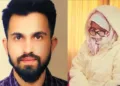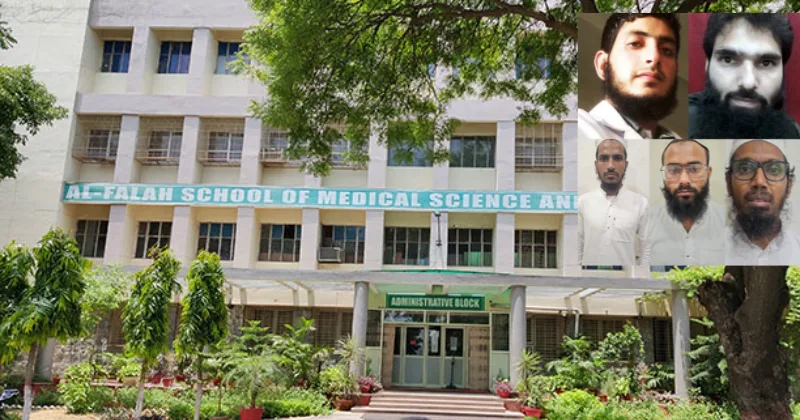
The entrenched Left liberal theory of relative deprivation driving young men and women to participating in acts of terror wherein they are considered gullible and vulnerable to the machinations of radical clerics has yet again been inverted and upended on an unprecedented scale. Let us consider the chain of events. On November 10, 2025, in a joint operation, the J&K, Haryana, and UP police conducted raids on the rented accommodation of Dr Muzammil Shakeel (from Pulwama) and Dr Adil Ahmad Rather (from Kulgam) in Faridabad, Haryana and Saharanpur, Uttar Pradesh and recovered almost 3000 kilograms of ammonium nitrate and a large cache of arms and ammunition. Earlier, the police had detained another doctor – Dr Shaheena Shahid (from Anantanag) – Dr Muzammil’s alleged girlfriend with an AK-47 in the boot of her car. Dr Shaheena was allegedly heading the Jaish-e-Mohammad’s women’s wing in India, the Jamaat-ul-Mominaat. The arrested doctors belonged to Jammu and Kashmir and at least two of them were associated with the Al-Falah University in Faridabad. During the interrogation, Dr Muzammil is said to have sung like a canary and confessed that they were chosen by their handlers because “no one suspects doctors”.
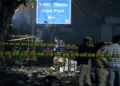
While Delhi-NCR was reeling under the shock of highly educated and qualified men and women being busted with explosives enough to blow up half the city, a blast tore through the busy Chandni Chowk area, right behind the Red Fort, killing 13 and injuring close to 24 people. The death toll is likely to rise since some have attained grievous injuries. While the investigating agencies were extremely careful to avoid jumping the gun, all strings seemed to be attached that morning’s terror bust. The Hyundai i-20 car used by the suicide bombers was laden with ammonium nitrate, the same explosive recovered from the doctor’s flats in Faridabad and Saharanpur. As the first reports of the key perpetrators emerged, it became clear where the story was headed – the terror module busted in the morning had perhaps carried out a revenge attack in Delhi. Furthermore, everything pointed to the suicide bomber – Dr Umar Mohammad’s – Kashmir connection. In fact, Umar was a faculty of medical science at the Al-Falah University teaching prospective doctors. To say that irony had died a thousand deaths will not be an exaggeration.
Earlier, at least three terror suspects were arrested by the Gujarat ATS, one of whom was a doctor who studied medicine from China and was busy extracting Ricin from castor seeds. The colourless, odourless chemical poison was then going to be mixed with temple Prasad in Delhi, Lucknow, and Ahmedabad in what could have been one of the most deadly instances of terror poisonings ever. Besides the doctor, a teacher and a cleric made up this sleeper cell. A few days before the arrest by the Gujarat ATS, the Maharashtra Police had taken an unassuming software engineer into custody from Pune on suspicion of links with the ISIS and other terror organizations. The frantic events of the past few days foregrounds a fundamental question – is it relative deprivation that is the cause of qualified and educated men and women turning to terror? Or is it radical Islam?
One common thread runs through the profiles of all those taken into custody as well as the Delhi bombers – they were qualified, skilled and accomplished, earning good salaries. None appeared to want for the basic necessities of life. What then pushed them into the arms of radical Islam? The entire edifice of the argument in favour of Muslim deprivation in Hindu majority India comes crashing down when we consider the backgrounds of the terrorists and their access to resources of all kinds – financial, social and political. They have complete and full access to everything and lack for nothing. In fact, it had recently come to light that the medical college and hospital run by the Mata Vaishno Devi Shrine Trust was offering 33% quota to Kashmiri (read Muslim) aspirants. It may well be the case that Dr Umar Mohammad, Dr Muzammil Shakeel and Dr Shaheena Shahid benefitted from these quotas and fulfilled their dream of becoming doctors. What, then, snapped?
The only plausible answer lies in the possibility of Islamic indoctrination, voluntary recourse to radicalization and induction into the networks of global jihad. Young and educated men and women are lured by jihadist factories worldwide to produce a whole generation of Islamic terrorists – suave and sophisticated in many cases, and educated and highly skilled in others. Their education then becomes not an impediment to their radicalization but acts as an enabler. The very engagement with ideas, skills and scientific temper turns into a pedestal for ready acceptance of radical Islamist ideology and indoctrination. Such indoctrination converts some into ideologues, while others become foot soldiers. For some the abject drive for the murder of infidels is so high, that the often thin line between ideologue and foot soldier blurs with results such as what we saw in Delhi recently. The city, almost terror free since 2011, has been turned into a veritable fortress. Now, imagine if 2900 kilograms of ammonium nitrate had been blown up!
Educated radicals often cite global injustices (e.g., civilian deaths in Muslim countries) and see violence perpetrated by them as defensive. Many see themselves not as aggressors but as avengers or protectors. Studies (particularly by Alan Krueger and Jitka Malečková) show that education level alone does not prevent radicalization. Herein lies the paradox of education. Many extremists are technically educated (engineers, doctors, IT specialists) but lack humanistic or critical training, making them susceptible to ideological certainty and binary thinking. Educated individuals are often more adept at using technology, accessing ideological material, and engaging in online echo chambers where extremist interpretations are validated and amplified. Islamic radicalism among educated Muslims might appear as a contradiction, but vitally reflects how ideological certainty, identity crises (often perceived), and global politics can interact with education when moral or civic grounding is weak.
Fathali Moghaddam’s “Staircase to Terrorism” describes radicalization as an upward progression through levels of cognitive commitment. The “ground floor” is occupied by perceived injustice or deprivation, followed by the “first floor” where the youth on the path of radicalization start searching for solutions and are wracked by feelings of frustration. Further, the “second floor” is characterised by displacement of aggression toward out-groups (e.g., Hindus, the West, secular governments), whereas the “third floor” is considered as moral engagement with extremist ideology, followed by the “fourth floor” which justifies violence on the basis of the us vs. them ideology. Lastly, the terrorists are said to have reached the “fifth floor” when they indulge in actual acts of violence and terror. Educated individuals can thus rationalize each step more effectively, creating sophisticated justifications for ideological or violent action. Remember these young men and women are often radicalized via intellectual debate, not poverty or coercion. In addition, education brings them more access to online and technological echo chambers, providing algorithmic reinforcement where platforms push more extreme content over time. They get caught up with moral communities online where the validation comes from like-minded peers and strengthens their conviction. Online propaganda reframes suffering (e.g., Gaza, Kashmir, Syria) as collective injustice demanding action. Young and educated Muslims – the likes of which are being swooped up by security agencies leading to the terror bust in Faridabad and Saharanpur and the Delhi bomb blast – view themselves as soldiers of Allah who cannot do wrong. It is hard to turn those who have convinced themselves of their infallibility around.