Pakistan-linked terror networks shift to Bangladesh & Nepal
July 24, 2026
  • Read Ecopy
  • Circulation
  • Advertise
  • Careers
  • About Us
  • Contact Us
Android AppiPhone AppArattai
Organiser
  • ‌
  • Bharat
    • Assam
    • Bihar
    • Chhattisgarh
    • Jharkhand
    • Maharashtra
    • View All States
  • World
    • Asia
    • Europe
    • North America
    • South America
    • Africa
    • Australia
  • Editorial
  • International
  • Opinion
  • RSS @ 100
  • More
    • Op Sindoor
    • Analysis
    • Sports
    • Defence
    • Politics
    • Business
    • Economy
    • Culture
    • Special Report
    • Sci & Tech
    • Entertainment
    • G20
    • Azadi Ka Amrit Mahotsav
    • Vocal4Local
    • Web Stories
    • Education
    • Employment
    • Books
    • Interviews
    • Travel
    • Law
    • Health
    • Obituary
  • Subscribe
    • Subscribe Print Edition
    • Subscribe Ecopy
    • Read Ecopy
  • ‌
  • Bharat
    • Assam
    • Bihar
    • Chhattisgarh
    • Jharkhand
    • Maharashtra
    • View All States
  • World
    • Asia
    • Europe
    • North America
    • South America
    • Africa
    • Australia
  • Editorial
  • International
  • Opinion
  • RSS @ 100
  • More
    • Op Sindoor
    • Analysis
    • Sports
    • Defence
    • Politics
    • Business
    • Economy
    • Culture
    • Special Report
    • Sci & Tech
    • Entertainment
    • G20
    • Azadi Ka Amrit Mahotsav
    • Vocal4Local
    • Web Stories
    • Education
    • Employment
    • Books
    • Interviews
    • Travel
    • Law
    • Health
    • Obituary
  • Subscribe
    • Subscribe Print Edition
    • Subscribe Ecopy
    • Read Ecopy
Organiser
  • Home
  • Bharat
  • World
  • Operation Sindoor
  • Editorial
  • Analysis
  • Opinion
  • Culture
  • Defence
  • International Edition
  • RSS @ 100
  • Magazine
  • Read Ecopy
Home Bharat

Pakistan-linked terror hubs shifting to Bangladesh and Nepal as Turkey routes covert funds and strategic support

A fresh security assessment by Indian agencies has warned that Pakistan is shifting parts of its terror infrastructure into Bangladesh and Nepal, with Turkey allegedly providing covert financial and technological backing. The report says new camps, funding channels and defence linkages are creating a worrying realignment of extremist activity across South Asia

Dr Vishnu AravindDr Vishnu Aravind
Nov 11, 2025, 12:20 pm IST
in Bharat, World, South Asia, International Edition
Follow on Google News
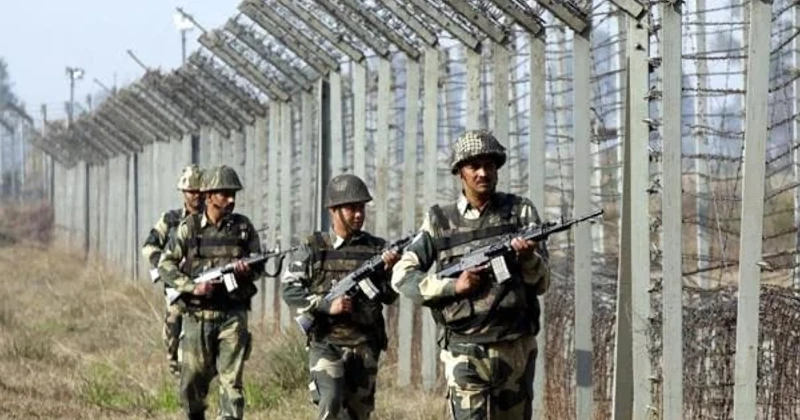
Indian agencies are tracking covert corridors linking Pakistan, Turkey, Bangladesh and Nepal in a shifting terror network

Indian agencies are tracking covert corridors linking Pakistan, Turkey, Bangladesh and Nepal in a shifting terror network

FacebookTwitterWhatsAppTelegramEmail

A new periodic national security assessment prepared by Indian intelligence and security agencies has flagged serious concerns over evolving militant and military dynamics in South Asia. According to an official familiar with the document, the report concludes that Pakistan has begun relocating segments of its operational terror infrastructure into neighbouring countries, a process that has reportedly gained pace after India’s recent Operation Sindoor. The assessment indicates that much of this repositioning is being channelled into Bangladesh and Nepal.

Officials say the report identifies specific locations where fresh training facilities and residential hubs are being set up, particularly in pockets just a few kilometres inside Bangladesh and Nepal, close to the Indian border. These stretches, the assessment notes, have witnessed renewed cross-border movements, activity described internally as similar to logistical preparations that typically precede operations. The assessment is based on weeks of multi-agency notes, surveillance inputs, and information gathered through various intelligence channels. It also warns of a surge in terror-linked infrastructure being developed inside Bangladesh. Officials involved in the review say that, in recent months, operatives linked with Bangladesh-based militant groups have been arrested across Indian states adjoining Bangladesh and Nepal, an indication that new transit corridors for movement and recruitment are being quietly tested.

One of the most disturbing findings in the report is the alleged financial and technological support flowing secretly from Turkey, combined with Pakistan’s continued supply of trainers, logistical resources and infrastructure to support expansion plans. Based on these indicators, Indian security agencies have intensified vigilance across border regions and have begun closer scrutiny of foreign-funded infrastructure projects in neighbouring countries. The review suggests tightening regional counter-terror cooperation and strengthening oversight on transnational financial channels that could be used for extremist activity.

LeT, JeM expanding in Nepal; AQIS and ISIS strengthening networks in Bangladesh

Despite internal concerns within Pakistan-based militant networks over losses suffered during Operation Sindoor, Indian agencies believe neo-operational planning is underway. The new report warns that Lashkar-e-Taiba (LeT) and Jaish-e-Mohammed (JeM) are widening their presence in Nepal, while al-Qaeda in the Indian Subcontinent (AQIS) and ISIS-connected modules are working systematically to turn Bangladesh into a fresh hub for radicalisation and recruitment. Officials say these activities have accelerated noticeably in the last five months, especially as pressure has increased on such organisations in their traditional strongholds.

According to the assessment, several of the newly developed bases resemble gated colonies, with restricted and compartmentalised zones meant to conceal terror-related training. Indian agencies have also tracked a steady movement of individuals from select regions in Pakistan into Bangladesh and Nepal, a trend seen as part of a longer-term strategy to reposition manpower and leadership.

Foreign funding channels highlighted

The report underscores the use of Turkish funding routes inside Bangladesh, alongside Pakistan’s continued provision of strategic resources to emerging militant groups. Intelligence summaries included in the assessment refer to what is described as a “quadrilateral alignment” involving Turkey, Pakistan, Bangladesh and Nepal, with covert cooperation spanning ideological, operational and infrastructure-related areas.

It further alleges that certain development and infrastructure projects close to the Indo-Nepal border have been quietly financed through Turkish-linked channels. Indian officials believe these investments are not purely commercial and could be aligned with Pakistan’s broader aim of destabilising India and reshaping the regional security environment. The assessment also notes the recent deepening of political links between Turkey and Bangladesh. Turkey’s Deputy Foreign Minister Berris Ekinci visited Dhaka in early October for the fourth round of political consultations. Government sources say the dialogue covered trade, investment, defence partnership, counter-terrorism, education, connectivity and humanitarian cooperation. During the visit, Ekinci also met Chief Adviser Professor Muhammad Yunus and engaged with leaders across Bangladesh’s political spectrum.

The report gives particular importance to the rapid expansion of defence cooperation between Turkey and Bangladesh. According to official communications reviewed during the assessment, both sides evaluated progress in defence industry collaboration, procurement, training and capacity development. Bangladesh has already begun scaling up its fleet of Turkish-built Bayraktar TB2 armed drones, equipment that has played significant roles in theatres ranging from Libya and Syria to the Armenia-Azerbaijan conflict. Defence sector reporting further suggests that Dhaka is exploring the purchase of advanced Turkish air-defence systems, including Hisar-O+ and Siper. No formal contract has been signed yet, but authoritative defence outlets claim that negotiations are active and tentative delivery timelines are being discussed. In addition, Haluk Gorgun, the head of Turkey’s Defence Industry Agency, recently visited Bangladesh for high-level meetings on defence cooperation and technology transfer. Numerous official and state-linked sources confirm that upgrading defence capacity remains a priority for both capitals.

Also Read: Bhopal: Model Khushboo Ahirwar found dead mysteriously; Family alleges brutal assault, partner Qasim in custody

Financial and ideological coordination under watch

Indian agencies are closely examining what they assess as coordinated ideological and operational links between Pakistan and Turkey across Bangladesh and Nepal. The report warns that funds, weapons, encrypted communications systems and extremist propaganda material have been funnelled into Bangladesh through covert channels. One intelligence input cited in the review claims that Turkish intelligence has financed renovation and infrastructural improvements at the Jamaat-e-Islami headquarters in Dhaka, an allegation that Indian agencies are treating seriously due to the organisation’s historical intersections with radical networks.

The assessment concludes that these developments collectively suggest a recalibrated militant strategy aimed at building operational depth beyond Pakistan’s borders. As a result, India has intensified border monitoring, increased intelligence sharing with partner countries and begun enhanced scrutiny of foreign-funded projects in the region. Agencies believe sustained observation will be essential to track emerging threats and prevent attempts to destabilise India and the wider South Asian security architecture.


Topics: NepalterrorismTurkeysouth asian securityOperation SindoorMilitant NetworksPakistan
ShareTweetSendShareSend
✮ Subscribe Organiser YouTube Channel. ✮
✮ Join Organiser's WhatsApp channel for Nationalist views beyond the news. ✮
Previous News

Red Fort blast: Delhi Police initial probe points to possible fidayeen attack

Next News

Eight terror plots foiled in 30 days: How security agencies of India silently averted catastrophe

Related News

Delhi Police claimed 480 Pakistan-linked accounts spread fake content during the NEET-UG protests

Operation Sindoor Network Now Targeting NEET-UG Protests? Delhi police blocks 480 Pakistan-linked accounts

Tamil Nadu: Counterfeit currency syndicate with Malaysia, Pakistan links busted in Chennai; terror angle investigated

Fazal-ur-Rehman and Asim Munir

Pakistan: Fazal-ur-Rehman challenges Asim Munir to ‘take off uniform & fight election’; Slams for failure in Kargil war

Pakistan tops the Global Terrorism Index and faces EU scrutiny over its human rights record, risking key trade benefits

GSP+ status review: EU wants Pakistan to improve human rights record, end enforced disappearances, or lose it

Representative Image

Balochistan Declares Independence from Pakistan: Unveils flag & anthem; Claims control of 85% province & minerals

Kargil Vijay Diwas: Victory and the visionary reforms

Load More

Latest News

Transnational drug kingpin arrested by NCB

India-Myanmar drug network busted: Crackdown on international syndicate by NCB; Prime kingpin Nengzatuan arrested

Former Devaswom Board chief P.S. Prasanth

Sabarimala gold loot: Former Devaswom Board chief P.S. Prasanth, ex-member Ajikumar arrested

CJP's Abhijeet Dipke under fire after suspended cop from Uttarakhand presented as serving officer (Image Source: Video Grab)

Exposing fraud at CJP Protest: Abhijeet Dipke’s ‘Cop Resignation’ claim under scrutiny after suspension details surface

Congress Leader Rahul Gandhi and Prime Minister Narendra Modi

Fact Check | NEET Paper Leak: Rebuttal on Rahul Gandhi’s press conference & debunking fake allegations

Nihang Sikhs Demand Apology from Abhijeet Dipke for insulting them

Clashes erupt at Jantar Mantar as Nihang Sikhs confront CJP, demands apology from Abhijeet Dipke for demeaning them

Dr Vrushali Joshi, All India Organising Secretary of Vishvamangalya Sabha

Interview| ‘Motherhood is central to nation-building’: Dr Vrushali Joshi explains Yuganukul Matrutva

Representative Image

Zohran Mamdani and the Politics of the Ummah: From Anti-India rhetoric to the demand for Netanyahu’s arrest

Representative Image

Why loan planning should be part of your annual financial goals

India has risen from a negligible solar player to the world's third-largest solar market, driven by rapid clean energy growth

From Zero to Third: How India emerged as the world’s third-largest solar power nation in just two decades

India diversifies its rare earth sourcing through deeper cooperation with Myanmar

India–Myanmar bilateral collaboration on rare earth gains momentum amid China’s export controls

Load More
  • Privacy
  • Terms
  • Cookie Policy
  • Refund and Cancellation
  • Delivery and Shipping

© Bharat Prakashan (Delhi) Limited.
Tech-enabled by Ananthapuri Technologies

  • Home
  • Search Organiser
  • Bharat
    • Assam
    • Bihar
    • Chhattisgarh
    • Jharkhand
    • Maharashtra
    • View All States
  • World
    • Asia
    • Africa
    • North America
    • South America
    • Europe
    • Australia
  • Editorial
  • Operation Sindoor
  • Opinion
  • Analysis
  • Defence
  • Culture
  • Sports
  • Business
  • RSS @ 100
  • Entertainment
  • More ..
    • Sci & Tech
    • Vocal4Local
    • Special Report
    • Education
    • Employment
    • Books
    • Interviews
    • Travel
    • Health
    • Politics
    • Law
    • Economy
    • Obituary
  • Subscribe Magazine
  • Read Ecopy
  • Advertise
  • Circulation
  • Careers
  • About Us
  • Contact Us
  • Policies & Terms
    • Privacy Policy
    • Cookie Policy
    • Refund and Cancellation
    • Terms of Use

© Bharat Prakashan (Delhi) Limited.
Tech-enabled by Ananthapuri Technologies