Tamil Nadu: 103 gold coins unearthed at Kovilur Sivan Mandir
June 24, 2026
  • Read Ecopy
  • Circulation
  • Advertise
  • Careers
  • About Us
  • Contact Us
Android AppiPhone AppArattai
Organiser
  • ‌
  • Bharat
    • Assam
    • Bihar
    • Chhattisgarh
    • Jharkhand
    • Maharashtra
    • View All States
  • World
    • Asia
    • Europe
    • North America
    • South America
    • Africa
    • Australia
  • Editorial
  • International
  • Opinion
  • RSS @ 100
  • More
    • Op Sindoor
    • Analysis
    • Sports
    • Defence
    • Politics
    • Business
    • Economy
    • Culture
    • Special Report
    • Sci & Tech
    • Entertainment
    • G20
    • Azadi Ka Amrit Mahotsav
    • Vocal4Local
    • Web Stories
    • Education
    • Employment
    • Books
    • Interviews
    • Travel
    • Law
    • Health
    • Obituary
  • Subscribe
    • Subscribe Print Edition
    • Subscribe Ecopy
    • Read Ecopy
  • ‌
  • Bharat
    • Assam
    • Bihar
    • Chhattisgarh
    • Jharkhand
    • Maharashtra
    • View All States
  • World
    • Asia
    • Europe
    • North America
    • South America
    • Africa
    • Australia
  • Editorial
  • International
  • Opinion
  • RSS @ 100
  • More
    • Op Sindoor
    • Analysis
    • Sports
    • Defence
    • Politics
    • Business
    • Economy
    • Culture
    • Special Report
    • Sci & Tech
    • Entertainment
    • G20
    • Azadi Ka Amrit Mahotsav
    • Vocal4Local
    • Web Stories
    • Education
    • Employment
    • Books
    • Interviews
    • Travel
    • Law
    • Health
    • Obituary
  • Subscribe
    • Subscribe Print Edition
    • Subscribe Ecopy
    • Read Ecopy
Organiser
  • Home
  • Bharat
  • World
  • Operation Sindoor
  • Editorial
  • Analysis
  • Opinion
  • Culture
  • Defence
  • International Edition
  • RSS @ 100
  • Magazine
  • Read Ecopy
Home Bharat

Historic Discovery in Tamil Nadu: 103 Chola-Pandya gold coins found during Kovilur Sivan Mandir restoration

During restoration work at the centuries-old Sivan Mandir in Kovilur, Tamil Nadu, workers uncovered a buried pot containing 103 ancient gold coins. Believed to date back to the late Chola or early Pandya period, the find sheds new light on South India’s rich temple history and economy

WEBDESKWEBDESK
Nov 8, 2025, 02:00 pm IST
in Bharat, Culture, Tamil Nadu
Follow on Google News
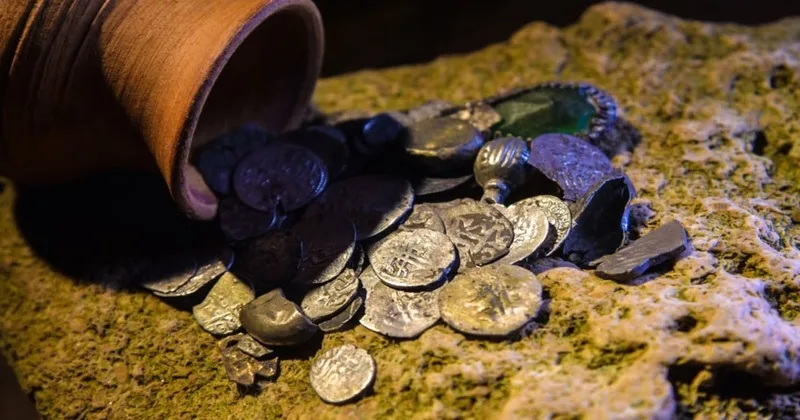
103 gold coins from the 13th-century Chola-Pandya era unearthed at Kovilur Sivan Mandir

103 gold coins from the 13th-century Chola-Pandya era unearthed at Kovilur Sivan Mandir

FacebookTwitterWhatsAppTelegramEmail

A remarkable archaeological discovery has been made in southern India, where restoration work at an ancient Shiva Mandir near the Javvadu Hills has revealed a buried pot containing 103 antique gold coins. Found in Kovilur village, Tiruvannamalai district, the treasure is believed to date back to the late Chola or early Pandya period, making it one of the most significant heritage finds in recent years.

The coins were uncovered beneath the sanctum sanctorum of the centuries-old Sivan Mandir during authorised renovation work. As workers dug beneath the Mandir floor, they stumbled upon a sealed mud pot. Upon opening it, they discovered a neatly stacked collection of gleaming gold coins, astonishingly well-preserved despite the passage of centuries.

Soon after the discovery was reported, officials from the Revenue and Hindu Religious and Charitable Endowments (HR&CE) Departments arrived at the site. The coins were carefully documented and transferred to secure custody for examination and preservation. Experts conducting initial studies noted that the temple’s architecture exhibits distinctive late Chola design features, further supporting the proposed dating of the find.

Preliminary analysis suggests that the coins may belong to a transitional period between the late Chola dynasty and the emerging Pandya rule, a time known for vibrant trade, maritime connections, and a Mandir-centred economy. Gold played a central role in financial exchange during this era, with Mandirs often functioning as both spiritual and economic hubs, receiving gold donations and managing land endowments.

Also Read: Pakistan: Archaeologists uncover a 1200-year-old Mandir in Swat Valley, revealing centuries of religious history

The Chola dynasty, one of medieval South India’s greatest powers, reached its zenith between the 10th and 12th centuries, extending its influence far beyond the subcontinent through maritime trade and cultural exchange. By the 13th century, however, Chola authority began to decline. The reign of King Rajaraja Chola III, from around 1216 to 1246 CE, marked the final significant phase of Chola sovereignty.

The Sivan Mandir at Kovilur, where the coins were uncovered, may have been among the numerous shrines historically endowed with gold and jewels, reflecting both royal patronage and local devotion. The discovery of the coins beneath the sanctum indicates they could have been part of the Mandir treasury, an offering to the deity, or a votive deposit placed during turbulent times to protect sacred wealth.

The late Chola and early Pandya periods were marked by thriving trade across the Indian Ocean and a sophisticated monetary system largely based on gold coinage. These coins often bore dynastic symbols, tigers for the Cholas and fish for the Pandyas and frequently featured religious motifs and inscriptions linking the currency to divine protection and royal authority. The coins unearthed at Kovilur may carry similar markings, offering scholars fresh insights into the minting practices and economic networks of the 13th century.

Archaeologists and numismatists have begun analysing the inscriptions, iconography, and metallurgical composition of the coins to determine their exact origin. If confirmed as dating to the late Chola or early Pandya era, the hoard would provide tangible evidence of how temple economies functioned during this transitional period. It would also shed light on the ways wealth was stored, circulated, and safeguarded amid shifting political landscapes.

Beyond their economic significance, the discovery serves as a vivid reminder of Tamil Nadu’s layered history and underscores how ancient temples continue to reveal stories hidden beneath their foundations.

For the residents of Kovilur village, the discovery of the gold coins has become a source of pride and fascination. Local historians and devotees have flocked to the temple, eager to glimpse a tangible relic of their ancestors’ prosperity. Heritage enthusiasts view it as a direct link to the grandeur of the Chola civilisation, a vivid reminder of a time when faith, art, and commerce were closely intertwined.

As specialists continue their examination, the hoard is expected to make a significant contribution to the study of Tamil Nadu’s medieval coinage and Mandir traditions. The coins will undergo detailed scientific analysis and historical documentation before being carefully conserved for public display.

The find beneath the Kovilur Sivan Mandir stands as a remarkable testament to the enduring wealth and sophistication of South India’s temple culture. Far more than a glittering treasure, the 103 gold coins offer a living connection to the late Chola and early Pandya eras, a golden fragment of history finally brought to light after centuries of silence.


 

Topics: ancient templesChola dynastyArchaeological FindPandya DynastyKovilur TempleGold Coins DiscoveryTamil Nadu HeritageHistorical Coins
ShareTweetSendShareSend
✮ Subscribe Organiser YouTube Channel. ✮
✮ Join Organiser's WhatsApp channel for Nationalist views beyond the news. ✮
Previous News

UP: 80 per cent of Lucknow sanitation workforce suspected to be Bangladeshis; Intelligence report raises alarm

Next News

Odisha: Union Minister Nitin Gadkari inaugurates 84th IRC in Bhubaneswar, emphasises world-class infrastructure

Related News

Ancient India: A golden age of women’s power

Ashmolean Museum has returned a 16th-century bronze murti of Thirumangai Alvar to India

Cultural Heritage Restored: Thirumangai Alvar bronze returned by Ashmolean Museum to its Mandir in Tamil Nadu

Yadava-era stone pillar remains found in Hinganghat

Yadava-era Mandir pillar remains discovered along Vena river in Hinganghat, highlighting region’s medieval heritage

Archaeologists unearth 11th-century Shiva Mandir in Krishnagiri district

Tamil Nadu Archeology: 900-year-old Shiva Mandir from the later Chola period discovered hidden beneath a banyan tree

Ancient coin unearthed in Baghpat, Uttar Pradesh

Ancient Remains Unearthed in Baghpat: Mandir structure, coins discovered, possibly dating back to Mahabharata period

Tamil Nadu: The Bastion of Hindu Dharma and Sanskrit Heritage

Load More

Latest News

Rani Durgawati

Remembering Rani Durgavati: A woman can be a mother, an empress and an embodiment of an immortal resolve

Karan Singh Kept in Dark: Sheikh Abdullah Never Informed J&K’s Sadr-e-Riyasat of Syama Prasad Mookerjee’s Death (This image is generated by AI)

Syama Prasad Mookerjee Death Mystery: Karan Singh says Sheikh Abdullah never informed him

On the occasion of Dr Syama Prasad Mookerjee’s State-Level Balidan Diwas , Chief Minister Shri Mohan Charan Majhi and others at an event organized at Jayadev Bhawan on June 23, 2026

“Article 370 abrogation fulfilled Dr Syama Prasad Mookerjee’s dream,” says Odisha CM Majhi at Balidan Divas programme

Prakash Raj in Fresh Controversy as Court Issues NBW in Voter Registration Case (This image is generated by AI)

Karnataka: Prakash Raj faces legal scrutiny over alleged multiple voter IDs; Bengaluru Court issues NBW

The fall of Keir Starmer highlights a broader crisis in British governance, where leadership changes have failed to reverse long-term national decline

From Brexit to Starmer: Why Britain’s crisis lies beyond changing leaders in Westminster

Tribute to Rani Durgawati on her Martyrdom Day

Rani Durgavati Martyrdom Day: Immortal Warrior rani, defender of Tribal Pride, national honour & Sanatan values

President Droupadi Murmu confers the Padma Shri on former civil servant R.V.S. Mani on June 23, 2026.

Former MHA official RVS Mani honoured with Padma Shri for contributions to internal security

Tamil Nadu: Temple funds only for temple property; TVK govt concedes before Madras High Court

Keralam’s former Industries Secretary, Mohammed Haneesh IAS (Right Side)

Keralam Cashew Scam: Former Industries Secretary Md Haneesh apologises before High Court after contempt proceedings

Tamil Nadu: Assembly Speaker directs all bureaucrats to strictly follow warrant of precedence after Mayor-MLA row

Load More
  • Privacy
  • Terms
  • Cookie Policy
  • Refund and Cancellation
  • Delivery and Shipping

© Bharat Prakashan (Delhi) Limited.
Tech-enabled by Ananthapuri Technologies

  • Home
  • Search Organiser
  • Bharat
    • Assam
    • Bihar
    • Chhattisgarh
    • Jharkhand
    • Maharashtra
    • View All States
  • World
    • Asia
    • Africa
    • North America
    • South America
    • Europe
    • Australia
  • Editorial
  • Operation Sindoor
  • Opinion
  • Analysis
  • Defence
  • Culture
  • Sports
  • Business
  • RSS @ 100
  • Entertainment
  • More ..
    • Sci & Tech
    • Vocal4Local
    • Special Report
    • Education
    • Employment
    • Books
    • Interviews
    • Travel
    • Health
    • Politics
    • Law
    • Economy
    • Obituary
  • Subscribe Magazine
  • Read Ecopy
  • Advertise
  • Circulation
  • Careers
  • About Us
  • Contact Us
  • Policies & Terms
    • Privacy Policy
    • Cookie Policy
    • Refund and Cancellation
    • Terms of Use

© Bharat Prakashan (Delhi) Limited.
Tech-enabled by Ananthapuri Technologies