
Government’s recent decision to deny entry to Francesca Orsini, a London-based professor of Hindi at SOAS University of London, has drawn sharp criticism from predictable quarters. Ramachandra Guha decried it as “an insult to knowledge.” The usual ecosystem of Western academics and Indian Marxists rushed to defend her as a “brilliant scholar of Indian literature.”
But Orsini’s writings tell a different story — one not of scholarship, but of subversion. Her academic career has systematically reinterpreted Bharat’s linguistic evolution through a divisive ideological lens. Like many cultural Marxists before her, she weaponises postcolonial theory to depict Hindi not as a unifying civilisational force but as an “oppressor’s language,” designed to subjugate others.
Behind her polished academic prose lies a familiar project: the deconstruction of national identity, the glorification of precolonial “multilingual utopia,” and the vilification of Bharat’s modern nationhood.
The Cultural Marxist Template in Academia
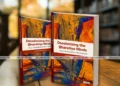
Francesca Orsini’s intellectual formation was rooted in European post-structuralism and cultural studies. Trained in Italy, Delhi, and London, she cultivated an image of the “neutral interpreter” of Hindi and Bhartiya multilingualism. Yet, a thematic thread runs through her works — from The Hindi Public Sphere (1920–1940) to Na Turk Na Hindu and East of Delhi (2023) — a thesis that Hindi’s rise was political, exclusionary, and hegemonic.
She argues that modern Hindi was not a natural linguistic evolution but a “manufacture” of Hindu elites in the 1920s–30s. This conveniently fits the Left’s global oppressor-oppressed framework: Hindu versus non-Hindu, Hindi versus “marginal languages,” majority versus minority.
Such narratives are not isolated intellectual exercises; they align closely with what Rajiv Malhotra has termed “Breaking India Forces” — Western-funded ideological projects that reinterpret Bharat’s cultural history to promote internal fault lines.
The “Hindi Public Sphere”: The Politics of Misrepresentation
In The Hindi Public Sphere (1920–1940), Orsini claims that Hindi’s national role emerged from elite propaganda, print culture, and nationalist politics, portraying the language’s rise as a 20th-century imposition.
This framing is historically unsound. Long before the 1920s, Hindi had already evolved organically through a combination of Bhakti literature, vernacular education, and printing networks.
Texts such as Prem Sāgar (1804–1810) by Lallu Lal standardised Khaṛībolī prose for popular readership decades before nationalism entered the scene. The Nāgarī Prachāriṇī Sabhā (founded 1893) and Hindi Sahitya Sammelan (1910) were grassroots organisations promoting script reform, literacy, and publication — not instruments of hegemony.
Moreover, the Hunter Commission Report (1882) had already recommended vernacular schooling, expanding Hindi literacy across North Bharat. The print revolution led by Naval Kishore Press in Lucknow created a mass reading culture — devotional, literary, and practical — in Hindi, Urdu, and Sanskrit alike.
To ignore these people-driven developments and reduce Hindi’s emergence to elite politics is not scholarship; it is ideological selectivity.
“Na Turk, Na Hindu”: The Strawman of Communalisation
In her essay “Na Turk, Na Hindu,” included in A Multilingual Nation (2018), Orsini attacks colonial linguists such as George Grierson, accusing them of “communalising” language by dividing Hindi and Urdu. She laments the loss of a supposedly “fluid, shared language” that existed before British classification and nationalist standardisation.
However, this is a misreading. Grierson’s Linguistic Survey of India (1898–1928) was a descriptive philological work, not a communal tract. His survey collaborated with numerous Bhartiya scholars and mapped linguistic diversity across the subcontinent with remarkable accuracy.
Furthermore, Gandhi’s advocacy of Hindustani — a bridge between Hindi and Urdu — refutes Orsini’s claim that nationalist politics hardened linguistic boundaries. In multiple speeches, Gandhi emphasised unity through linguistic inclusivity, calling Hindustani “a happy amalgam of Hindi and Urdu”.
By ignoring such evidence, Orsini constructs a strawman — a false binary of oppressor and oppressed — which serves ideological ends, not historical truth.
The Romantic Fallacy of “Multilingual Harmony”
In After Timur Left (2014) and East of Delhi (2023), Orsini romanticises 15th–19th century North Bharat as a utopian “multilingual world,” allegedly destroyed by nationalism and colonial standardisation. She presents precolonial Awadh and Delhi as models of coexistence — until, she claims, the “Hindu nationalist project” shattered that harmony.
This romanticism collapses upon contact with evidence. The Bhakti movement had already woven diverse languages — Braj, Avadhi, Maithili, and Khari Boli — into a single civilisational fabric. Rāmacaritmānas (Tulasīdās, 16th century), Sursāgar (Sūrdās), and Bījak (Kabīr) were not sectarian but integrative works, creating a pan-Bhartiya devotional idiom.
The transition from oral, fluid idioms to printed, standardised prose was not a political conspiracy; it was a natural outcome of urbanisation, pedagogy, and literacy. Vernacular schools, primers, and print markets required consistency — just as any modern linguistic community does.
To frame such normal cultural evolution as “oppression” is to misrepresent civilisational processes as political pathology.
A Pattern of Ideological Engineering
Across her writings, Orsini’s pattern is unmistakable:
- Deconstruct national identity as “manufactured.”
- Romanticise selective multilingual pasts.
- Cast modern Hindi as hegemonic.
- Reduce linguistic evolution to power politics.
This is the classic cultural Marxist framework — dismantle organic structures, reinterpret heritage as hierarchy, and substitute history with grievance. Her methodology does not seek understanding; it seeks deconstruction.
Why Bharat Must Respond
When a Western academic repeatedly portrays Bharat’s linguistic consolidation as cultural violence, it feeds separatist narratives both domestically and internationally.
Within Bharat, it legitimises the false charge of “Hindi imposition.” Globally, it reinforces the colonial trope of Bharat as inherently oppressive — needing external intellectual “liberation.”
Such scholarship directly undermines the spirit of Ek Bharat, Shreshtha Bharat. When Guha and his ideological peers call Orsini’s deportation “insecure” or “stupid,” they ignore a larger reality: the Bhartiya State has the sovereign right to guard its civilisational narrative from distortion.
The Real Story of Hindi
Hindi’s evolution was not engineered by politicians; it was steel-forged by people of Bharat. From the devotional fervour of Bhakti saints to the pressmen of Lucknow, from schoolteachers in the Gangetic plains to Gandhi’s call for Hindustani, the story of Hindi is one of inclusion and continuity.
To describe this as “manufactured” is to deny agency to millions of Bhartiya readers, writers, and educators who built Hindi’s foundation.
“Hegemony” did not create Hindi; civilisation did.
Reclaiming Intellectual Sovereignty
Francesca Orsini’s academic oeuvre is not neutral inquiry. It is a sophisticated ideological apparatus that seeks to fracture Bharat’s cultural confidence under the guise of “critical scholarship.”
Government’s decision to deny her entry is not a blow to academia; it is an assertion of intellectual sovereignty — a declaration that Bharat will no longer host scholars who question its unity while enjoying its hospitality.
Our response should not be mere outrage but intellectual reconstruction — retelling Bharat’s linguistic story through Bhartiya categories, rooted in dharma, history, and evidence.
As Rajiv Malhotra reminds us, “They don’t need to invade you with armies when they can colonise your mind with ideas.”
Bharat’s decolonisation begins with reclaiming the narrative. The time has come to say clearly: we will write our own story — in our own language.