Drivers turn owners as Bharat taxi launch: India’s first cooperative ride hailing revolution to end corporate monopoly
June 20, 2026
  • Read Ecopy
  • Circulation
  • Advertise
  • Careers
  • About Us
  • Contact Us
Android AppiPhone AppArattai
Organiser
  • ‌
  • Bharat
    • Assam
    • Bihar
    • Chhattisgarh
    • Jharkhand
    • Maharashtra
    • View All States
  • World
    • Asia
    • Europe
    • North America
    • South America
    • Africa
    • Australia
  • Editorial
  • International
  • Opinion
  • RSS @ 100
  • More
    • Op Sindoor
    • Analysis
    • Sports
    • Defence
    • Politics
    • Business
    • Economy
    • Culture
    • Special Report
    • Sci & Tech
    • Entertainment
    • G20
    • Azadi Ka Amrit Mahotsav
    • Vocal4Local
    • Web Stories
    • Education
    • Employment
    • Books
    • Interviews
    • Travel
    • Law
    • Health
    • Obituary
  • Subscribe
    • Subscribe Print Edition
    • Subscribe Ecopy
    • Read Ecopy
  • ‌
  • Bharat
    • Assam
    • Bihar
    • Chhattisgarh
    • Jharkhand
    • Maharashtra
    • View All States
  • World
    • Asia
    • Europe
    • North America
    • South America
    • Africa
    • Australia
  • Editorial
  • International
  • Opinion
  • RSS @ 100
  • More
    • Op Sindoor
    • Analysis
    • Sports
    • Defence
    • Politics
    • Business
    • Economy
    • Culture
    • Special Report
    • Sci & Tech
    • Entertainment
    • G20
    • Azadi Ka Amrit Mahotsav
    • Vocal4Local
    • Web Stories
    • Education
    • Employment
    • Books
    • Interviews
    • Travel
    • Law
    • Health
    • Obituary
  • Subscribe
    • Subscribe Print Edition
    • Subscribe Ecopy
    • Read Ecopy
Organiser
  • Home
  • Bharat
  • World
  • Operation Sindoor
  • Editorial
  • Analysis
  • Opinion
  • Culture
  • Defence
  • International Edition
  • RSS @ 100
  • Magazine
  • Read Ecopy
Home Bharat

Drivers turn owners as Bharat taxi launch: India’s first cooperative ride hailing revolution to end corporate monopoly

India’s gig economy is set for a major transformation with the launch of Bharat Taxi, the country’s first driver-owned cooperative ride-hailing platform. Designed to challenge the dominance of Ola and Uber, the initiative empowers drivers as shareholders, ensuring fair pay, transparency, and people driven governance

Shashank Kumar DwivediShashank Kumar Dwivedi
Oct 25, 2025, 02:40 pm IST
in Bharat, Business
Follow on Google News
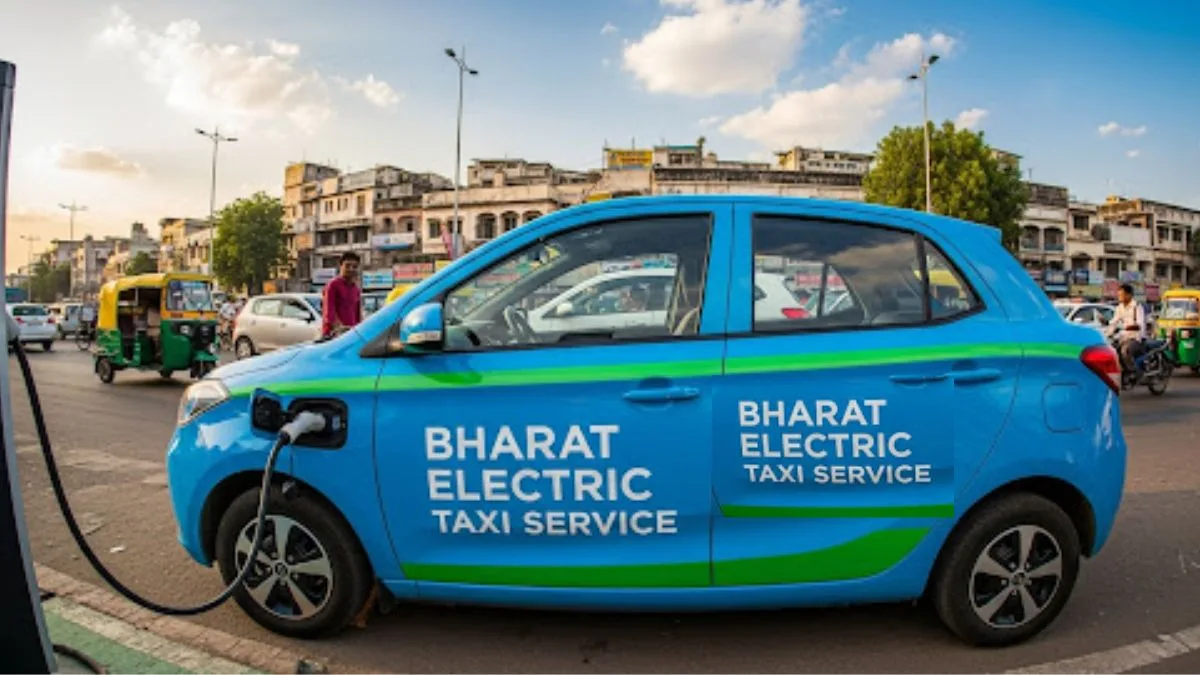
Bharat taxi marries cooperative principles with digital innovation for inclusive mobility

Bharat taxi marries cooperative principles with digital innovation for inclusive mobility

FacebookTwitterWhatsAppTelegramEmail

In a first of its kind initiative, Bharat Taxi is set to debut its pilot run this November in Delhi with around 650 driver-owners, expanding to a nationwide rollout by December 2025. By then, nearly 5,000 drivers, including women “Saarthis,” are expected to be part of the initiative. What makes Bharat Taxi distinct is its cooperative ownership model under the Multi-State Sahakari Taxi Cooperative Ltd (MSTC), where every driver becomes a shareholder with an equal voice in decision-making.

Unlike existing ride-hailing platforms, where drivers function as independent contractors under opaque algorithms and arbitrary commissions, Bharat Taxi allows its members to own the platform collectively, ensuring that profits are reinvested within the cooperative rather than diverted to foreign investors. It’s not just a ride-hailing platform, it’s a movement towards fairness, and empowerment in India’s digital economy.

India’s strongest cooperatives join hands

The project enjoys the backing of India’s most respected cooperative powerhouses, IFFCO, Amul (GCMMF), KRIBHCO, NDDB, NABARD, NCEL, NCDC, and another regional cooperative, which together have infused an authorised capital of Rs 300 crore to build the platform from scratch. Significantly, the project involves no government equity, underscoring the independence and sustainability of the cooperative movement that has long strengthened India’s rural and agricultural economy.

In a show of cooperative solidarity, Jayen Mehta, Managing Director of GCMMF-Amul, has been elected unopposed as the Chairman of Sahakar Taxi Cooperative Limited, while Rohit Gupta, Deputy Managing Director of NCDC, has been appointed Vice Chairman. Their leadership signals a strong convergence between India’s cooperative legacy and the emerging digital economy.

Empowering drivers as entrepreneurs

At the heart of Bharat Taxi lies a powerful idea, transforming drivers into micro-entrepreneurs. Each driver-member is not a hired worker but an equity partner in the cooperative enterprise. This redefines their role in the digital economy, shifting them from being algorithmically managed gig workers to self-reliant business owners with a stake in profits and decision-making.

By eliminating exploitative middlemen and excessive commission structures, Bharat Taxi ensures that earnings stay with the drivers. With transparent governance and open books, drivers will have access to all financial and operational details, a rare practice in the current corporate ecosystem dominated by secrecy and algorithmic control.

Fair pay, transparency, and collective governance

Transparency is at the core of Bharat Taxi’s governance model. Unlike corporate aggregators that dictate fares through hidden algorithms, Bharat Taxi’s pricing and policies will be collectively decided by members through democratic consultation. This not only creates trust and accountability but also ensures that profits are redistributed among driver-owners according to cooperative principles.

By significantly reducing commission fees and operational costs, Bharat Taxi aims to increase driver income by up to 25-30 percent, offering economic resilience and eliminating the pressure of meeting unrealistic daily ride quotas. The cooperative structure also includes provisions for welfare benefits, community insurance, and retirement savings, promoting long-term security for its members.

Building a cooperative digital economy for an Atmanirbhar Bharat

Bharat Taxi stands as a symbol of India’s evolving cooperative movement, aligning closely with Prime Minister Narendra Modi’s vision of “Sahakar se Samriddhi” (Prosperity through Cooperation). It fuses cooperative values with cutting-edge technology, offering a self-reliant alternative to foreign-backed digital monopolies.

The platform’s creation marks a broader shift towards digital cooperativism, a model where technology becomes a tool for empowerment, not exploitation. As global app-based companies dominate India’s ride-hailing landscape, Bharat Taxi proposes a democratised, home-grown alternative that channels profits back into communities instead of overseas investors.

The initiative also supports Atmanirbhar Bharat by promoting grassroots entrepreneurship, allowing ordinary drivers to become owners of a scalable, tech-driven enterprise. The model holds promise for replication across sectors such as logistics, last-mile delivery, and e-commerce, creating a new cooperative digital ecosystem.

Integration with digital India infrastructure

Bharat Taxi is built to align with India’s expanding digital public infrastructure. The app will be integrated with DigiLocker, UMANG, and API Setu platforms to ensure secure identity verification, seamless documentation, and transparent service delivery. These integrations reflect the government’s push for interoperability and trust within digital platforms, enabling Bharat Taxi to offer both convenience and compliance.

By blending cooperative principles with digital governance, Bharat Taxi not only enhances user experience but also ensures data sovereignty, keeping user and driver data within India’s digital boundaries, a growing national priority.

Pilot launch and expansion plans

The pilot phase, beginning November 2025, will cover Delhi and Gujarat, enrolling 650 driver-owners. The pan-India launch in December will include major cities like Mumbai, Lucknow, and Pune, with a goal of enrolling over 5,000 drivers in the first phase.

The cooperative also aims to expand beyond metros into district and semi-urban regions, bridging India’s urban-rural mobility gap. The long-term goal is to make affordable and safe transport accessible in smaller towns while creating new income streams for local driver communities.

A turning point for India’s gig economy

If successful, Bharat Taxi could become a global case study in cooperative digital innovation. It represents a shift from profit-driven monopolies to community-owned digital ecosystems, where technology serves the collective rather than the corporate.

By empowering drivers with ownership, transparency, and dignity, Bharat Taxi demonstrates that the future of work in India can be ethical, sustainable, and self-reliant. As the cooperative model gains traction, it may not only challenge the dominance of global ride-hailing giants but also inspire a new wave of Atmanirbhar entrepreneurship in India’s digital economy.


Topics: Atmanirbhar BharatCooperative movementGig economy Indiacooperative cab servicedriver-owned platformride-hailing IndiaBharat Taxi
ShareTweetSendShareSend
✮ Subscribe Organiser YouTube Channel. ✮
✮ Join Organiser's WhatsApp channel for Nationalist views beyond the news. ✮
Previous News

Madhya Pradesh: Teacher Jaboor Ahmad Tadvi accused of making Hindu students perform Namaz; Probe ordered in Burhanpur

Next News

Odisha: Truck carrying 40 cows seized on National Highway 326; Six found dead

Related News

PMRC Scheme 2026 launched to bring global Indian talent back into India's research ecosystem

PMRC Scheme 2026: Centre invites applications from global Indian scientists; Know eligibility, benefits & how to apply

Bharat Taxi emerges as World's largest mobility cooperative with over 35 lakh users, 6 lakh drivers

How Bharat Taxi is transforming India’s ride-hailing sector with a zero-commission cooperative model for drivers

India produces over 70 per cent of the world’s jaggery, carrying a Vedic legacy into today’s global superfood market

From Vedic Fields to Global Markets: India’s ancient superfood leading a global sweetener revolution

DRDO Virupaksha Radar is stealth-hunting eye in the Indian sky

Virupaksha AESA Radar: DRDO’s high-power GaN system to replace legacy bars Radar on Su-30MKI fleet

PM Modi has called for collective citizen action to help India tackle global economic disruptions, rising prices, and supply chain challenges

PM Modi’s Austerity Appeal to Indians: Save fuel, buy less gold, back Made-in-India, reduce foreign travel

Representative Image for Dhavni

India’s Dhvani HGV: The strategic game-changer in the Indo-Pacific power struggle

Load More

Latest News

BJP Keralam State president Rajeev Chandrasekhar; Keralam CM VD V D Satheesan (Left to Right)

BJP Keralam calls VD Satheesan’s first Budget a mockery of the poor, says ‘Indira Guarantee’ promises ignored

UK grooming gang has 95% Pakistani Muslim men; Did media, govt & civil society conceal it fearing Islamophobic label?

The Political Winter of Pakistan occupied Jammu & Kashmir – A Crisis of Oppression and Global Apathy

India has achieved a major environmental milestone with 100 Ramsar Sites, including 74 designated since 2014

100 Ramsar Sites: India’s wetland revival and the new model of decentralised environmental governance

Yoga teaches the harmony of body, mind and spirit, the foundation of enduring civilizations and enlightened leadership.

From Self-Mastery to World Harmony: Yoga as the foundation of civilizational survival and progress

Sewa Bharati reaffirmed its commitment to the displaced families of Wayanad, Kerala, by handing over eight newly constructed homes under the "Sneh Nikunjam"

Sewa Bharati: The silent revolution of selfless service, strengthening the roots of Bharat

250-year-old Ramcharitmanas manuscript to be preserved in Ayodhya museum

Rare 250-year-old Ramcharitmanas manuscript set to be preserved at Ayodhya’s International Ramkatha Museum

Yogi Government’s school transformation drive gets national boost as 11 Uttar Pradesh schools make SHVR list

Uttar Pradesh: Eleven schools earn national recognition in Swachh Evam Harit Vidyalaya rankings 2025-26

Aligarh police arrest Anwar Hussain, brother of Samajwadi Party leader in beef smuggling case

Beef Smuggling Case in Uttar Pradesh: Samajwadi Party leader Sarwar Hussain’s brother Anwar arrested in Aligarh

Japan Prime Minister Sanae Takaichi and Prime Minister Narendra Modi

Assam at the Epicentre of India’s Foreign Policy: Japan PM Sanae Takaichi to visit for the Indo-Japan summit

Load More
  • Privacy
  • Terms
  • Cookie Policy
  • Refund and Cancellation
  • Delivery and Shipping

© Bharat Prakashan (Delhi) Limited.
Tech-enabled by Ananthapuri Technologies

  • Home
  • Search Organiser
  • Bharat
    • Assam
    • Bihar
    • Chhattisgarh
    • Jharkhand
    • Maharashtra
    • View All States
  • World
    • Asia
    • Africa
    • North America
    • South America
    • Europe
    • Australia
  • Editorial
  • Operation Sindoor
  • Opinion
  • Analysis
  • Defence
  • Culture
  • Sports
  • Business
  • RSS @ 100
  • Entertainment
  • More ..
    • Sci & Tech
    • Vocal4Local
    • Special Report
    • Education
    • Employment
    • Books
    • Interviews
    • Travel
    • Health
    • Politics
    • Law
    • Economy
    • Obituary
  • Subscribe Magazine
  • Read Ecopy
  • Advertise
  • Circulation
  • Careers
  • About Us
  • Contact Us
  • Policies & Terms
    • Privacy Policy
    • Cookie Policy
    • Refund and Cancellation
    • Terms of Use

© Bharat Prakashan (Delhi) Limited.
Tech-enabled by Ananthapuri Technologies