CBSE Moves from rote to real learning in 2025
June 10, 2026
  • Read Ecopy
  • Circulation
  • Advertise
  • Careers
  • About Us
  • Contact Us
Android AppiPhone AppArattai
Organiser
  • ‌
  • Bharat
    • Assam
    • Bihar
    • Chhattisgarh
    • Jharkhand
    • Maharashtra
    • View All States
  • World
    • Asia
    • Europe
    • North America
    • South America
    • Africa
    • Australia
  • Editorial
  • International
  • Opinion
  • RSS @ 100
  • More
    • Op Sindoor
    • Analysis
    • Sports
    • Defence
    • Politics
    • Business
    • Economy
    • Culture
    • Special Report
    • Sci & Tech
    • Entertainment
    • G20
    • Azadi Ka Amrit Mahotsav
    • Vocal4Local
    • Web Stories
    • Education
    • Employment
    • Books
    • Interviews
    • Travel
    • Law
    • Health
    • Obituary
  • Subscribe
    • Subscribe Print Edition
    • Subscribe Ecopy
    • Read Ecopy
  • ‌
  • Bharat
    • Assam
    • Bihar
    • Chhattisgarh
    • Jharkhand
    • Maharashtra
    • View All States
  • World
    • Asia
    • Europe
    • North America
    • South America
    • Africa
    • Australia
  • Editorial
  • International
  • Opinion
  • RSS @ 100
  • More
    • Op Sindoor
    • Analysis
    • Sports
    • Defence
    • Politics
    • Business
    • Economy
    • Culture
    • Special Report
    • Sci & Tech
    • Entertainment
    • G20
    • Azadi Ka Amrit Mahotsav
    • Vocal4Local
    • Web Stories
    • Education
    • Employment
    • Books
    • Interviews
    • Travel
    • Law
    • Health
    • Obituary
  • Subscribe
    • Subscribe Print Edition
    • Subscribe Ecopy
    • Read Ecopy
Organiser
  • Home
  • Bharat
  • World
  • Operation Sindoor
  • Editorial
  • Analysis
  • Opinion
  • Culture
  • Defence
  • International Edition
  • RSS @ 100
  • Magazine
  • Read Ecopy
Home Bharat

CBSE Exam 2025: From rote to real learning, 80 per cent competency-based shift explained

CBSE is introducing a major shift from rote learning to competency-based education, with 80 per cent of the Class X exam now focused on real-world understanding and application. However, experts say the real challenge lies in preparing teachers to adapt to this new skill-driven approach

WEBDESKWEBDESK
Oct 14, 2025, 01:00 pm IST
in Bharat, Education
Follow on Google News
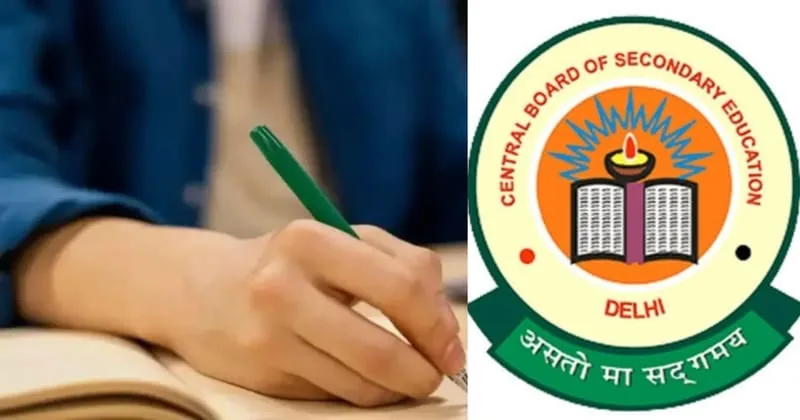
Representative image

Representative image

FacebookTwitterWhatsAppTelegramEmail

The Central Board of Secondary Education (CBSE) is gearing up for one of the biggest transformations in India’s school examination system. Starting this academic year, the board plans to move away from traditional memory-based testing to a competency-driven model that focuses on understanding, application, and real-world problem-solving.

Under the revised pattern, 80 per cent of the Class X board examination will be based on competency-based questions, marking a decisive departure from rote memorisation. The change aims to align school education with the goals of the National Education Policy (NEP) 2020, which envisions a system that nurtures critical thinking, creativity, and conceptual understanding instead of mechanical recall.

For decades, Indian classrooms have been dominated by rote learning, a method where students memorise facts and formulas to answer them during exams. While this approach often yielded high scores, it did little to promote real comprehension or practical problem-solving skills.

The new system introduced by CBSE represents a fundamental shift. According to the CBSE’s revised guidelines, 40 per cent of Class 10 questions will now be “Higher Order Thinking Skills (HOTS)” that assess analytical ability, reasoning, and interpretation. Another 40 per cent will focus on competency-based conceptual understanding, while only 20 per cent will continue to test factual recall.

This change aims to equip students with the skills needed for the 21st century, where success relies on creativity, adaptability, and the ability to connect knowledge across different fields.

Why was the change needed?

The NEP 2020 clearly focuses on the need for learning that promotes understanding over memorisation. It stresses skill-based education, encouraging students to apply knowledge in real-world contexts. Education Minister Dharmendra Pradhan, while addressing a gathering at IIT Madras, reiterated that this aims to produce learners who can “think critically, solve problems, and innovate.” The government believes that this shift will make Indian students more globally competitive and align the school curriculum with international education standards.

The Real Challenge: Are teachers prepared?

While students might adapt quickly to the new assessment pattern, experts believe the real test lies in teacher preparedness. A competency-based exam requires a fundamental change in teaching methods from delivering content to facilitating inquiry, discussion, and exploration.

A nationwide study by the Centre for Teacher Accreditation (CENTA) covering 3,000 teachers revealed that while teachers scored well on general pedagogy (around 50 per cent), only 26.7 per cent were trained in computer-based or competency-based teaching techniques. The survey also found that overall knowledge scores averaged 62 per cent, with Pedagogical Content Knowledge at 53 per cent well below the 75 per cent benchmark set by the National Standards for Teachers.

CENTA CEO Ramya Venkataraman noted that “many teachers understand the theory of modern pedagogy but fail to apply it effectively in classrooms.” The gap, she said, shows an urgent need for sustained professional training and institutional support.

Also Read: Rising Mandir intrusions in Kerala spark debate over the sanctity of Sanatani rituals and religious freedom

Recognising the challenge, CBSE exam controller Sanyam Bhardwaj stated that teacher training has been made a top priority. “This year, pedagogical training is being focused on STEM subjects, and nearly all teachers have completed the mandatory 50 hours of annual training,” he said.

The board has also issued a set of guidelines and model question papers to help schools understand the new exam pattern. Additionally, the Board’s Centre of Excellence (CoE) across India has been conducting workshops and webinars to familiarise educators with competency-based frameworks, question design, and performance evaluation. However, educationists agree that periodic workshops alone may not be enough. The shift requires a complete reorientation of teaching philosophy, where teachers act more as mentors, guiding students through discovery rather than as lecturers delivering content.

For many schools, particularly those in semi-urban and rural areas, access to adequate training and resources remains a serious concern. Rashmi Panagriya, principal of Skyline School in Madhya Pradesh, pointed out that out of her 24 teachers, only 18 have received formal training in competency-based teaching due to costs and scheduling conflicts.

The disparity between urban and rural schools also poses a challenge. While elite institutions have access to technology and continuous teacher development programs, smaller schools struggle with basic infrastructure and teacher availability, making the uniform implementation of reforms difficult.

Under the new framework, examinations will no longer test how well students can memorise but rather how effectively they can apply concepts to real-life situations. Internal assessments and school-based projects will play a larger role in evaluating skills such as problem-solving, creativity, and collaboration.

To support this model, CBSE plans to introduce digital assessment tools and standardised evaluation rubrics that will help teachers design fair and objective tests. Experts believe this could also reduce stress among students by encouraging understanding rather than cramming.

As India embraces this new educational model, the success of the competency-based system will depend on how effectively schools can bridge the gap between policy and practice (execution). The transition requires consistent teacher training, curriculum redesign, and stronger monitoring mechanisms.

The upcoming CBSE reform is a bold and forward-looking step that promises to redefine how India measures academic success. However, for this ambitious vision to succeed, teachers must be equipped, empowered, and encouraged to adopt new teaching methods. The ultimate goal is clear: nurturing thinkers, not memorisers and that transformation begins in the classroom.

 

Topics: Education ReformIndian EducationCBSE 2025Competency Based EducationSkill Based LearningTeacher TrainingNEP 2020
ShareTweetSendShareSend
✮ Subscribe Organiser YouTube Channel. ✮
✮ Join Organiser's WhatsApp channel for Nationalist views beyond the news. ✮
Previous News

US government shutdown enters 14 days as Trump diverts attention with global peace deals amid mass federal layoffs

Next News

Maharashtra: Major blow to Maoists as politburo member Malloujula Venugopal Rao lays down arms along with 60 others

Related News

When Question Papers Become Ideological Battlegrounds: The politics behind ‘brahminical patriarchy’ word in BHU exam

NEP 2020: Foundation laid, reforms awaited

Idea is to make Nalanda a global centre of learning once again: Prof Sachin Chaturvedi

Representative Image (Thus is n AI Generated image)

NEP 2020: Bharat’s greatest gift for humanity; Testament to truth, consciousness & eternal bliss

BJP pushes NEP-style school reforms in Bengal, flags failures under TMC

West Bengal: BJP Govt unveils school reform blueprint no heavy bags, less homework; Flags failures under TMC

As Bharat moves toward Viksit Bharat, reclaiming the Gurukul tradition of debate, experiential learning, and holistic education, as envisioned in NEP 2020, is the need of the hour

From Gurukul to NEP 2020: Reclaiming Bharat’s ancient educational wisdom for a holistic and viksit future

Load More

Latest News

India Deploys 12 Nuclear Warheads: Heralds doctrinal shift to script strategic deterrence against multi-front threat

J&K: Zojila tunnel clears key hurdle; Signals new era of connectivity for Ladakh

How Cockroach politics is hollowing out Bharatiya democratic culture

RSS centenary year is a time for renewed resolve and greater commitment to nation-building: Dr Mohan Bhagwat

Ex-DMK Minister Senthil Balaji (Right Side-File Photo)

Tamil Nadu: CBI books Rs 397 cr transformer tender scam from ex-DMK Minister Senthil Balaji’s tenure (2021-2023)

Border Security Force (BSF) officials inspect the Single Row Fencing (SRF) at a Border Out Post area (India-Bangladesh border)

Infiltration and Border Management: Saving the Siliguri corridor

External Affairs Ministry spokesperson Randhir Jaiswal, slams Pakistan over the recent killings in POJK

‘Hope Pakistan is held accountable’: India reacts after 20 killed in Pakistan Occupied Jammu & Kashmir

China’s anti-BLA offensive hits snag as UN members demand proof

UN Setback for China and Pakistan: US and allies stall move to ban Baloch Liberation Army

West Asia Conflict: Collective response to energy crisis

Atul Limaye Ji Sah Sarkaryavah, Rashtriya Swayamsevak Sangh while addressing a Pramukh Jan Gosthi Rashtriya at Raipur, Chhattisgarh

Chhattisgarh: Society must lead its own transformation through collective initiative: Atul Limaye

Load More
  • Privacy
  • Terms
  • Cookie Policy
  • Refund and Cancellation
  • Delivery and Shipping

© Bharat Prakashan (Delhi) Limited.
Tech-enabled by Ananthapuri Technologies

  • Home
  • Search Organiser
  • Bharat
    • Assam
    • Bihar
    • Chhattisgarh
    • Jharkhand
    • Maharashtra
    • View All States
  • World
    • Asia
    • Africa
    • North America
    • South America
    • Europe
    • Australia
  • Editorial
  • Operation Sindoor
  • Opinion
  • Analysis
  • Defence
  • Culture
  • Sports
  • Business
  • RSS @ 100
  • Entertainment
  • More ..
    • Sci & Tech
    • Vocal4Local
    • Special Report
    • Education
    • Employment
    • Books
    • Interviews
    • Travel
    • Health
    • Politics
    • Law
    • Economy
    • Obituary
  • Subscribe Magazine
  • Read Ecopy
  • Advertise
  • Circulation
  • Careers
  • About Us
  • Contact Us
  • Policies & Terms
    • Privacy Policy
    • Cookie Policy
    • Refund and Cancellation
    • Terms of Use

© Bharat Prakashan (Delhi) Limited.
Tech-enabled by Ananthapuri Technologies