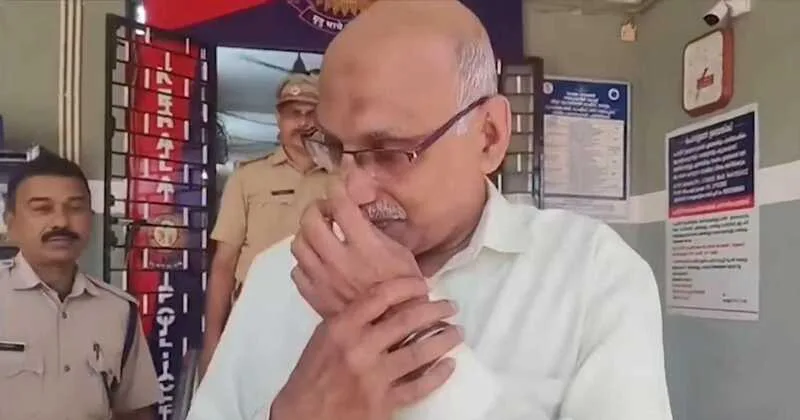
THIRUVANANTHAPURAM: A 62-year-old madrasa teacher, identified as Imbichikoya, from Unnankallu in Kadakkal, Kollam, has surrendered before the Kollam Sessions Court after two cases were registered against him under the Protection of Children from Sexual Offences (POCSO) Act.
According to reports, Imbichikoya showed obscene videos on his mobile phone to children and subjected them to sexual assault. The matter reportedly came to light after the children informed their parents, who subsequently approached Childline. Following the report, the Kerala Police initiated proceedings against the madrasa teacher.
Another Madrassa 'teacher' from Kerala arrested for sexually exploiting students/children.
His name is Imbichikoya.Dear Cockroach gang. If u really want to indulge in education system and 'theek the system', then you hv a genuine field b4 you.
N number of cases are reporting… pic.twitter.com/zGcP3OQOkV
— Yuvraj Gokul (@yuvrajsays) September 10, 2026
Other Madrasa-Related POCSO Cases
The Imbichikoya case comes amid several POCSO cases involving madrasa teachers reported in Keralam during 2026. In September, Kannur madrasa teacher Muhammad Basheer was arrested in a case involving a former student, with the case concerning sexual abuse that reportedly continued over several years. In May, K P Mohammed Shareef, a madrasa teacher from Kozhikode, was arrested in a POCSO case involving a 14-year-old student. In June, a 39-year-old madrasa teacher from Malappuram was arrested in connection with 20 POCSO cases involving minor boys.
The cases have emerged from different districts and at different stages of the legal process. While individual cases should not be used to generalise about all madrasas or madrasa teachers, they do raise legitimate questions about child-safety mechanisms, teacher accountability and complaint procedures in institutions where children receive religious education.
This is where the Cockroach Janata Party (CJP) comes into the picture. CJP has been vocal about India’s education system, particularly the condition of government schools and issues concerning children’s rights and welfare. It has also sought greater accountability from governments and educational authorities.
But if the stated objective is genuinely to improve the education system and protect children, the same concern should logically extend to every institution where children receive education. The latest case involving Imbichikoya therefore raises a pointed question for CJP: if you really want to ‘fix the system’, why not examine madrasas and other religious educational institutions as well?
The growing number of POCSO cases involving madrasa teachers in Kerala makes child safety and accountability in madrasas an issue that cannot be ignored.