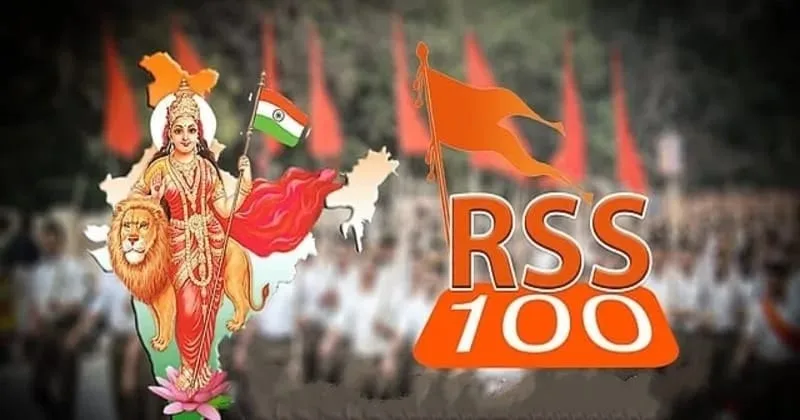
RSS at 100: A century of seva, a future of sankalp
July 14, 2026
  • Read Ecopy
  • Circulation
  • Advertise
  • Careers
  • About Us
  • Contact Us
Android AppiPhone AppArattai
Organiser
  • ‌
  • Bharat
    • Assam
    • Bihar
    • Chhattisgarh
    • Jharkhand
    • Maharashtra
    • View All States
  • World
    • Asia
    • Europe
    • North America
    • South America
    • Africa
    • Australia
  • Editorial
  • International
  • Opinion
  • RSS @ 100
  • More
    • Op Sindoor
    • Analysis
    • Sports
    • Defence
    • Politics
    • Business
    • Economy
    • Culture
    • Special Report
    • Sci & Tech
    • Entertainment
    • G20
    • Azadi Ka Amrit Mahotsav
    • Vocal4Local
    • Web Stories
    • Education
    • Employment
    • Books
    • Interviews
    • Travel
    • Law
    • Health
    • Obituary
  • Subscribe
    • Subscribe Print Edition
    • Subscribe Ecopy
    • Read Ecopy
  • ‌
  • Bharat
    • Assam
    • Bihar
    • Chhattisgarh
    • Jharkhand
    • Maharashtra
    • View All States
  • World
    • Asia
    • Europe
    • North America
    • South America
    • Africa
    • Australia
  • Editorial
  • International
  • Opinion
  • RSS @ 100
  • More
    • Op Sindoor
    • Analysis
    • Sports
    • Defence
    • Politics
    • Business
    • Economy
    • Culture
    • Special Report
    • Sci & Tech
    • Entertainment
    • G20
    • Azadi Ka Amrit Mahotsav
    • Vocal4Local
    • Web Stories
    • Education
    • Employment
    • Books
    • Interviews
    • Travel
    • Law
    • Health
    • Obituary
  • Subscribe
    • Subscribe Print Edition
    • Subscribe Ecopy
    • Read Ecopy
Organiser
  • Home
  • Bharat
  • World
  • Operation Sindoor
  • Editorial
  • Analysis
  • Opinion
  • Culture
  • Defence
  • International Edition
  • RSS @ 100
  • Magazine
  • Read Ecopy
Home Bharat

RSS – A century of seva, a future of sankalp

For a century, the Rashtriya Swayamsevak Sangh (RSS) has stood as a pillar of service, discipline, and cultural unity in India, quietly shaping the nation’s identity beyond politics. As it marks 100 years, the RSS calls for renewed commitment to values, civic duty, and national revival

Sushmita SinghSushmita Singh
Sep 28, 2025, 01:30 pm IST
in Bharat, Opinion, RSS News
Follow on Google News
Representative Image

Representative Image

FacebookTwitterWhatsAppTelegramEmail

Have you ever thought, “What keeps a nation standing when the winds shift—power, politics, or something deeper like wrong narratives?”

History answers bluntly: nations endure when people are rooted in values, united in service, and fearless in duty. For a hundred years, the Rashtriya Swayamsevak Sangh (RSS) has lived this truth—turning discipline into strength and seva into civilisation’s shield. Governments rotate. Headlines fade. But the Sangh has been a quiet constant, reminding Bharat that survival is more than freedom; it is identity. RSS has worked with a sankalp: to help India remember its Bharat.

A century of resolve

Founded in 1925 by Dr Keshav Baliram Hedgewar, the RSS did not emerge from the pursuit of power but from the urgency of purpose. Colonial Bharat was fractured and shaken; petitions would not heal it. He saw that true freedom would rise from character, unity, and resilience forged in ordinary citizens.

Across the decades, swayamsevaks walked that path without slogans or self-promotion. From the relief camps of Partition (1947) to support during the Indo-China War (1962) and the Indo-Pak War (1971), from sheltering Sikhs in 1984 to rebuilding after the Gujarat earthquake (2001) and mobilising during the COVID-19 crisis—RSS has shown up where people needed it most.

Policies can frame a nation. People build one.
“Seva hi Sangathan, Sangathan hi Shakti.”
Service creates organisation; organisation creates strength.

What the Numbers Tell Us
Service is not a story alone; it’s a structure. These figures reflect that ethos:
– As of March 2025, RSS reported 83,129 shakhas across India, up from 73,117 in March 2024—10,000+ added in a single year.
– Roughly 51,710 daily and 21,936 weekly shakhas convene nationwide.
– During COVID-19, Sewa Bharati helped set up COVID care centres in
118 cities/towns and isolation centres in 287 towns, facilitated 4,193 plasma donations, and ran a helpline with 1,200 volunteers and 130 doctors that fielded 88,000+ calls by May 2021.
– Volunteers distributed 7.3 million ration kits, 4.5 million food packets, and 9 million+ masks, operating at 92,656 service locations with 560,000 active volunteers.

These numbers don’t just impress; they instruct. Seva isn’t occasional—it’s continuous. It isn’t optics—it’s infrastructure.

Also Read: From Kailash to the Nilgiris: Preserving the spirit of the mountains in India

Why RSS matters today

Critics often narrow the Sangh to politics. But politics seeks power; the Sangh builds permanence. Power swings with elections. Civilisations endure when anchored in culture, values, and a disciplined citizenry. Every swayamsevak is not merely a volunteer, but a custodian of civilisational continuity. Shakhas, training, and seva aren’t designed for headlines; they deepen roots so the branches of Bharat may rise higher.

Panch Parivartan: Five Circles of Change

At the centenary, the Sangh calls every citizen to a five-fold transformation:
1. Samajik Samarasata – Social harmony beyond caste and creed.
2. Kutumb Prabodhan – Nurturing families, society’s first institution.
3. Paryavaran Chetna – Living in balance with nature.
4. Swa – Rootedness in selfhood, culture, and civilisational pride.
5. Kartavya Bodh – A renewed sense of civic duty.
These are not slogans; they are mirrors.
The question is simple: are we living them? Anger Is Not Enough
Yes, there is anger—at how readily we forget the strength of our civilisation; at how discipline is mocked while chaos is glamorised; at how the swayamsevak who fed refugees, carried the wounded, and rebuilt homes is so often footnoted in history.

Consider the spark that lit a century. As a ten-year-old, Keshav Hedgewar felt the pain of a nation in chains. One day, he rose in class and cried, “Vande Mataram!” The British punished him; his defiance could have ended in bitterness. Instead, it became resolve. He shaped anger into discipline, discipline into sankalp, and sankalp into sangathan. What began as a child’s outrage evolved into an organisation that would outlast colonialism, endure bans, weather criticism, and keep marching—quietly, steadfastly.

The RSS is not a memory. It is a movement.

The Next Century Is Ours

The last hundred years were about survival. The next hundred must be about revival.
Today’s battles are waged not only on borders, but also in classrooms, startups, laboratories, media, and algorithms. Bharat’s destiny will be shaped in data centers and science labs, in universities and homes.
–  To the youth: Don’t scroll past your potential. Teach a skill. Mentor a child. Give an hour to seva.
–  To professionals: Your code, your designs, your strategies can solve Bharat’s hardest problems. Don’t shrink your talent to a payslip.
–  To parents: Raise children fluent in both the Gita and AI.
–  To elders: Your wisdom isn’t for retirement—it’s for revival. Guide,
mentor, bless.
The Sangh does not ask you to abandon dreams. It asks you to awaken them— for Bharat.

A Century as a Mirror

RSS@100 isn’t only a milestone; it’s a mirror. What do we see when we look in?
Do we see swayamsevaks training on dusty fields, serving in relief camps, holding the nation together in crises—or citizens distracted by glowing screens, scrolling away responsibility?
Bharat Mata doesn’t ask for applause. She asks for action. She doesn’t need followers. She needs swayamsevaks.

The Final Call: Your Role in History

– If the last century was about resilience, the next must be about reach.

– If the last was about awakening, the next must be about action.

– If the last was about survival, the next must be about revival.
So pause. Reflect. Ask yourself:
When Bharat Mata calls, will you rise—or will you scroll past?
When your grandchildren ask, “What did you do when your nation stood
at a turning point?”—what will you say?
Will you be a spectator of history, or a participant who shaped it?
Ink writes history. Effort writes the future.
For a hundred years, RSS has shown the way. The baton is now in our hands.
Ek Sadi. Ek Sankalp. Jai Bharat.


 

Topics: nation buildingSocial Harmonycultural identitySankalpRSS 100Civilisational Pride
ShareTweetSendShareSend
✮ Subscribe Organiser YouTube Channel. ✮
✮ Join Organiser's WhatsApp channel for Nationalist views beyond the news. ✮
Previous News

Pakistan-Saudi Arabia Defence Pact: A marriage of convenience

Next News

J&K: LG Manoj Sinha thanks Centre for sanctioning construction of 5,061 houses damaged due to floods

Related News

OTT Platforms and their influence on India’s culture, values and social identity

The Ideological Industry of Toxic OTT: A cultural war against India and Hindu society

Bhaurao Bhuskute

Bhaurao Bhuskute: A silent architect of nation-building and an exemplary karmayogi

Census 2027: A nation must know itself before it can transform

200 people, including pastor, return to "original faith" in Chhattisgarh

Ghar wapsi in Chhattisgarh: 200 tribals, including pastor, return to Sanatan Dharma in Kawardha

The transformation of West Bengal’s club culture over decades

From Community Spirit to Political Structure: The transformation of West Bengal’s club culture over decades

Bharatiya Bhasha Sangam 2.0 in Gujarat

Bharatiya Bhasha Sangam 2.0 concludes in Gujarat with focus on linguistic unity

Load More

Latest News

J&K unit of BJP has filed the defamation case against the CM Omar Abdullah

J&K: BJP serves Rs 100-crore defamation notice to CM Omar for making allegations of bribery to NC legislators

(Left) CDS Gen N S Raja Subramani (Right) Union Defence Minister Rajnath Singh

Bharat’s bold leap towards Integrated Theatre Commands: CDS Gen Subramani pushes historic military reform

A delegation of Hindu Aikyavedi met Chief Minister VD Satheeshan

Keralam: Hindu Aikyavedi delegation meets CM, submits resolutions adopted at Hindu leadership conclave

IED blast targets Assam Rifles Convoy in Nagaland; One martyred

IED attack on Assam Rifles convoy in Nagaland; One soldier martyred, four injured; CM Rio terms it cowardly act

Representative Image

PoJK protests hit White House as Kashmiri diaspora shouts anti-Pakistan slogans; Muzaffarabad rises against abuse

Home Minister Amit Shah laying foundation stone for 125-foot Dr Syama Prasad Mookerjee statue in Kolkata

Dr Syama Prasad Mookerjee: Not just a statue but the foundation of Sonar Bangla

Indian mathematician T A Sarasvati Amma

The Woman Who Rewrote Mathematical History: The extraordinary journey of T A Sarasvati Amma

The people in Pakistan-occupied Jammu Kashmir (PoJK) are rising against Pakistan's brutality

POJK Unrest: Azad or gulam

Prime Minister Narendra Modi (Left) and Indonesian President Prabowo Subianto (Right)

PM Modi’s Indonesia Visit: Threads from the past, transformation for future

PoJK: Uprising against continued colonisation

Load More
  • Privacy
  • Terms
  • Cookie Policy
  • Refund and Cancellation
  • Delivery and Shipping

© Bharat Prakashan (Delhi) Limited.
Tech-enabled by Ananthapuri Technologies

  • Home
  • Search Organiser
  • Bharat
    • Assam
    • Bihar
    • Chhattisgarh
    • Jharkhand
    • Maharashtra
    • View All States
  • World
    • Asia
    • Africa
    • North America
    • South America
    • Europe
    • Australia
  • Editorial
  • Operation Sindoor
  • Opinion
  • Analysis
  • Defence
  • Culture
  • Sports
  • Business
  • RSS @ 100
  • Entertainment
  • More ..
    • Sci & Tech
    • Vocal4Local
    • Special Report
    • Education
    • Employment
    • Books
    • Interviews
    • Travel
    • Health
    • Politics
    • Law
    • Economy
    • Obituary
  • Subscribe Magazine
  • Read Ecopy
  • Advertise
  • Circulation
  • Careers
  • About Us
  • Contact Us
  • Policies & Terms
    • Privacy Policy
    • Cookie Policy
    • Refund and Cancellation
    • Terms of Use

© Bharat Prakashan (Delhi) Limited.
Tech-enabled by Ananthapuri Technologies