US free speech ideals cannot override India’s constitution
June 13, 2026
  • Read Ecopy
  • Circulation
  • Advertise
  • Careers
  • About Us
  • Contact Us
Android AppiPhone AppArattai
Organiser
  • ‌
  • Bharat
    • Assam
    • Bihar
    • Chhattisgarh
    • Jharkhand
    • Maharashtra
    • View All States
  • World
    • Asia
    • Europe
    • North America
    • South America
    • Africa
    • Australia
  • Editorial
  • International
  • Opinion
  • RSS @ 100
  • More
    • Op Sindoor
    • Analysis
    • Sports
    • Defence
    • Politics
    • Business
    • Economy
    • Culture
    • Special Report
    • Sci & Tech
    • Entertainment
    • G20
    • Azadi Ka Amrit Mahotsav
    • Vocal4Local
    • Web Stories
    • Education
    • Employment
    • Books
    • Interviews
    • Travel
    • Law
    • Health
    • Obituary
  • Subscribe
    • Subscribe Print Edition
    • Subscribe Ecopy
    • Read Ecopy
  • ‌
  • Bharat
    • Assam
    • Bihar
    • Chhattisgarh
    • Jharkhand
    • Maharashtra
    • View All States
  • World
    • Asia
    • Europe
    • North America
    • South America
    • Africa
    • Australia
  • Editorial
  • International
  • Opinion
  • RSS @ 100
  • More
    • Op Sindoor
    • Analysis
    • Sports
    • Defence
    • Politics
    • Business
    • Economy
    • Culture
    • Special Report
    • Sci & Tech
    • Entertainment
    • G20
    • Azadi Ka Amrit Mahotsav
    • Vocal4Local
    • Web Stories
    • Education
    • Employment
    • Books
    • Interviews
    • Travel
    • Law
    • Health
    • Obituary
  • Subscribe
    • Subscribe Print Edition
    • Subscribe Ecopy
    • Read Ecopy
Organiser
  • Home
  • Bharat
  • World
  • Operation Sindoor
  • Editorial
  • Analysis
  • Opinion
  • Culture
  • Defence
  • International Edition
  • RSS @ 100
  • Magazine
  • Read Ecopy
Home World North America USA

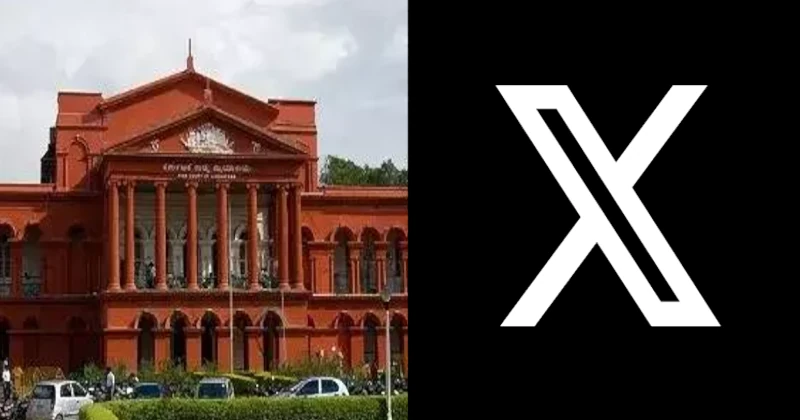
American free speech ideals cannot override India’s constitutional framework: Karnataka HC on content petition of X

The Karnataka HC dismissed Elon Musk’s X Corp’s plea against content takedown orders, ruling that American free speech ideals cannot override India’s constitutional framework. Justice M. Nagaprasanna held that foreign corporations cannot invoke citizens’ rights to evade Indian law, stressing that “liberty can’t be a licence to lawlessness”

WEBDESKWEBDESK
Sep 25, 2025, 11:30 am IST
in USA, Bharat, World, Karnataka
Follow on Google News
FacebookTwitterWhatsAppTelegramEmail

The Karnataka High Court delivered a scathing rejection of Elon Musk’s X Corporation’s petition against content takedown orders. The ruling not only upheld the Union Government’s authority under Section 79(3)(b) of the Information Technology Act, but also drew sharp boundaries against the transplantation of American free speech doctrines into Indian constitutional thought.

Justice M Nagaprasanna’s verdict is an unambiguous assertion of sovereignty, “Unregulated speech under the guise of liberty becomes a licence to lawlessness.”

At the centre of the case was X Corp’s attempt to invoke Article 19(1)(a) the right to free speech and expression under the Indian Constitution. The High Court decisively shut the door on this line of argument, making it clear that fundamental rights belong only to Indian citizens.

“Noble in spirit and luminous in promise, Article 19(1)(a) remains nevertheless a charter of rights conferred upon citizens of this nation. A petitioner who seeks sanctuary under its canopy must be a citizen of India, failing which its protective embrace cannot be invoked,” Justice Nagaprasanna observed.

This reasoning strikes at the root of Big Tech’s strategy claiming the benefits of India’s constitutional guarantees while avoiding its obligations under statutory law.

The judgment delivered perhaps its hardest blow when it highlighted X Corp’s hypocrisy. In the United States, the company complies with content regulation under laws like the “Take It Down Act”, which criminalises non-compliance with takedown orders. But in India, the same platform brands similar regulations as unconstitutional censorship.

“The petitioner’s platform is subject to a regulatory regime in the United States, its birthplace and foot land. Under the Take It Down Act of the United States, it chooses to follow the said Act as it criminalises violation of take down orders. But the same petitioner refuses to follow the same on the shores of this nation of similar take down orders which are founded upon illegality. This is sans countenance,” the court held.

The message is blunt, India will not be treated as a “second-class sovereign” by corporations that pick and choose which jurisdictions to respect.

A major flashpoint in the case was the Ministry of Home Affairs’ Sahyog portal, launched in October 2024. The portal enables coordinated takedown of unlawful online content, particularly relating to cybercrime, offences against women, and national security. X Corp painted it as an unconstitutional tool of censorship. The High Court, however, called this portrayal baseless.

“Far from being a constitutional anathema, the Sahyog portal is an instrument of public good, conceived under the authority of Section 79(3)(b) of the IT Act and Rule 3(b) of the 2021 Rules. It stands as a beacon of cooperation between citizens and the intermediary a mechanism through which the State endeavours to combat the growing menace of cybercrime,” Justice Nagaprasanna ruled.

The court further warned platforms against adopting a “posture of detachment” after facilitating content that violates Indian law.

X Corp’s defence leaned heavily on the Supreme Court’s 2015 Shreya Singhal verdict, which had struck down Section 66A of the IT Act and limited blocking orders to the procedure laid down in Section 69A. But the High Court noted that the Shreya Singhal judgment was specific to the 2011 IT Rules a legal framework no longer in force.

“Shreya Singhal spoke of 2011 rules, now consigned to history. The 2021 Rules, fresh in their conception and distinct in their design, demand their own interpretative frame unsaddled by precedents that address the bygone regime,” Justice Nagaprasanna declared.

By affirming that the 2021 IT Rules must be interpreted independently, the court has effectively carved out a new jurisprudential space for India’s digital governance.

The ruling also dismantled the notion that US jurisprudence is the gold standard for free speech. While Reno v. ACLU (1997) had been the cornerstone of internet freedom in the West, Justice Nagaprasanna pointed out that even American courts have since diluted Reno’s absolutism.

“Every sovereign nation regulates social media. India’s resolve likewise cannot be branded unlawful,” the court said, rejecting any attempt to impose American norms on India’s legal system.

The judgment was not just about corporate compliance but also about protecting vulnerable groups. Justice Nagaprasanna explicitly noted that regulation becomes non-negotiable in cases of offences against women, linking the right to dignity enshrined in the Constitution with the need to curb digital lawlessness. “Regulation is a must, more so in cases of offences against women, failing which the right to dignity as ordained in the Constitution gets railroaded,” the court observed.

The Karnataka HC verdict has far-reaching consequences:

  • Foreign corporations cannot invoke Indian fundamental rights to shield themselves from compliance.
  • The 2021 IT Rules are valid and enforceable, independent of Shreya Singhal.
  • Platforms must comply with Indian takedown orders, just as they comply with similar laws abroad.
  • The Sahyog portal is legally valid and strengthens state capacity to fight cybercrime.

By firmly asserting that India’s legal and constitutional framework not Silicon Valley’s ideological biases will govern digital speech, the judgment sends a clear message: India’s marketplace is not a playground for global platforms to evade accountability.

Also Read: West Bengal scraps 30 years of industrial incentives: Economic fallout and corporate exodus loom under TMC

In the West, especially after the Capitol Hill riots of 2021, platforms like X, Meta, and Google have tightened their content moderation to comply with domestic laws. Yet, when asked to follow Indian regulations, they often invoke “censorship” and mobilise international narratives about shrinking freedoms.


Topics: Supreme CourtMinistry of Home AffairsElon MuskKarnataka HCJustice NagaprasannaShreya Singhal verdict
ShareTweetSendShareSend
✮ Subscribe Organiser YouTube Channel. ✮
✮ Join Organiser's WhatsApp channel for Nationalist views beyond the news. ✮
Previous News

MoD to revive two strategic airstrips near China border in Ladakh, Arunachal Pradesh; Boosting IAF & Army presence

Next News

Khalistani terrorist Gurpatwant Pannun of SFJ threatens migrants in Punjab, warns against Deepawali celebrations

Related News

The AMU Judgment: Why the Supreme Court must revisit Article 30

Tamil Nadu Assembly (File Photo)

Tamil Nadu speaker drops action against 21 rebel AIADMK MLAs after EPS withdrawal, targets 4 who joined TVK

Govt Revises Immigration Rules: Foreigners must renew registration within 180 days; Digitisation push for redressal

Supreme Court remarks have revived the UAPA bail debate, with supporters citing national security concerns

UAPA Bail Debate: Striking a delicate balance between individual liberty and national security

Supreme Court invokes Article 142, issues strict timelines to curb delay in High Court judgments

Supreme Court invokes Article 142, orders strict timelines for High Court judgments to end delays in justice delivery

SIR and Article 324: Supreme Court strengthens the constitutional spine of Indian Democracy; Reaffirms ECI’s authority

Load More

Latest News

(Left) Russian President Vladimir Putin (Right) Prime Minister Narendra Modi (Image Credit: ANI)

Russia Day 2026: The ancient civilisational bond between India and Moscow

After the conclusion of the 11th Governing Body meeting of NITI Aayog, the Chief Minister of Tamil Nadu, Joseph Vijay, met Prime Minister Narendra Modi in Delhi

Tamil Nadu: At first NITI Aayog meet, CM Joseph Vijay charts cooperative course with Modi govt unlike DMK

Keralam ex- CM Pinarayi Viajayan and his daughter Veena Vijayan

Keralam: Former CM Pinarayi Vijayan’s daughter Veena Vijayan gets fresh ED summons in Rs 2.78 crore CMRL case

Radical Islamists forced to stop the construction of Bhagwan Ram idol in Bangladesh

Bangladesh: Construction of Bhagwan Ram murti halted amid threats by Islamists; Reflects spiking anti-Hindu hostility

Subash Chander of Bajrang Dal Telangana

Telangana Shocker: VHP demands strict punishment for Md Ghouse in Khammam 12-year-old girl sexual assault case

Rare Rashtrakuta-Era inscription unearthed in Karnataka

Karnataka: Rare Rashtrakuta-Era inscription unearthed, reveals extraordinary bond between king and servant

RBI revokes registration of 135 NBFCs over regulatory violations; 125 financial entities were from West Bengal

Prime Minister Narendra Modi

Even the US bows to PM Modi’s long-standing leadership!

A representative image

A Decade of Revolution: 25 crore out of poverty, 15.8 crore homes with tap water – How Govt schemes changed lives

India–Myanmar Civilisational Connect: Significance of President U Min Aung Hlaing’s visit to India

Load More
  • Privacy
  • Terms
  • Cookie Policy
  • Refund and Cancellation
  • Delivery and Shipping

© Bharat Prakashan (Delhi) Limited.
Tech-enabled by Ananthapuri Technologies

  • Home
  • Search Organiser
  • Bharat
    • Assam
    • Bihar
    • Chhattisgarh
    • Jharkhand
    • Maharashtra
    • View All States
  • World
    • Asia
    • Africa
    • North America
    • South America
    • Europe
    • Australia
  • Editorial
  • Operation Sindoor
  • Opinion
  • Analysis
  • Defence
  • Culture
  • Sports
  • Business
  • RSS @ 100
  • Entertainment
  • More ..
    • Sci & Tech
    • Vocal4Local
    • Special Report
    • Education
    • Employment
    • Books
    • Interviews
    • Travel
    • Health
    • Politics
    • Law
    • Economy
    • Obituary
  • Subscribe Magazine
  • Read Ecopy
  • Advertise
  • Circulation
  • Careers
  • About Us
  • Contact Us
  • Policies & Terms
    • Privacy Policy
    • Cookie Policy
    • Refund and Cancellation
    • Terms of Use

© Bharat Prakashan (Delhi) Limited.
Tech-enabled by Ananthapuri Technologies