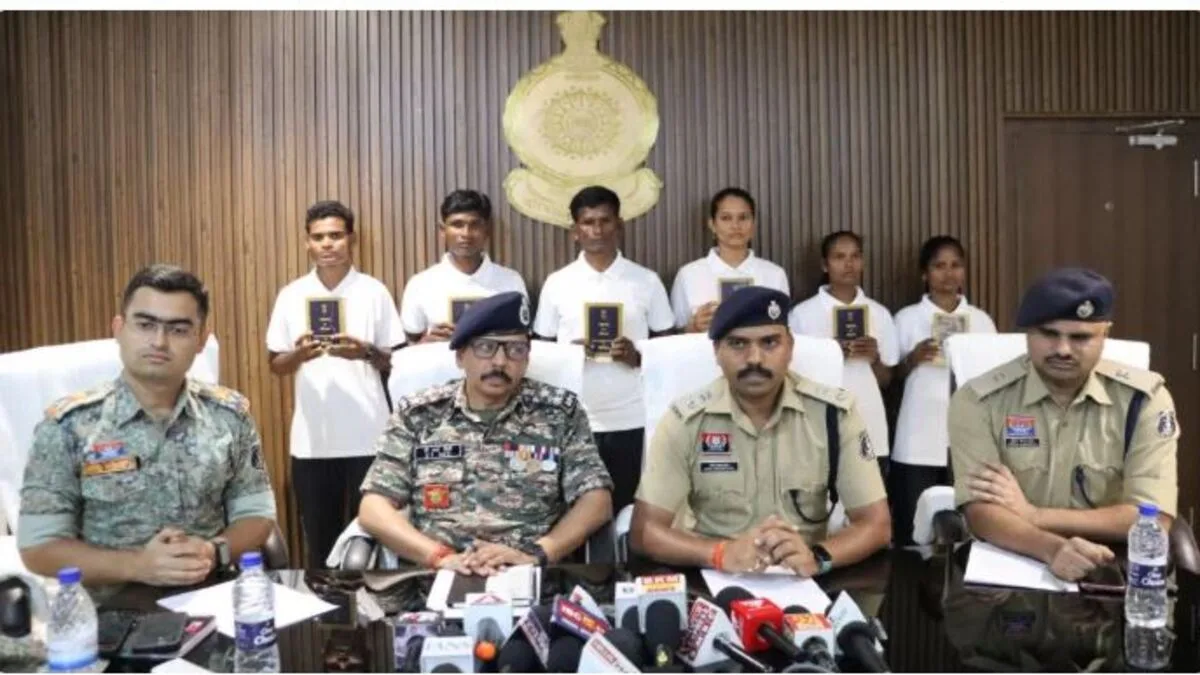
BIJAPUR: Six Maoist cadres, including three women and carrying a combined reward of Rs 35 lakh, surrendered before security forces in Bijapur district of Chhattisgarh on October 12, police said. Four of the surrendered cadres were active in the neighbouring state of Odisha, while the others were associated with Maoist activities in Chhattisgarh’s Bastar region.
The surrender took place before Bijapur Police, with support from the District Reserve Guard (DRG) and the Central Reserve Police Force (CRPF), including personnel of the CRPF’s 170th Battalion.
According to Bijapur Superintendent of Police Umesh Prasad Gupta, the cadres decided to abandon the Maoist organisation under the influence of the Chhattisgarh government’s Naxalite Surrender and Rehabilitation Policy and the rehabilitation initiatives being implemented in the district.
Police said the decision also reflected the impact of sustained anti-Maoist operations, the weakening of the organisation’s structure, disillusionment with its violent ideology and the influence of development initiatives in tribal areas.
The six cadres were identified as Rani Sodhi alias Sandhya (30), Pando Podiyam alias Sasmita (28), Santosh Kudiyam alias Sukku (27), Kosa Madvi alias Satish (30), Deve Madkam alias Janni (22) and Lalu Tati (25). They hail from different parts of the Bastar region and were allegedly involved in activities targeting security forces in Chhattisgarh and Odisha, officials said.
Four Surrendered Cadres Were Active in Odisha
According to police, four of the six cadres were associated with the Odisha state unit of the Maoist organisation. Rani Sodhi, Pando Podiyam and Santosh Kudiyam were active as Platoon Party Committee Members (PPCMs) in Company No. 8 of the Odisha unit. Each carried a reward of Rs 8 lakh.
Deve Madkam alias Janni, who was also associated with the Odisha unit, functioned as a Party Member and carried a reward of Rs 2 lakh. Police said he had served as a security guard for senior Maoist cadre Jagdish Irpa alias Ramanna.
Kosa Madvi alias Satish was associated with Company No. 2 of the Chhattisgarh unit, where he served as a PPCM and A-Section Commander. A reward of Rs 8 lakh had been announced for him.
Lalu Tati, the sixth cadre, was active as a Party Member in the Gangloor area of Bijapur and carried a reward of Rs 1 lakh.
The rewards announced for the six cadres totalled Rs 35 lakh. Police described their surrender as an outcome of sustained security operations and efforts to encourage Maoists to leave violence and return to mainstream society.
Cadres Had Been Associated with Maoist Organisation for Years
Police records indicate that several of the surrendered cadres had been associated with the Maoist organisation for years and had taken on different responsibilities during their involvement.
Rani Sodhi reportedly joined the organisation in 2012 as a Bal Sangham member. She subsequently became a member of the People’s Liberation Guerrilla Army (PLGA) and later a party member. In 2022, she was assigned the responsibility of PPCM in Odisha State Company No. 8.
Pando Podiyam joined the organisation in 2015 and rose to the rank of PPCM in December 2025, according to police.
Santosh Kudiyam had reportedly been associated with the organisation since 2005. Police said he had been deployed to provide security to senior Maoist cadres in Odisha and had served as a security guard for Odisha State Central Committee Member Ganesh Uika.
Kosa Madvi served as a PPCM and A-Section Commander in Company No. 2. According to police, he left the organisation in January 2026 due to health-related reasons and had been absconding since then.
Deve Madkam joined the organisation in 2015 and was subsequently assigned to Odisha State Company No. 8. He reportedly served as a security guard for senior Maoist cadre Jagdish Irpa alias Ramanna.
Lalu Tati joined the Bal Sangham in 2010 and later worked as a Party Member in the Gangloor Area Committee and Battalion No. 1. Police said he deserted the organisation in January-February 2026.
Security Operations and Disillusionment Cited as Reasons
Explaining the reasons behind the surrender, SP Umesh Prasad Gupta said the cadres cited the growing influence of security forces, the weakening organisational structure of the Maoist outfit and their disillusionment with its violent and anti-people ideology.
“They also cited the growing influence of security forces, the weakened organisational structure of the outlawed outfit, disillusionment with its violent and anti-people ideology, successful rehabilitation of former Maoists and rapid development in tribal areas as reasons for joining the mainstream,” Gupta said.
Officials said sustained counter-insurgency operations had increased pressure on Maoist cadres, while reports of former insurgents rebuilding their lives after surrender had encouraged others to consider rehabilitation.
The government’s rehabilitation initiatives and skill development programmes were also cited as factors influencing the decision. According to officials, development activities in tribal areas have contributed to creating opportunities for people to move away from violence and participate in mainstream social and economic life.
Police said several of the surrendered cadres were allegedly involved in encounters, attacks on police camps and other incidents targeting security forces in Chhattisgarh and Odisha. Their alleged involvement in such incidents remains subject to the relevant investigations and records.
Rehabilitation Package to Support Return to Mainstream
Under the Chhattisgarh government’s Naxalite Surrender and Rehabilitation Policy, the surrendered cadres will be provided assistance to help them rebuild their lives and reintegrate into society.
SP Gupta said the benefits would include financial assistance, skill development training, housing support, educational assistance and opportunities for self-employment and jobs.
The rehabilitation framework aims to provide former Maoist cadres with avenues for livelihood and social reintegration. Officials said the district administration and police would continue to guide and assist the surrendered individuals during the rehabilitation process.
The support is intended to help them acquire skills, pursue employment and establish stable lives after leaving the organisation. Authorities have emphasised that rehabilitation measures form an important part of the state’s approach alongside security operations.
Coordinated Efforts by Police and Security Forces
The surrender was facilitated through coordinated efforts by the District Reserve Guard, Bijapur Police and the CRPF’s 170th Battalion, officials said.
Gupta said effective coordination, sustained engagement and trust-building by the security personnel played an important role in bringing the cadres back into the mainstream.
The surrender comes amid continuing efforts by security forces and the Chhattisgarh government to weaken Maoist networks while encouraging cadres to abandon violence through rehabilitation opportunities.
Officials said the combination of security operations, development initiatives and support for former Maoists was intended to encourage more cadres to surrender and begin a new life outside the organisation.
The district police reiterated that the surrendered cadres would be extended benefits under the state’s rehabilitation policy and supported in their efforts to reintegrate into society.