2025 is turning out to be the year of the youth rebellion. Across continents, a restless Generation Z is demanding change — loudly, angrily and often violently. In Kathmandu, Nepal, young people have flooded the streets after the government banned Facebook, WhatsApp, YouTube and more than two dozen other platforms for failing to comply with national regulations — though TikTok and other Chinese apps were notably exempt, raising questions about whether they had met the government’s compliances.
For many Nepali youths, social media had become a crucial source of income, and its sudden restriction ignited fury. The protests soon turned deadly, with clashes leaving at least 19 people dead, according to official figures — though observers say the toll is likely higher. In Nairobi, Kenya, thousands of young protesters faced tear gas, arrests and even bullets for challenging new tax laws. In Jakarta, Indonesia, corruption scandals sparked nationwide riots, leaving cities scarred and governments shaken. The story repeats itself from Nigeria to Serbia to Mongolia: young people, disillusioned with their leaders, are turning protest into their most powerful and sometimes their only weapon.
And yet, there is one country where the largest youth population in the world has not poured into the streets in destructive fury. The name is Bharat.
Bharat’s distinct path
Bharat has no shortage of frustrations. Its young people wrestle with unemployment, rising costs of living, inequality and climate anxiety in some extent. But unlike in so many other countries, their energy has not translated into mass uprisings. Instead, it has been channeled into the electoral process, the start-up ecosystem, campus debates, climate campaigns and online mobilizations.
Far from being apathetic, Bharat’s Gen Z is hyper-engaged. They are loud on social media, active in civil society and enthusiastic participants in elections. They protest, yes, but their protests rarely tip into the kind of destabilizing violence that has brought governments elsewhere to the brink. This is not because Bharat is immune to discontent. It is because, despite few of its flaws, Bharat’s democratic system has created space for young people to vent, demand, and influence without burning the system down.
Social media: weapon or classroom?
The contrast with Nepal could not be sharper. In Kathmandu, the government treated social media as a threat and tried to silence it. However, official logic was impose law of the land in these American companies but that excludes Chinese Tiktok. The ban backfired immediately, triggering the deadliest protests the country has seen in years.
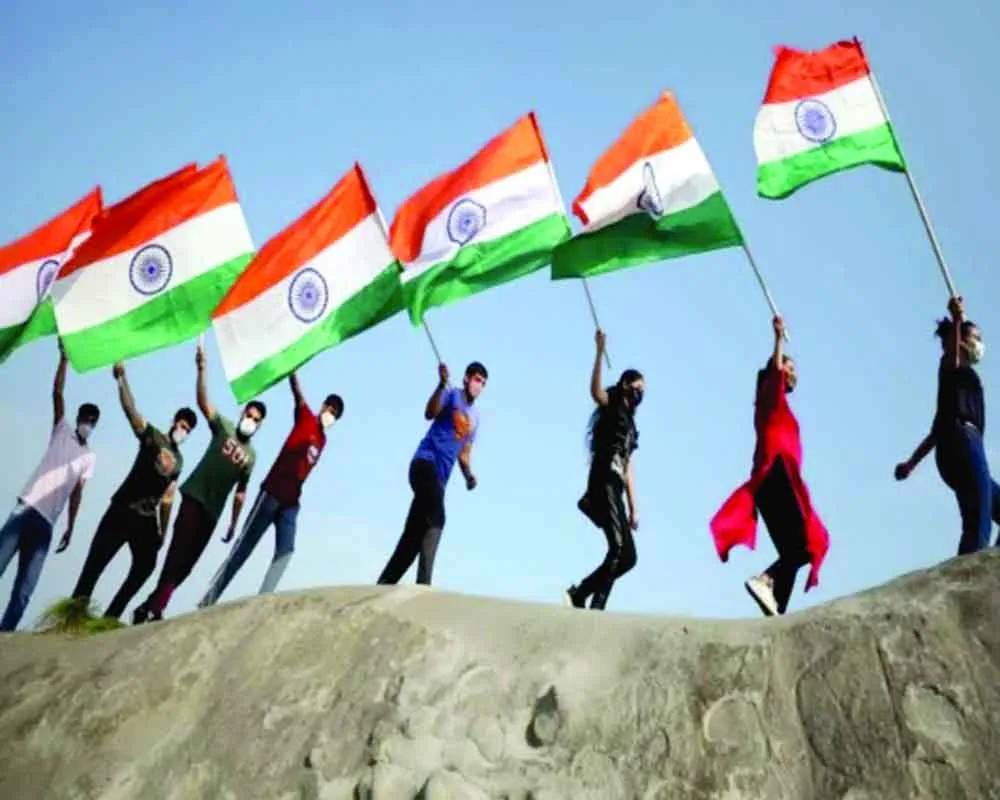
Bharat has taken a different approach. Cheap data plans and digital inclusion programs such as IndiaNet have brought the internet to hundreds of millions. Far from banning platforms, Bharat has turned them into a stage for civic energy. Gen Z has seized the opportunity.
Today, nearly 90 percent of the eco-content produced online in Bharat comes from Gen Z creators. From climate explainer reels to sustainability start-ups, young Bharatiya are using the digital sphere not just to complain, but to create. Where Nepal saw TikTok as a danger, Bharat’s youth see it as a classroom, a marketplace and a megaphone.
From anger to agency
In Kenya, it was a tax bill that brought youth to the streets. In Indonesia, it was MPs awarding themselves lavish perks in the middle of economic pain. In Mongolia, another corruption scandal tipped students into revolt. In all these countries, young people felt locked out of decision-making and robbed of agency.
In Bharat, the story is different. Young people may be frustrated by unemployment and inequality, but they also believe they have levers to pull. They file RTIs to demand transparency. They create apps that monitor pollution or streamline government services. They launch start-ups that solve problems in agriculture, fintech and education. They contest elections, run NGOs, and organize issue-specific campaigns that make headlines and, sometimes, even change policy.
That is the difference: Bharatiya youth are not waiting for leaders to act. They are becoming leaders themselves.
Democracy as a pressure valve
Much of this resilience stems from Bharat’s democratic culture inherit from ancient wisdom and civilizational ethos. For all its messiness and it is often messy , Bharatiya democracy is a pressure valve. Young people have multiple forums to channel their anger: student unions, activist movements, street protests, social media campaigns, parliamentary committees and an independent judiciary.
This does not mean grievances disappear overnight. It does mean that frustration has outlets, and that those outlets reduce the temptation to burn everything down. When elections come, Bharat’s Gen Z shows up in force. First-time voters have participated in impressive numbers, signalling that they see democracy not as a hollow ritual but as their best tool to shape the future. Young leaders like Chhavi Rajawat is notable as India’s first MBA sarpanch, serving Soda village. Also from Rajasthan, in 2015, Vasundhara Choudhary, a 21-year-old Delhi University student, Anju, a medical student from Haryana who became a sarpanch at age 21 in November 2022, and Lakshika from Madhya Pradesh, also 21 when elected Sarpanch in June 2022 are the examples of Gen Z who lead from front.
Policies that matter
Government initiatives have also played a part. Programs like Startup India, Skill India, and Digital India have not solved every problem — but not far from it. They have created visible pathways of opportunity. They tell young people: there is room for you in the system.
A student in Bengaluru can dream of building the next global unicorn. A young voter in Assam can believe her ballot matters. A climate activist in Delhi can rally thousands online without fear of government crackdown. These possibilities make discontent manageable and even productive.
A lesson for a turbulent world
None of this is to deny Bharat’s challenges. Youth unemployment issue is there but right approach can bring some solution. Inequality is real. Political polarization is sharp. Democracy here is a constant work in progress.
But when you look at the fires burning across the globe, Bharat’s story shines as an alternative. We have given our restless generation not just space to shout, but tools to build. Where other governments shut down platforms, Bharat opened them up. Where others taxed and excluded, Bharat offered at least some pathways of inclusion. Where others faced rage, India harnessed energy.
This is not a story of perfection. It is a story of resilience.
Gen Z is the largest, most connected and most impatient generation in history. Around the world, they are reshaping politics, whether governments like it or not. The only question is whether they will do so as rebels against the system or as partners in building it.
Bharat’s experience shows that when young people are trusted with responsibility, when they are given both the freedom to criticize and the chance to participate, they can be a stabilizing force, not a destructive one.
“In a world where youth rage is tearing nations apart, India shows that democracy, for all its flaws, can still turn restless energy into a revolution of hope.”