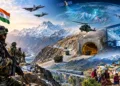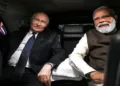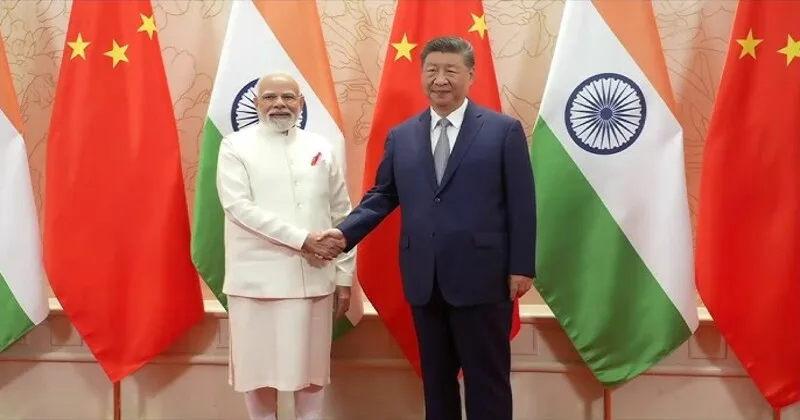
The current geopolitical backdrop is marked by global turbulence. Ukraine, Taiwan, Gaza, the shifting sands of West Asia and the ever-thickening shadow of great power rivalry between the United States and China. Within this churn, Modi’s engagement with Xi has implications far beyond bilateral ties. It is about defining India’s place in the 21st century geopolitics, its role in Asia and its ambitions on the world stage.
A History of Shadows: Why India Remains Wary
India’s caution is not unfounded. The 1962 war remains an unhealed scar, a reminder that Chinese assurances of “Hindi-Chini Bhai Bhai” were quickly betrayed by the thunder of artillery across the Himalayas. Since then, the Line of Actual Control (LAC) has remained both undefined and volatile, a frozen conflict waiting for a thaw.
Recent years have seen this caution harden into mistrust. The 2017 Doklam standoff, where Indian soldiers confronted Chinese construction on Bhutanese soil, was a stark reminder of Beijing’s creeping salami-slicing tactics. The 2020 Galwan clash, where 20 Indian soldiers attained Veergati, brought relations to their lowest point in decades. Since then, disengagement talks have continued, but the trust deficit has remained.
For Modi, therefore, meeting Xi is not about sentiment but about statecraft. He carries the weight of India’s heroes, the expectations of its citizens and the responsibility of ensuring that dialogue does not dilute deterrence.
China’s Playbook: Engagement and Encirclement
Xi’s China is assertive, ambitious, and unapologetic. The Belt and Road Initiative (BRI), with its corridors slicing through South Asia, is not just about trade, it is about strategic encirclement. From Gwadar in Pakistan to Hambantota in Sri Lanka, from railways in Nepal to infrastructure in Myanmar, Beijing has woven a web around India’s periphery.
The China–Pakistan Economic Corridor (CPEC), which runs through Gilgit-Baltistan, strikes at the heart of India’s sovereignty claims in Jammu & Kashmir. China’s increasing naval presence in the Indian Ocean, under the guise of anti-piracy patrols and port development, raises alarms about maritime encirclement.
At the same time, Beijing adopts the language of engagement, speaking of cooperation in BRICS, SCO, and G20 forums, while quietly trying to alter the facts on the ground along the Himalayas. For India, this duality is the essence of the China challenge: Xi extends a hand for partnership even as his troops test India’s resolve in the high mountains.
Modi’s Diplomacy: The Balance of Strength and Dialogue
Modi’s approach to China has evolved through cycles of optimism and realism. The early days saw attempts at grand gestures, the informal summits at Wuhan (2018) and Mamallapuram (2019) were meant to build personal chemistry with Xi. Yet Galwan shattered any illusion of “man-to-man” diplomacy altering hard national interests.
Post-2020, Modi’s stance has hardened. Infrastructure development along the LAC has been accelerated, partnerships with the U.S., Japan, and Australia through the Quad have deepened and supply chain resilience initiatives are being pursued to reduce dependence on China. India’s military posture in Ladakh and Arunachal Pradesh is now robust and the message is clear: dialogue will continue, but deterrence will not be diluted.
The meeting with Xi, therefore, is not a return to old optimism. It is a signal that India is willing to talk, but from a position of strength.
The Future: Five Scenarios for India–China Relations
1. Managed Hostility
The most likely scenario is a continuation of the current uneasy balance—dialogue at summits, patrol clashes along the LAC and sharp competition in South Asia and the Indian Ocean. Neither side wants a full-scale war, but both will probe each other’s limits. For India, managed hostility means strengthening border infrastructure, diversifying trade and building alliances without expecting breakthroughs with Beijing.
2. Economic Pragmatism Amidst Political Rivalry
Despite the border tensions, China remains one of India’s largest trading partners. The economic interdependence, especially in electronics, pharmaceuticals and industrial inputs, is too deep to sever quickly. Xi may offer selective economic cooperation to keep India engaged, while Modi will weigh the risks of overdependence. The future may see a “compartmentalisation”—competition on security, but cautious cooperation in trade.
3. Geopolitical Flashpoints
The Taiwan Strait, South China Sea, or even Gilgit-Baltistan could trigger crises that spill over into India–China ties. Beijing may tighten its embrace of Islamabad, creating sharper dilemmas for New Delhi. The future holds the risk of sudden escalations that no summit can fully prevent.
4. Regional Leadership Rivalry
Both Modi and Xi see themselves as civilizational leaders. Modi projects India as the “Vishwaguru” of the Global South; Xi champions the “China Dream” and a new world order less dominated by the West. These ambitions for leadership of Asia, Africa, Latin America, and West Asia, will continue to shape their engagement. BRICS expansion, G20 negotiations, and UN reform debates will be the arenas where this competition plays out.
5. Unlikely Rapprochement
While unlikely, one cannot rule out a future where both leaders, facing domestic and global pressures, decide to recalibrate. If China’s economy slows further and India’s market becomes more attractive, Beijing might offer concessions. If India sees the need to focus inward and avoid multi-front hostility, it may seek a limited thaw. However, such a rapprochement would be tactical, not strategic—the trust deficit is quite deep to be bridging it is a long drawn task.
The Strategic Imperatives for India
What then must India do as it navigates this uncertain future?
1. Strengthen Deterrence at the LAC – Continue investment in roads, tunnels, airstrips and surveillance systems along the border. Ensure that 1962 is never repeated.
2. Deepen Strategic Partnerships – Balance China through other strategic partners. The Quad, I2U2 (India–Israel–U.S.–UAE) and Indo-Pacific partnerships provide India with leverage.
3. Economic Resilience – Diversify supply chains, boost domestic manufacturing (Atmanirbhar Bharat), and reduce dependence on Chinese imports in critical sectors like telecom, semiconductors, and pharmaceuticals.
4. Engage the Global South – Build stronger ties with Africa, Latin America and ASEAN nations, offering an alternative to China’s debt-heavy BRI model. India’s emphasis on capacity building, digital governance, and healthcare can outshine Beijing’s cheque-book diplomacy.
5. Narrative Leadership – India must project itself not just as a balancing power but as a shaping power. By combining democratic values with economic growth, India can offer a civilisational counter-narrative to China’s authoritarian model.
The Long Game
The Modi–Xi meeting is a reminder that India–China relations are not a sprint but a marathon. For India, caution is not weakness, it is wisdom born of history. The past has shown that Chinese smiles can mask strategic encroachments. The future demands that India talk, but on its own terms.
What lies ahead is not friendship, nor inevitable conflict, but a prolonged path of power, patience, and persuasion. Modi’s challenge is to ensure that India is not overshadowed by China’s rise, but Bharat rises as a confident, resilient and decisive power shaping the Asian century.
The handshake with Xi may make headlines. But it is the firmness of India’s grip on its own destiny that will define the future, and India is confidently marching in this path!