Energy diplomacy and the new global oil order under PM Modi
July 7, 2026
  • Read Ecopy
  • Circulation
  • Advertise
  • Careers
  • About Us
  • Contact Us
Android AppiPhone AppArattai
Organiser
  • ‌
  • Bharat
    • Assam
    • Bihar
    • Chhattisgarh
    • Jharkhand
    • Maharashtra
    • View All States
  • World
    • Asia
    • Europe
    • North America
    • South America
    • Africa
    • Australia
  • Editorial
  • International
  • Opinion
  • RSS @ 100
  • More
    • Op Sindoor
    • Analysis
    • Sports
    • Defence
    • Politics
    • Business
    • Economy
    • Culture
    • Special Report
    • Sci & Tech
    • Entertainment
    • G20
    • Azadi Ka Amrit Mahotsav
    • Vocal4Local
    • Web Stories
    • Education
    • Employment
    • Books
    • Interviews
    • Travel
    • Law
    • Health
    • Obituary
  • Subscribe
    • Subscribe Print Edition
    • Subscribe Ecopy
    • Read Ecopy
  • ‌
  • Bharat
    • Assam
    • Bihar
    • Chhattisgarh
    • Jharkhand
    • Maharashtra
    • View All States
  • World
    • Asia
    • Europe
    • North America
    • South America
    • Africa
    • Australia
  • Editorial
  • International
  • Opinion
  • RSS @ 100
  • More
    • Op Sindoor
    • Analysis
    • Sports
    • Defence
    • Politics
    • Business
    • Economy
    • Culture
    • Special Report
    • Sci & Tech
    • Entertainment
    • G20
    • Azadi Ka Amrit Mahotsav
    • Vocal4Local
    • Web Stories
    • Education
    • Employment
    • Books
    • Interviews
    • Travel
    • Law
    • Health
    • Obituary
  • Subscribe
    • Subscribe Print Edition
    • Subscribe Ecopy
    • Read Ecopy
Organiser
  • Home
  • Bharat
  • World
  • Operation Sindoor
  • Editorial
  • Analysis
  • Opinion
  • Culture
  • Defence
  • International Edition
  • RSS @ 100
  • Magazine
  • Read Ecopy
Home Bharat

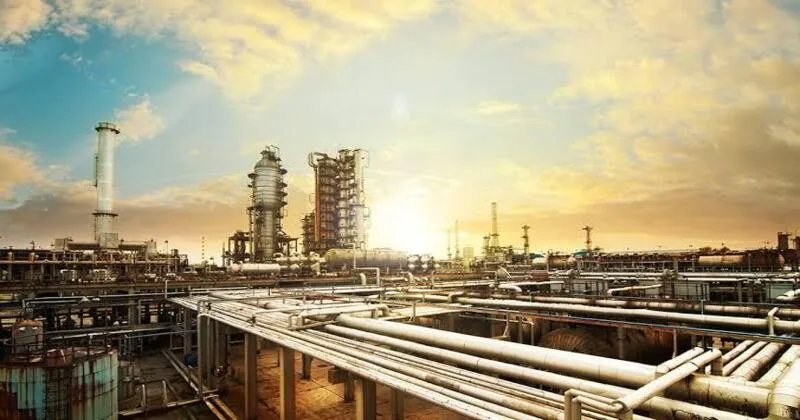
Energy Diplomacy in India under Narendra Modi: Reshaping the global oil order

India’s energy landscape has been reshaped under Prime Minister Narendra Modi, transforming the nation from an energy importer to a global energy influencer. Through strategic diplomacy and refining dominance, India is now redefining the global oil order

Prabin Kumar PadhyPrabin Kumar Padhy
Jul 29, 2025, 06:40 pm IST
in Bharat, Opinion
Follow on Google News
Representative image

Representative image

FacebookTwitterWhatsAppTelegramEmail

In the last decade, India has undergone a silent but significant transformation in its energy sector. Under the visionary leadership of Prime Minister Narendra Modi, the country has not only strengthened its energy security at home but has also begun to shape the global oil economy in profound ways. Once seen primarily as a passive consumer of imported energy, India is now emerging as a pivotal energy influencer, altering trade routes, recalibrating alliances, and challenging the long-standing supremacy of traditional oil powers, including the United States.

Also Read: Kanwar Yatra: IIT Kanpur students and faculty walk 2.5 km to Anandeshwar Mandir in a step towards cultural revival

At the heart of this shift lies a clear and assertive energy strategy driven by diversification, self-reliance, and global engagement. Prime Minister Modi’s foreign policy initiatives, combined with economic pragmatism, have allowed India to punch far above its weight in the global energy arena.
From Importer to Influencer

When Prime Minister Modi assumed office in 2014, India’s energy sector was riddled with vulnerabilities: excessive reliance on oil imports from the Middle East, volatile global crude prices, and limited refining infrastructure. Modi’s government responded with a long-term vision — to reduce import dependence, expand domestic refining, invest in alternative fuels, and build a resilient supply chain.

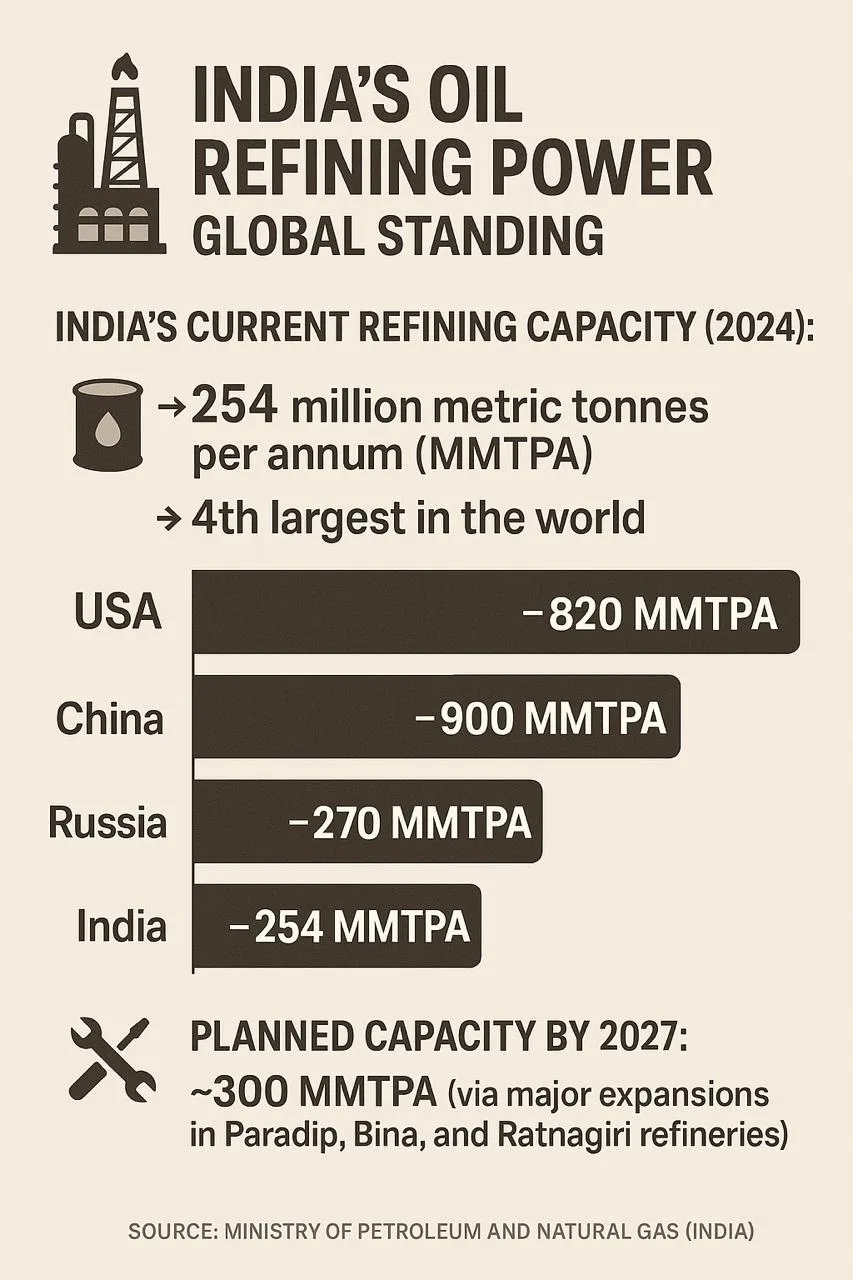
Today, India is the fourth-largest refiner in the world, with a capacity of over 250 million metric tons per annum. The country has become a major exporter of refined petroleum products to global markets, including Europe and Africa. This refining prowess has allowed India to act as a bridge between oil producers and consumers — a position of strategic importance that few developing nations enjoy.
India-EU Energy Realignment

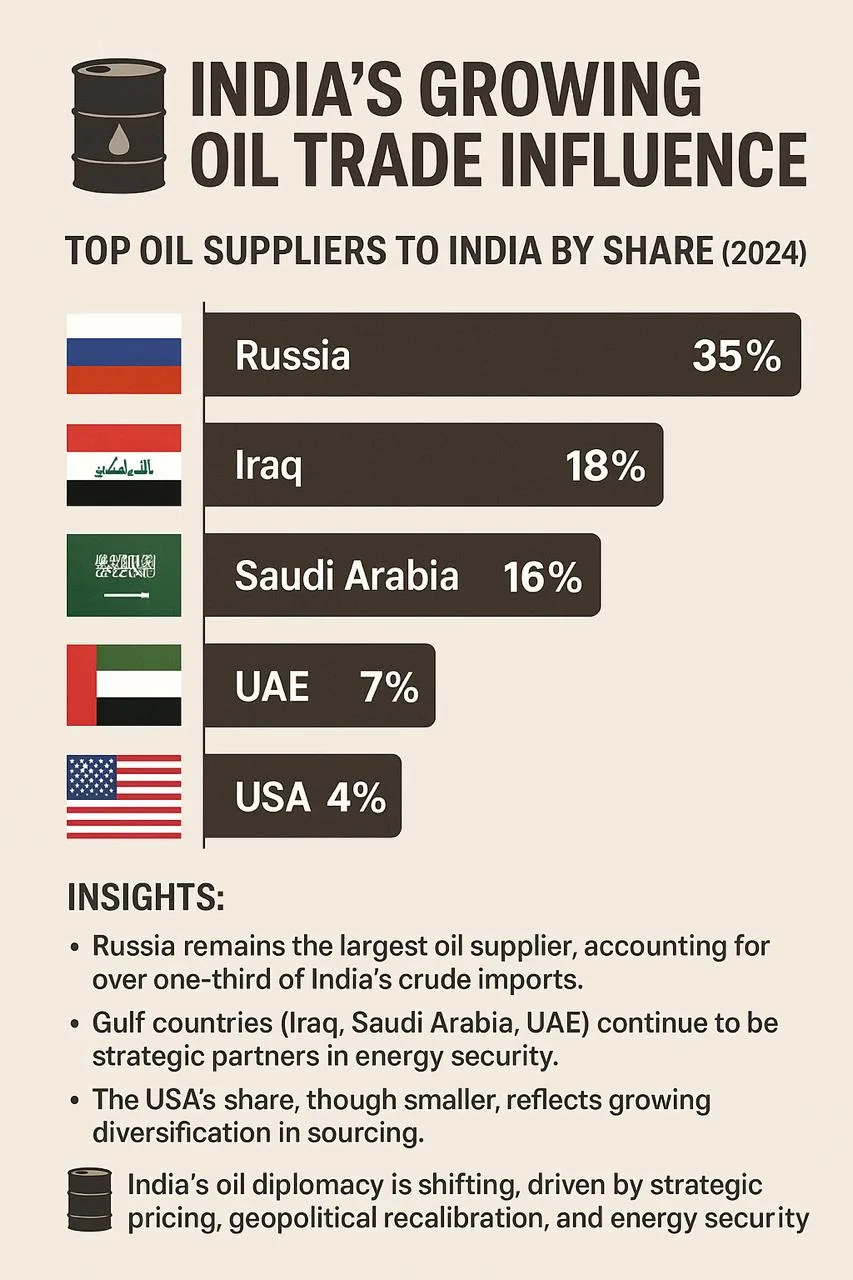
One of the most remarkable geopolitical consequences of this transformation is the new energy relationship between India and the European Union. Following the Russia-Ukraine conflict and the resulting sanctions on Russian crude oil, Europe sought alternative sources of energy. India seized the opportunity by purchasing discounted Russian crude, refining it in domestic facilities, and exporting petroleum products — such as diesel, petrol, and aviation fuel — to Europe. This has effectively created an energy corridor wherein Russian oil reaches the West through Indian refineries. While technically legal and compliant with global trade norms, this arrangement has challenged the EU’s efforts to isolate Russia economically. More importantly, it has cemented India’s role as an indispensable energy partner to Europe, not merely as a buyer, but as a strategic intermediary in global oil trade.

This new dynamic has also exposed the limits of Western sanctions and signalled a shift in the balance of power within the global energy ecosystem. The EU, once dependent on traditional producers and the U.S. for refined fuels, now finds itself indirectly reliant on India’s energy industry — a development that would have seemed unlikely just a few years ago.

Outreach to Africa and Asia: South-South Energy Diplomacy

Beyond Europe, India is expanding its energy footprint across Africa and the broader Asian continent. Through both government-to-government and private-sector collaborations, India is supplying refined fuels and investing in energy infrastructure in countries such as Kenya, Mozambique, Bangladesh, Sri Lanka, Nepal, and Myanmar. This strategy is part of India’s broader “Neighbourhood First” and “Act East” policies, which aim to build stronger ties with regional partners through trade, infrastructure, and energy cooperation. India’s engagement with African nations also aligns with its ambition to be a voice of the Global South — offering a non-Western model of development that is based on partnership rather than patronage.

By doing so, India is binding the Global South into a new energy ecosystem — one that is less dependent on traditional Western powers and more reflective of the emerging multipolar world order.

Curtailing US Energy Supremacy

Historically, the United States has wielded considerable influence over global oil markets, thanks to its domestic shale revolution, dollar dominance, and strategic alliances with OPEC nations. However, India under Modi has carefully manoeuvred to dilute America’s energy hegemony without direct confrontation.

By maintaining energy relations with Russia, Iran, and Central Asian countries — even during periods of Western disapproval — India has demonstrated an independent foreign policy grounded in national interest. The bold decision to increase Russian oil imports during Western sanctions, for example, allowed India to secure energy at favourable prices while resisting external pressure.

Furthermore, India’s growing status as a refining and export hub makes it a global supplier, not just a consumer. Indian oil companies are now negotiating on more equal terms with Western firms, and the country is actively promoting alternative fuels like ethanol, compressed biogas, and green hydrogen — areas where India may one day lead the world.

India is also using platforms such as the International Solar Alliance (ISA) and the Global Biofuel Alliance to redefine energy leadership beyond fossil fuels, thereby building coalitions that do not depend on U.S. or European approval.

A New Geopolitical Equation

The significance of this energy transformation extends well beyond economics. Energy is now a critical tool in India’s foreign policy arsenal. It enables the country to:

Influence regional security by supplying neighbouring countries with fuel during times of crisis.
Negotiate trade deals and bilateral agreements from a position of strength.
Serve as a neutral intermediary in global disputes, enhancing its diplomatic weight.
This newfound influence was evident during the G20 presidency, where India brought climate equity, energy transition, and energy access for the Global South to the centre stage of international discourse.

India’s Energy Doctrine Comes of Age

Under the leadership of Prime Minister Narendra Modi, India has moved from energy dependence to energy diplomacy. The nation is no longer a passive participant in global oil markets but an assertive player shaping new trade flows and geopolitical alignments.

With growing refining capacity, strategic sourcing, bold diplomacy, and a commitment to energy innovation, India is redefining the global energy order. The ripple effects are visible across continents — from the corridors of Brussels to the ports of Africa, from the refineries of Jamnagar to the pipelines of Central Asia.

As the world transitions to a new era of energy politics, India stands not at the periphery, but at the centre of power, steady, strategic, and sovereign.


Topics: India-EU energy tiesNarendra Modirussian oil importsIndia energy diplomacyglobal oil traderefining capacity
ShareTweetSendShareSend
✮ Subscribe Organiser YouTube Channel. ✮
✮ Join Organiser's WhatsApp channel for Nationalist views beyond the news. ✮
Previous News

Land Jihad In Assam: Under massive eviction drive in Rengma forest, 10,590 bighas cleared and 2,648 houses demolished

Next News

From ‘India-out’ to ‘India-in’: PM Modi’s Maldives visit marks diplomatic victory for New Delhi in Indian ocean region

Related News

Congress MP Shashi Tharoor (File Photo)

Congress leader Shashi Tharoor applauds Modi’s governance and foreign policy

PM Modi attended the National Day celebrations marking the 50th anniversary of Seychelles’ Independence as the Guest of Honour

PM Modi in Seychelles 50th National Day as Guest of Honour; Indian Army marches, reflecting stronger security ties

Old image of PM Modi used for representative purposes

‘Made from our soil, crafted by our artisans’: PM Modi’s vocal for local message ahead of Ganesh Utsav

West Bengal's defence industry gets a new boost as indigenous warship production and military investments expand

How West Bengal is emerging as India’s next defence corridor under BJP govt’s industrial push

Andhra Pradesh Minister and TDP National General Secretary Nara Lokesh

Nara Lokesh dismisses rumours of TDP sabotaging Modi government, reaffirms unconditional NDA support

Delhi Chief Minister Rekha Gupta paid tribute to Bharatiya Jana Sangh founder Syama Prasad Mookerjee on his death anniversary

Article 370 abrogation was the greatest tribute to Syama Prasad Mookerjee: Delhi CM Rekha Gupta

Load More

Latest News

Shri Ram Janmabhoomi Teerth Kshetra Trust accepts resignation on moral grounds; SIT submits interim report

Ayodhya Ram Mandir Donation Row: Trust accepts resignations, promises greater transparency; SIT submits interim report

Nida Khan one of the accused in Nashik TCS Corporate Jihad Case gets bail

Nashik TCS Corporate Jihad Case: Court grants bail to Nida Khan in conversion and sexual harassment case

Karnataka State BJP files complaint with Election Commission over irregularities in voter verification

Karnataka SIR Row: NDA submits documentary evidence to Election Commission, alleges irregularities in voter revision

Hindenburg report was a conspiracy to tarnish the image of India’s industrial sector using the Adani Group as a pretext

Battlefield to Top of the World: Indian Paralympian Hokato Hotozhe Sema becomes No.1 in shot put F57 category

Editor of Organiser Weekly Prafulla Ketkar and West Bengal Governor R N Ravi at the Narad Jayanti Udjapan & Narad Samman 2026

Whether my reporting is in the interest of nation or not is a litmus test for journalist: West Bengal Governor R N Ravi

POJK Protests: A reality check on atrocities committed by Pakistan

117 pseudo-intellectuals write to PM Modi to extend diplomacy with Pakistan at the cost of national security

80 years of Organiser: Enduring voice

PM Modi and Australian PM Anthony Albanese

Powering India’s Nuclear Future: PM Modi’s Australia visit brings the landmark Uranium deal into focus

Load More
  • Privacy
  • Terms
  • Cookie Policy
  • Refund and Cancellation
  • Delivery and Shipping

© Bharat Prakashan (Delhi) Limited.
Tech-enabled by Ananthapuri Technologies

  • Home
  • Search Organiser
  • Bharat
    • Assam
    • Bihar
    • Chhattisgarh
    • Jharkhand
    • Maharashtra
    • View All States
  • World
    • Asia
    • Africa
    • North America
    • South America
    • Europe
    • Australia
  • Editorial
  • Operation Sindoor
  • Opinion
  • Analysis
  • Defence
  • Culture
  • Sports
  • Business
  • RSS @ 100
  • Entertainment
  • More ..
    • Sci & Tech
    • Vocal4Local
    • Special Report
    • Education
    • Employment
    • Books
    • Interviews
    • Travel
    • Health
    • Politics
    • Law
    • Economy
    • Obituary
  • Subscribe Magazine
  • Read Ecopy
  • Advertise
  • Circulation
  • Careers
  • About Us
  • Contact Us
  • Policies & Terms
    • Privacy Policy
    • Cookie Policy
    • Refund and Cancellation
    • Terms of Use

© Bharat Prakashan (Delhi) Limited.
Tech-enabled by Ananthapuri Technologies