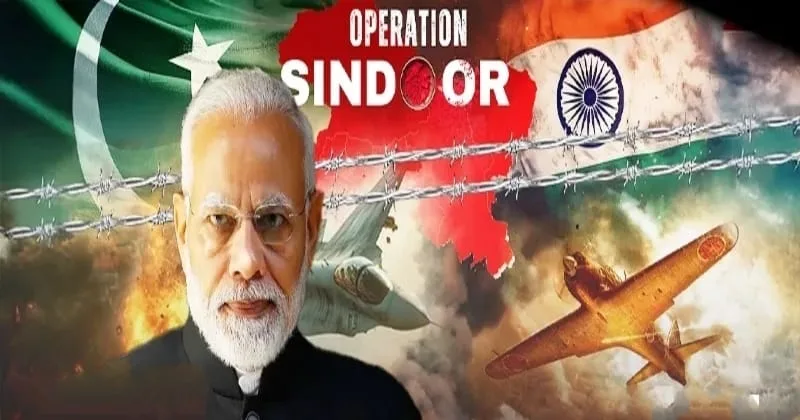
Pahalgam attack shows need for global anti-terror front led by India
June 6, 2026
  • Read Ecopy
  • Circulation
  • Advertise
  • Careers
  • About Us
  • Contact Us
Android AppiPhone AppArattai
Organiser
  • ‌
  • Bharat
    • Assam
    • Bihar
    • Chhattisgarh
    • Jharkhand
    • Maharashtra
    • View All States
  • World
    • Asia
    • Europe
    • North America
    • South America
    • Africa
    • Australia
  • Editorial
  • International
  • Opinion
  • RSS @ 100
  • More
    • Op Sindoor
    • Analysis
    • Sports
    • Defence
    • Politics
    • Business
    • Economy
    • Culture
    • Special Report
    • Sci & Tech
    • Entertainment
    • G20
    • Azadi Ka Amrit Mahotsav
    • Vocal4Local
    • Web Stories
    • Education
    • Employment
    • Books
    • Interviews
    • Travel
    • Law
    • Health
    • Obituary
  • Subscribe
    • Subscribe Print Edition
    • Subscribe Ecopy
    • Read Ecopy
  • ‌
  • Bharat
    • Assam
    • Bihar
    • Chhattisgarh
    • Jharkhand
    • Maharashtra
    • View All States
  • World
    • Asia
    • Europe
    • North America
    • South America
    • Africa
    • Australia
  • Editorial
  • International
  • Opinion
  • RSS @ 100
  • More
    • Op Sindoor
    • Analysis
    • Sports
    • Defence
    • Politics
    • Business
    • Economy
    • Culture
    • Special Report
    • Sci & Tech
    • Entertainment
    • G20
    • Azadi Ka Amrit Mahotsav
    • Vocal4Local
    • Web Stories
    • Education
    • Employment
    • Books
    • Interviews
    • Travel
    • Law
    • Health
    • Obituary
  • Subscribe
    • Subscribe Print Edition
    • Subscribe Ecopy
    • Read Ecopy
Organiser
  • Home
  • Bharat
  • World
  • Operation Sindoor
  • Editorial
  • Analysis
  • Opinion
  • Culture
  • Defence
  • International Edition
  • RSS @ 100
  • Magazine
  • Read Ecopy
Home Bharat

Time for India to lead global coalition against terrorism

The recent Pahalgam terror attack highlights the urgent need for a united global front against terrorism, with India uniquely positioned to lead such a coalition. Leveraging its experience, military strength, and diplomatic stature, India can spearhead international efforts to combat terrorism effectively

Lt Gen (Retd) MK DasLt Gen (Retd) MK Das
Jun 22, 2025, 10:05 pm IST
in Bharat, World, International Edition
Follow on Google News
Representative image

Representative image

FacebookTwitterWhatsAppTelegramEmail

The dastardly terror attack in Pahalgam on April 22 that carried out the selective killing of 26 innocent tourists has added a new dimension to terrorism in India. India has been a victim of Pakistan sponsored terrorism, right from the first war in Kashmir in 1947-48. Pakistan sponsored this war under the garb of tribal raiders and later fully participated in it. The trend of Pak-sponsored terrorism became an instrument of their national policy right from the early 1990s in J&K, which has continued unabated for the last 35 years.

India’s North Eastern states have also witnessed various shades of Grey Zone warfare, in the form of insurgency, militancy and terrorism, right from the 1960s. The state of Punjab also suffered from Khalistani militancy from the mid-1980s to mid-1990s. At its peak, almost 250 districts in the country suffered from Left Wing Extremism (LWE), popularly known as the Naxalite movement. So, in contemporary history, no nation has been a bigger victim of terrorism of various shades than India. There are other countries, too, that have suffered from terrorism, but not at the scale and magnitude of India.

The Pahalgam terror attack, sponsored by Pakistan, is a watershed moment in the history of terrorism in India. This heinous attack is similar to 9/11 attack in the US. Though India suffered another Pak-sponsored major terror attack a decade later in Mumbai (the 26/11 attack), the country could not take any decisive action against terror. India came up with a much stronger ‘Zero Tolerance against Terrorism’ policy under the PM Modi government in 2014. Under the Modi government, India has tackled terrorism more decisively. But in the last decade, terrorism has acquired multiple shades, and it continues to pose a major threat to humanity. But now India has demonstrated its new policy of striking the terrorists and those who sponsor terrorism during Operation Sindoor. This ‘new normal’ against terrorism is something that the major powers in the world would have taken notice of.

It is interesting to note how the US responded to the 9/11 terror attacks. It launched the ‘Global War against Terrorism’ from 2001 onwards. It used massive force against all the terror groups, terror suspects and supporters of terrorism, all over the world. The US began ‘Operation Enduring Freedom’ in Afghanistan in October 2001, along with the NATO forces to target al-Qaeda and Taliban. During this two-decade-long operation till de-induction in August 2022, every human rights convention was violated, and lakhs of innocent civilians from Afghanistan lost their lives. Now compare this with the calibrated and measured response by India during Operation Sindoor from 7-10 May, where India took pains only to target the terror hubs based in Pakistan and strictly avoided civilian targets. Even when Pakistan targeted civilians in Poonch, Rajouri and Naushera, India avoided the provocation to target civilians of that country. This incident is another example of matured conduct in every crisis situation.

India has been a role model in tackling terrorism right from the beginning. India used the principle of minimum force against the terrorists. Major weapon platforms like artillery guns and tanks, including aerial platforms like armed helicopters, have been rarely used by India against terrorists. India never crossed the LOC in hot pursuit of the terrorists in J&K. India never ventured across the IB in Bangladesh and Myanmar, though both these countries had a number of terror hideouts located within them. Once terrorists targeted an army convoy in Manipur, PM Modi gave orders for pre-emptive action against the terrorists hiding in Myanmar in June 2015. This was a major shift in India’s offensive policy to neutralise terrorists across the borders.

India has the advantage of being one of the largest contributors to the UN Peacekeeping Forces, having deployed almost 3 lakh troops to more than 50 missions since the 1950s. Even now, more than 5000 Indian peacekeepers are deployed in nine active missions in Congo, Sudan, Lebanon, etc. India has also trained and facilitated capacity-building in a large number of countries and regional groupings like the ASEAN. Peacekeeping has been at the core of India’s diplomacy, which has promoted global cooperation in promoting peace. Thus, India has the global experience to deal with terrorism and other conflict situations.

Ideally, the United Nations should have been at the forefront of combating terrorism across the world without any biases. The UN should have come up with an acceptable definition of terrorism by now. Unfortunately, the UN has become a toothless organisation, and the UN platforms are increasingly used to voice countries that sponsor terrorism. Even more ironic is the selection of Pakistan to chair the UN Security Council’s Taliban Sanctions Committee in 2025. Pakistan is often referred to as the ‘Global exporter of terrorism’ and, till recently, was on the grey list of the Financial Action Task Force (FATF) for supporting terrorism as a national policy. Hence, there is a feasibility of collaborative action to deal with terrorism at the regional and global levels.

Terrorists are taking advantage of a fragmented world where major powers are working in silos. US, Russia, China, UK etc. have their own compulsions. The US, particularly, is no longer capable of global policing. It is evident from the way the US administration is struggling to control a basic law & order situation these days in Los Angeles. Therefore, an unstable world needs the global collaboration of like-minded nations against terrorism. India is in a singular position to lead the global coalition against terrorism, with its stature, economy, military power and sense of propriety. The understanding and sharing of intelligence, common protocols and extradition treaties can be the beginning of such a partnership. Even if 20-plus nations become part of this coalition, to begin with, it would augur well for the united fight against terrorism.

On May 10, PM Modi met the members of the all-party delegation, which toured the globe to canvass support for India’s stand on terrorism. All the delegations have achieved their aim successfully. The next step should now be to forge an alliance to combat terrorism with like-minded nations, particularly in the Global South. Such an alliance not only exposes Pakistan but also de-hyphenates it distinctly from the fourth largest economy and world’s largest democracy called India. PM Modi is attending the G-7 Summit scheduled in Canada next week. A section of Canadian administration has supported the Khalistani movement in India’s Punjab. Therefore, PM Modi certainly is going to sensitise the leadership of the most powerful nations on India’s stand on terrorism.

Notwithstanding the outcome of the summit, under the dynamic leadership of PM Modi, India has the moral right, experience and necessary stature to lead the global coalition against terrorism.
Topics: Counter terrorism StrategyAnti-Terrorism PolicyterrorismPM ModiPakistan Sponsored TerrorismPahalgam Terror AttackOperation Sindoor
ShareTweetSendShareSend
✮ Subscribe Organiser YouTube Channel. ✮
✮ Join Organiser's WhatsApp channel for Nationalist views beyond the news. ✮
Previous News

From G7 threats to flag desecration: 24 incidents detail Khalistani war on India from Canadian soil

Next News

NIA arrests one more accused in Maoists Northern Region Bureau terror revival conspiracy case

Related News

As Khalistani networks seek new platforms beyond the West, Azerbaijan has emerged as a key venue for conferences, campaigns and narratives aligned with the Pakistan-Turkey axis against India.

Khalistan’s New Grazing Ground: Azerbaijan emerges as new hub for Turkey-Pakistan backed anti-India networks

Prime Minister Narendra Modi

PM Modi to launch Rs 21,770 cr mega projects in Surat & Daman; Infrastructure, healthcare among key projects

Bangladesh’s reported JF-17 push has triggered fresh scrutiny after India’s Ops Sindoor exposed the vulnerabilities of Pakistani-Chinese defence systems and precision strike capabilities

Shadows of Operation Sindoor: Questions loom over Bangladesh’s JF-17 ambitions amid Sino-Pakistani tech vulnerabilities

A decade transformed Indian Railways through electrification, speed, safety and modern infrastructure under PM Modi's vision

Same Tracks, New Destiny: How Modi government rewrote Indian Railways’ story after 2014

Prime Minister Narendra Modi

“Sabka Sath, Sabka Vikas, Sabka Hisab”: Decoding PM Modi’s political message on accountability & national security

NIA files chargesheet against three Maoist operatives in Andhra Pradesh

Andhra Explosives Supply Case: NIA files charges against 3 CPI (Maoist) operatives

Load More

Latest News

Union Home Minister Amit Shah addressing BSF personnel at the Lankamura Border Outpost along the India-Bangladesh border in West Tripura district on June 5, 2026

Amit Shah at Bangladesh Border: “India will have an impregnable security grid soon”

India slams Pakistan’s bid to hold elections in Gilgit-Baltistan, demands end to illegal occupation

Maharashtra government approves central wage structure for Pune Metro Contract Workers; Major victory for BMS

India seals robust 7.7% GDP Growth in FY26: Reflects economic resilience amid West Asia crisis & other global headwinds

A representative image

After TCS, Corporate Jihad allegations reach SBI: Married Hindu employee conversion claims trigger FIR in Mumbai

MEA spokesperson Randhir Jaiswal highlights India's resolve to deport illegal Bangladeshi migrants via bilateral mechanisms

India reiterates strong resolve to deport illegal Bangladeshis; Flags delay of bilateral procedures from Dhaka

Kerala HC rejects CMRL appeal, clears way for ED probe against Pinarayi Vijayan’s daughter in money laundering case

Uttar Pradesh leads in Bharat's green transformation

World Environment Day 2026: On his birthday, Yogi Adityanath’s green vision powers Uttar Pradesh’s transformation

As Khalistani networks seek new platforms beyond the West, Azerbaijan has emerged as a key venue for conferences, campaigns and narratives aligned with the Pakistan-Turkey axis against India.

Khalistan’s New Grazing Ground: Azerbaijan emerges as new hub for Turkey-Pakistan backed anti-India networks

Kochi IPL Mystery: Why Did Sunanda Pushkar Surrender Stake Amid Benami Claims Tied to Shashi Tharoor, Sonia Gandhi?

Kochi IPL Mystery: Why Did Sunanda Pushkar Surrender Stake Amid Benami Claims Tied to Shashi Tharoor, Sonia Gandhi?

Load More
  • Privacy
  • Terms
  • Cookie Policy
  • Refund and Cancellation
  • Delivery and Shipping

© Bharat Prakashan (Delhi) Limited.
Tech-enabled by Ananthapuri Technologies

  • Home
  • Search Organiser
  • Bharat
    • Assam
    • Bihar
    • Chhattisgarh
    • Jharkhand
    • Maharashtra
    • View All States
  • World
    • Asia
    • Africa
    • North America
    • South America
    • Europe
    • Australia
  • Editorial
  • Operation Sindoor
  • Opinion
  • Analysis
  • Defence
  • Culture
  • Sports
  • Business
  • RSS @ 100
  • Entertainment
  • More ..
    • Sci & Tech
    • Vocal4Local
    • Special Report
    • Education
    • Employment
    • Books
    • Interviews
    • Travel
    • Health
    • Politics
    • Law
    • Economy
    • Obituary
  • Subscribe Magazine
  • Read Ecopy
  • Advertise
  • Circulation
  • Careers
  • About Us
  • Contact Us
  • Policies & Terms
    • Privacy Policy
    • Cookie Policy
    • Refund and Cancellation
    • Terms of Use

© Bharat Prakashan (Delhi) Limited.
Tech-enabled by Ananthapuri Technologies