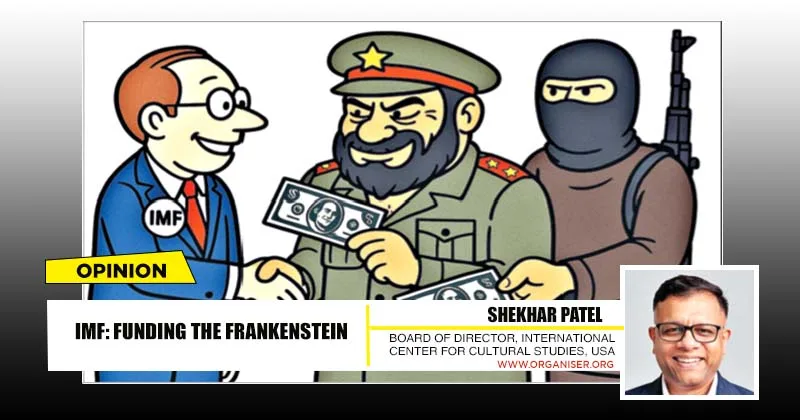
The West still has a chance to curb Pakistani terrorism and avoid a Jihadi initiated apocalypse, but its influence is waning in a changing world order. Recent actions of the IMF after the Pahalgam massacre raise questions over whether global institutions have the vision or the spine to penalise rogue states early, with Bharat advocating for stronger action.
Bharat’s handling of Pakistan, especially post-attacks like Pahalgam, shows a deliberate strategy. I see it as firm yet measured – hitting terror camps without sparking a wider war. Bharat is big, with 1.4 billion people and a 3.4 trillion dollar GDP (projected to hit 5 trillion dollar by 2030, per IMF forecasts), so it doesn’t need to overreact like smaller nations. It is using economic pressure, diplomacy, and precision strikes to box Pakistan in, all while building global clout through diplomacy.
The recent 1.4 billion dollar loan to Pakistan in May 2025 by IMF, and a further freeing up of 1 billion dollars despite Bharat’s protests, shows its current approach – keeping Pakistan afloat rather than pushing reform. But I think, in its “twilight” years, the IMF could pivot. It has got leverage, having bailed Pakistan out 24 times since 1950. If it tied loans to cutting military spending (20 per cent of Pakistan’s budget) and curbing terror, it could force change. Bharat has been pushing this, but the focus of West is elsewhere, and China’s backing of Pakistan complicates things.
The secular, multi-religious fabric of Bharat contrasts with the theocratic fragility of Pakistan. Its restraint, like not breaking Pakistan apart by supporting Balochistani rebels and Afghanistan based groups, despite calls after Pahalgam, shows wisdom. It is playing the long game—economic growth, cultural influence, and alliances—while keeping Pakistan in check. Compared to the erratic “deal-making” of US or caution of Europe, the firm, resolute, and precise approach of Bharat feels right for a rising power.
The geopolitical strategy of Bharat, particularly in dealing with its adversaries, exemplifies a nuanced, well-optimised approach that positions it for multi-dimensional global leadership. Rooted in hundreds of years of historical, cultural, and economic experiences, starting with Chandragupta Maurya, to Shivaji, to M K Gandhi, Bharat’s actions are not merely reactive but a deliberate blend of short-term security measures and long-term ambitions. However, the actions of the world are in stark contrast to those of Bharat. In its twilight years, the IMF has a critical opportunity to alter Pakistan’s path on terrorism, but its current biases and declining influence risk letting the situation simmer toward a chaotic breakpoint.
Historical and Cultural Foundations of Nation-States
Nation-states have long been shaped by cultural and religious underpinnings, often reflecting survival instincts from their formative stages. The colonial era of Europe, for instance, saw Christian leaders sanction violence against non-believers, a militant ethos tied to early expansion. Islam, emerging in the Middle East amid tribal conflicts, embedded aggressive survival tactics like Jihad into its texts, codifying military discipline as a way of life. As civilizations grow, however, their need for militancy typically wanes. Christianity, spreading across continents, shifted from crusades to consolidation, toning down aggression. Islam, emerging later, has struggled to follow suit, with some adherents locked into a perpetual race for ideological purity, fueling jihadist movements, and each subsequent one being more brutal and extremist than the previous one.
Pakistan exemplifies this dynamic. Created on the Two-Nation Theory—that Hindus and Muslims cannot coexist—its identity hinges on opposing Bharat, particularly over Kashmir. Unlike Indonesia, where Islam coexists with cultural traditions like the Ramayan without conflict, Pakistan lacks a distinct cultural foundation, as its people share Bharat’s Hindu roots, converted over centuries. This dissonance drives its sponsorship of terrorism, with groups like Lashkar-e-Taiba linked to attacks from the 2008 Mumbai massacre (166 dead) to recent incidents like the Pahalgam attack in April 2025, which specifically targeted Hindu tourists, killing 26 innocent civilians. The Global Terrorism Index consistently ranks Pakistan among the top terror sponsors, highlighting its global threat.
Israel’s Model in Dealing with Islamist Terror
Israel’s response to the October 7, 2023, Hamas attack—aggressively targeting Gaza and Lebanon—makes sense for a small nation with a global Jewish population of about 15 million. With fewer numbers, it must hit hard to deter threats, as seen in recent operations against Hamas and Hezbollah. However, this analogy should not be applied to Bharat and Pakistan for the following reasons:
- Nuclear Stakes: Pakistan’s 170 nuclear warheads (per the Stockholm International Peace Research Institute, 2023) contrast with Israel’s non-nuclear foes, raising escalation risks. Operation Sindoor and Balakot airstrikes by Bharat, that killed hundreds or maybe even a little over a thousand terrorists, were calibrated to avoid this, unlike broader campaigns by Israel, where a significant number of civilians have been killed as well.
- Geopolitical Context: Israel leans on US support; Bharat navigates a multipolar world where China backs Pakistan through initiatives like the 62 billion dollar China-Pakistan Economic Corridor and significant military infrastructure, intelligence, and training. Despite whatever façade it may put on, the West is wary of Bharat’s rise as much as it fears China’s and wants to keep Bharat bogged down, just enough to balance the power in the Indo-Pacific. Given an opportunity, the West would love to play the role of a cat to solve disputes among mice.
- Ideological Drivers: Two-Nation Theory of Pakistan makes it uniquely stubborn to let go of terrorism as a state policy—conceding on Kashmir would unravel its foundation, unlike other terror networks supported by, say, some Middle East countries, which have localised goals.
Some in Bharat push to emulate Israel, breaking Pakistan into ethnic fragments using physical force (Balochistan, Sindh, Khyber Pakhtunkhwa, Punjab), but I see Bharat’s restraint as wiser. Bharat’s size, economic potential, and need for its global leadership mean, it can outlast Pakistan without overreaching inside Pakistani territory. A Bharat steeped in Hindu ethos does not have to be insecure and constantly trying to engage in one-upmanship like Pakistan. Media-driven frenzy and emotional excitement should be left behind when thinking about the welfare of us and the world.
Ideological Threat by Pakistan
The existence of Pakistan rests on proving that Muslims need a separate Nation state, with Kashmir as the test. If Muslim majority of Kashmir thrives in secular system of Bharat, Pakistan’s narrative collapses. This narrative drives its support for terrorism. Since the 1990s, Bharat has flagged this threat , but the world took notice only after 9/11, applying pressure until the US exit from Afghanistan in 2021. China’s strategy exacerbates this, using Pakistan to distract Bharat while expanding its global footprint, as seen in its 80 per cent share of Pakistani military imports.
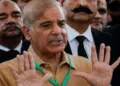
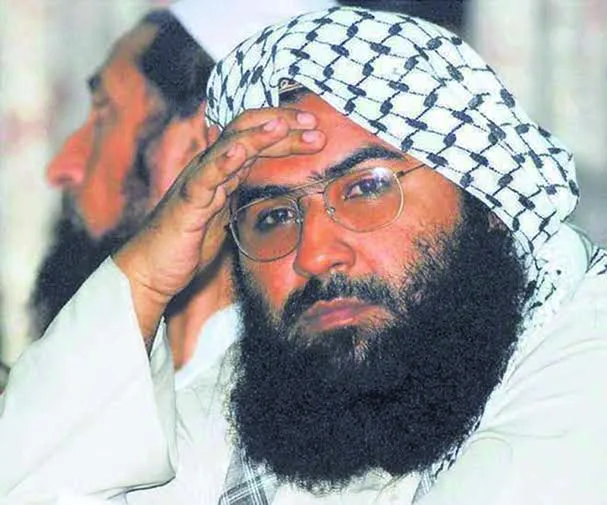 Pakistan PM Shehbaz Sharif has announced comprehensive support and a compensation of Rs 1 crore per killed to the family of those killed during India’s Operation Sindoor. These announcements come in the wake of the first disbursement of a 1 billion dollar International Monetary Fund (IMF) loan to Pakistan under the Resilience and Sustainability Facility. The Pakistan Government’s announcement will result in Rs 14 crore payout to UN-designated and India’s most wanted terrorist, Masood Azhar, whose 14 family members were killed during the Sindoor strike. Masood Azhar, a UN-designated terrorist, is the chief of the international terror outfit Jaish-e-Mohammed (JeM).
Bharat leverages its strengths of demographic and economic might to counter Pakistan and China on the global stage. Bharatiya scale allows long-term outmaneuvering with the West. In addition, the multi-religious, secular ethos of Bharat offers internal stability and international legitimacy, unlike Pakistan or China’s weaknesses. Military actions like “Operation Sindoor” show Bharat’s ability to be firm, resolute, and precise, avoiding escalation while sending a message.
Compare this to global powers—the US is swinging wildly in its “deal-making” frenzy (eg, Trump-era tariffs alienating allies), Europe is in an almost paralysed state of diplomacy driven by internal division, unable to handle Russia, and China is calculated but paranoid, picking fights with neighbours unnecessarily.
The recent 1.4 billion dollar loan to Pakistan in May 2025 by IMF, and a further freeing up of 1 billion dollars despite Bharat’s protests, shows its current approach – keeping Pakistan afloat rather than pushing reform
Bretton Woods Biases
Transactional West, busy with internal politics, and a rising China highlight the limitations of IMF. The IMF, World Bank, and UN, born in 1945, struggle with today’s challenges. Their handling of Pakistan proves it:
- Short-Term Stability Over Security: The IMF loans (over 50 billion dollars since 1980) prop up Pakistan without tackling terror roots, risking a severe war in the future, as Bharat warns.
- Western-Centric Lens: As Western dominance fades, these bodies can’t handle non-Western actors, especially with China backing them, as seen in Pakistan’s removal from the FATF grey list in 2022 despite terror links.
- Transactional Nature: The West’s focus on internal politics leaves little appetite for long-term solutions, echoing appeasement’s failures.
These institutions must penalise rogue states early, cutting off financial lifelines and letting them fail, rather than letting situations simmer, a lesson Bharat has long advocated. The IMF’s recent governance and corruption diagnostic in Pakistan is a start, but it must go further, tying loans to anti-terror measures.
Bharat’s strategy is a masterclass in optimisation—firm yet forward-thinking, using its scale and values to outmanoeuvre threats. The world must heed the call of Bharat to choke off states like Pakistan financially and diplomatically, before the twilight years of IMF let an apocalyptic crisis slip through. Bharat’s steady climb to the top is inevitable in a multidimensional world, and it’s time for global institutions to align with this vision.