Gilgit-Baltistan Boils: Locals accuse Pakistan of looting land and resources
September 17, 2026
  • Read Ecopy
  • Circulation
  • Advertise
  • Careers
  • About Us
  • Contact Us
Android AppiPhone AppArattai
Organiser
  • ‌
  • Bharat
    • Assam
    • Bihar
    • Chhattisgarh
    • Jharkhand
    • Maharashtra
    • View All States
  • World
    • Asia
    • Europe
    • North America
    • South America
    • Africa
    • Australia
  • Editorial
  • International
  • Opinion
  • RSS @ 100
  • More
    • World Hindu Congress 2026
    • Op Sindoor
    • Analysis
    • Sports
    • Defence
    • Politics
    • Business
    • Economy
    • Culture
    • Special Report
    • Sci & Tech
    • Entertainment
    • G20
    • Azadi Ka Amrit Mahotsav
    • Vocal4Local
    • Web Stories
    • Education
    • Employment
    • Books
    • Interviews
    • Travel
    • Law
    • Health
    • Obituary
  • Subscribe
    • Subscribe Print Edition
    • Subscribe Ecopy
    • Read Ecopy
  • ‌
  • Bharat
    • Assam
    • Bihar
    • Chhattisgarh
    • Jharkhand
    • Maharashtra
    • View All States
  • World
    • Asia
    • Europe
    • North America
    • South America
    • Africa
    • Australia
  • Editorial
  • International
  • Opinion
  • RSS @ 100
  • More
    • World Hindu Congress 2026
    • Op Sindoor
    • Analysis
    • Sports
    • Defence
    • Politics
    • Business
    • Economy
    • Culture
    • Special Report
    • Sci & Tech
    • Entertainment
    • G20
    • Azadi Ka Amrit Mahotsav
    • Vocal4Local
    • Web Stories
    • Education
    • Employment
    • Books
    • Interviews
    • Travel
    • Law
    • Health
    • Obituary
  • Subscribe
    • Subscribe Print Edition
    • Subscribe Ecopy
    • Read Ecopy
Organiser
  • Home
  • Bharat
  • World
  • Operation Sindoor
  • Editorial
  • Analysis
  • Opinion
  • Culture
  • Defence
  • International Edition
  • RSS @ 100
  • Magazine
  • Read Ecopy
Home World

Gilgit-Baltistan Boils: Locals accuse Pakistan of looting land and resources

Widespread anger has erupted in Pakistan-occupied Gilgit-Baltistan as locals protest against Islamabad’s controversial land and mineral policies. Hundreds rallied in Shigar district, accusing the Pakistan Army and government of exploiting their natural resources without consent

Shashank Kumar DwivediShashank Kumar Dwivedi
Apr 29, 2025, 07:15 pm IST
inWorld, South Asia, Asia
Follow on Google News
Gilgit-Baltistan Boils: Locals accuse Pakistan of looting land and resources

Gilgit-Baltistan Boils: Locals accuse Pakistan of looting land and resources

Facebook
Twitter
WhatsAppTelegramEmail

Pakistan’s deepening internal crisis took another serious turn as widespread protests erupted across Gilgit-Baltistan (GB), a region illegally occupied by Pakistan since 1947. The immediate spark for the latest wave of demonstrations was the combination of land and mineral grabs sanctioned by the Pakistani state and army, and the worsening living conditions due to prolonged, frequent power outages.

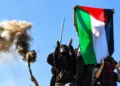
On April 27, hundreds of residents from the Shigar district poured onto the streets to register their anger against the Pakistan government and the military establishment. Carrying banners and raising slogans, the demonstrators vehemently opposed the proposed Mines and Minerals Bill, which they allege aims to legalise the systematic exploitation of the region’s natural resources without the consent of its indigenous population.

Organised by the K2 Action Committee, the protest drew people from several surrounding villages, including Dassu, Baraldo, Hyderabad, Tisar, Basho, and others. The protestors gathered at Hussaini Chowk in the district headquarters of Shigar, forming a massive rally. Their slogans, such as “Kabze par kabza namanzoor” (“We reject repeated occupations”), captured the deep-rooted resentment among the people against decades of resource exploitation and political marginalisation.

The core of the protest: “No policy without public consent”

The rally revolved around a clear and resolute message, that no decision regarding mining or resource extraction would be acceptable without public participation and consent. Speakers at the demonstration warned Islamabad and the Pakistan Army that unilateral actions would be fiercely resisted. They emphasised that the land, rivers, mountains, and minerals of Gilgit-Baltistan belong to its people, not to an occupying authority seeking to enrich itself at their expense.

One protester summed up the collective sentiment, stating, “The mountains, rivers, and minerals are ours. We are the custodians of this land, and we will not allow exploitation without our consent.”

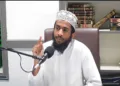
The protest gained significant momentum when Agha Syed Ali Rizvi, a prominent Shia cleric and President of Majlis Wahdat-e-Muslimeen, addressed the gathering. Speaking passionately, Rizvi directly attacked Pakistan’s policies in the region.

He declared: “All geological resources, forests, and mountains in Gilgit-Baltistan are the collective property of its people.”

Warning Pakistan against any attempt to exploit the region’s mineral wealth without local consent, Rizvi said: “If Pakistan wants to pay off its debt, if it wants to become rich, if it needs minerals, then seek permission from every child of Shigar. We will offer charity to Pakistan if needed.”


In a chilling warning to the authorities, he further added: “If you come forcibly to occupy our lands, we swear by God, we will dig your graves on these very mountains.”

The forceful speeches and the passion evident among the crowd reflect a rapidly growing political consciousness and willingness to resist Islamabad’s extractive policies in Gilgit-Baltistan.

Why Gilgit-Baltistan Matters?

The unrest in Gilgit-Baltistan carries far-reaching implications, not only for Pakistan but also for India and the broader region. Gilgit-Baltistan holds enormous strategic significance. A major portion of the China-Pakistan Economic Corridor (CPEC), a flagship project of China’s Belt and Road Initiative (BRI), passes through this region.

India has strongly objected to CPEC, stating that it passes through territory that belongs to India but is illegally occupied by Pakistan. India’s objections stem not only from legal claims but also from security concerns, as the development of infrastructure in PoGB has led to increased Chinese investment, presence, and even military collaboration in sensitive areas close to the Line of Control (LoC) and the India-China border.

Gilgit-Baltistan’s geographical position further enhances its strategic importance. It shares borders with China’s Xinjiang province, Afghanistan’s narrow Wakhan Corridor, and India’s union territory of Jammu and Kashmir. The Karakoram Highway, linking Pakistan to China, passes directly through Gilgit-Baltistan, making it a critical artery for trade and military logistics.

Thus, control over Gilgit-Baltistan is not merely about land, it is about dominance over a vital geopolitical junction. This, coupled with Pakistan’s desire to exploit the region’s rich mineral deposits without local input, has fueled both internal dissent and international concern.

Worsening Living Conditions: Power outages and economic hardship

While the larger geopolitical stakes loom large, the immediate grievances of the people are tied to daily survival. The residents of Gilgit-Baltistan are grappling with severe hardships, including frequent power outages lasting up to 20 hours in some areas. These blackouts, occurring even during critical periods such as winter months, have devastated local businesses, agriculture, and households.

In a region already marginalised economically, the frustration is boiling over. The constant land-grabbing practices, coupled with worsening infrastructure and services, have created a volatile environment where even previously small grievances now fuel mass mobilisations.

The growing unrest is also beginning to affect Pakistan’s ambitions with China. Local resistance along CPEC routes, particularly protests and blockades, is disrupting trade and raising concerns in Beijing about the long-term viability of its investments in Pakistan-occupied territories.

An unfolding crisis with regional ramifications

The protests in Gilgit-Baltistan are not isolated expressions of anger, they represent the culmination of decades of political suppression, economic exploitation, and social neglect. As Islamabad faces deepening crises within its borders, the anger in Gilgit-Baltistan is yet another indication that Pakistan’s domestic instability is spinning out of control.

By seeking to tighten its grip over natural resources without consulting the indigenous population, Pakistan risks triggering even more intense resistance movements. The people of Gilgit-Baltistan, long treated as second-class citizens, are now openly challenging the state narrative and demanding autonomy over their land and future.
Topics: PakistanIslamGilgit BaltistanBorder Dispute
Share
Tweet
SendShareSend
✮ Subscribe Organiser YouTube Channel. ✮
✮ Join Organiser's WhatsApp channel for Nationalist views beyond the news. ✮
Previous News

Ground Report | Murshidabad Violence: “In the name of WAQF…. punished just for being Hindu”

Next News

Terror has a religion — And it’s time to expose the hypocrisy of India’s leftists

Related News

Chinese President Xi Jinping and Prime Minister Modi at BRICS Summit, 2026

BRICS Summit: China inks declaration on Pahalgam attack & counter-terrorism; India’s win amid Beijing-Islamabad ties

‘Samuel Could Never Do This’: Mother Rejects Blasphemy Allegations Against Son in Lahore

Pakistan Blasphemy Case: Mother of Christian man Samuel Arif claims false implication, seeks justice

UN Experts Flag Balochistan ‘Pattern’ of Alleged Disappearances and Extrajudicial Killings

Balochistan Under UN Lens: Experts raise alarm over alleged disappearances, torture and killings

The Map of India shown in Afghanistan Cricket Board's promotional video

Afghanistan cricket promo irks occupying Pakistan; Kabul highlights PoJK, Gilgit-Baltistan as Indian territories

Austrian Minister Claudia Bauer said the Muslim Brotherhood should be banned, warning that political Islam has spread into established institutions and IGGO could face action.

Austria moves to ban Muslim Brotherhood: Official Islamic body IGGO faces action over political Islam & radicalisation

PM Modi calls for united global action to dismantle entire terror ecosystem, pushing SCO to reject double standards on terrorism

Dismantling the Global Terror Ecosystem: PM Modi pushes SCO towards coordinated counter-terrorism action

Load More

Latest News

The resistance before liberation: Arya Samaj and the fight against the Razakars in Hyderabad

J&K BJP OBC Morcha presented 50,000 diyas to Sat Sharma under the ‘Aashirwad Ka Diya’ initiative to mark PM Modi’s birthday

PM Modi’s Birthday: J&K BJP OBC Morcha presents 50,000 diyas as part of ‘Aashirwad Ka Diya’ programme

A Representative Image

Chinese Telegram network, bank insider and Rs 12.84 crore fraud: How Delhi Police traced the corporate cybercrime trail

Odisha CM Mohan Charan Majhi and others during the inauguration of the Doppler Weather Radar and the launch of various development projects in Sambalpur

Odisha: “Sambalpur gets India’s 51st doppler weather radar, 40 more to be installed nationwide, ” says Jitendra Singh

Next-generation TB vaccines could save 7.3 million lives by 2050

New TB vaccines could protect adolescents and adults, helping save 7.3 million lives between 2030 and 2050: Gavi

25 years of Narendra Modi (AI-generated Image)

Modi@25: Jan dhan, UPI, Swachh Bharat to Viksit Bharat — A journey of transformation

Vishwakarma Puja Dattopant Thengadiji Vs Commies: Communist devaluation of dignity and selfhood

The Communist armed struggle continued after the Nizam’s surrender, raising questions over its objectives and fight against the Indian Army

Hyderabad Liberation: Why the communists continued their armed struggle against the Indian Army after Nizam’s surrender

Akhil Bharatiya Vidyarthi Parishad (ABVP) National Secretary Shravan B. Raj strongly condemned Karnataka Congress President B. K. Hariprasad’s statement describing Umar Khalid as a ‘nationalist’

ABVP slams Congress over Delhi riots 2020 accused Umar Khalid remark, questions ‘Changing’ nationalism narrative

Veteran Kannada Actor Ananth Nag wins Dada Saheb Phalke award

Anant Nag Wins Dadasaheb Phalke Award: PM Modi praises his natural acting, versatility

Load More
  • Privacy
  • Terms
  • Cookie Policy
  • Refund and Cancellation
  • Delivery and Shipping

© Bharat Prakashan (Delhi) Limited.
Tech-enabled by Ananthapuri Technologies

  • Home
  • Search Organiser
  • Bharat
    • Assam
    • Bihar
    • Chhattisgarh
    • Jharkhand
    • Maharashtra
    • View All States
  • World
    • Asia
    • Africa
    • North America
    • South America
    • Europe
    • Australia
  • Editorial
  • Operation Sindoor
  • Opinion
  • Analysis
  • Defence
  • Culture
  • Sports
  • Business
  • RSS @ 100
  • Entertainment
  • More ..
    • Sci & Tech
    • Vocal4Local
    • Special Report
    • Education
    • Employment
    • Books
    • Interviews
    • Travel
    • Health
    • Politics
    • Law
    • Economy
    • Obituary
  • Subscribe Magazine
  • Read Ecopy
  • Advertise
  • Circulation
  • Careers
  • About Us
  • Contact Us
  • Policies & Terms
    • Privacy Policy
    • Cookie Policy
    • Refund and Cancellation
    • Terms of Use

© Bharat Prakashan (Delhi) Limited.
Tech-enabled by Ananthapuri Technologies