Study finds how antidepressants have potential for treating brain tumours
June 10, 2026
  • Read Ecopy
  • Circulation
  • Advertise
  • Careers
  • About Us
  • Contact Us
Android AppiPhone AppArattai
Organiser
  • ‌
  • Bharat
    • Assam
    • Bihar
    • Chhattisgarh
    • Jharkhand
    • Maharashtra
    • View All States
  • World
    • Asia
    • Europe
    • North America
    • South America
    • Africa
    • Australia
  • Editorial
  • International
  • Opinion
  • RSS @ 100
  • More
    • Op Sindoor
    • Analysis
    • Sports
    • Defence
    • Politics
    • Business
    • Economy
    • Culture
    • Special Report
    • Sci & Tech
    • Entertainment
    • G20
    • Azadi Ka Amrit Mahotsav
    • Vocal4Local
    • Web Stories
    • Education
    • Employment
    • Books
    • Interviews
    • Travel
    • Law
    • Health
    • Obituary
  • Subscribe
    • Subscribe Print Edition
    • Subscribe Ecopy
    • Read Ecopy
  • ‌
  • Bharat
    • Assam
    • Bihar
    • Chhattisgarh
    • Jharkhand
    • Maharashtra
    • View All States
  • World
    • Asia
    • Europe
    • North America
    • South America
    • Africa
    • Australia
  • Editorial
  • International
  • Opinion
  • RSS @ 100
  • More
    • Op Sindoor
    • Analysis
    • Sports
    • Defence
    • Politics
    • Business
    • Economy
    • Culture
    • Special Report
    • Sci & Tech
    • Entertainment
    • G20
    • Azadi Ka Amrit Mahotsav
    • Vocal4Local
    • Web Stories
    • Education
    • Employment
    • Books
    • Interviews
    • Travel
    • Law
    • Health
    • Obituary
  • Subscribe
    • Subscribe Print Edition
    • Subscribe Ecopy
    • Read Ecopy
Organiser
  • Home
  • Bharat
  • World
  • Operation Sindoor
  • Editorial
  • Analysis
  • Opinion
  • Culture
  • Defence
  • International Edition
  • RSS @ 100
  • Magazine
  • Read Ecopy
Home World

Study finds how antidepressants have potential for treating brain tumours

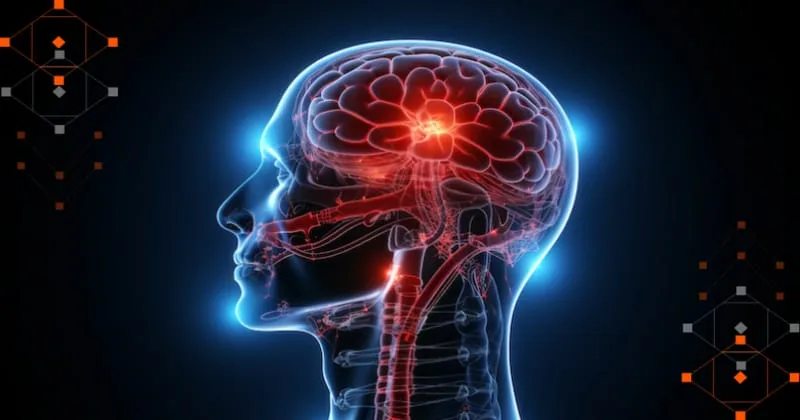
A study has found that vortioxetine, an antidepressant, shows promise in treating glioblastoma, an aggressive and currently incurable brain tumour. This discovery could pave the way for new, effective treatments that utilise existing medications to combat this challenging disease

WEBDESKWEBDESK
Sep 23, 2024, 11:00 pm IST
in World, Health
Follow on Google News
Representative image

Representative image

FacebookTwitterWhatsAppTelegramEmail

Glioblastoma is an extremely aggressive brain tumour that is currently incurable. Cancer doctors can increase their patients’ life expectancy with surgeries, radiation, chemotherapy, or surgical procedures. Nonetheless, half of patients die within a year of diagnosis.

Medications that are effective against brain tumours are challenging to find since many cancer medications are unable to cross the blood-brain barrier and enter the brain. This reduces the number of available treatments. Neuro-oncologists have thus been working hard for some years to identify better medications that can reach the brain and eradicate the tumour.

Researchers led by ETH Zurich Professor Berend Snijder have discovered a chemical that, at least in vitro, successfully combats glioblastomas: vortioxetine, an antidepressant. Scientists understand that this affordable medicine, which has already

Snijder’s postdoc and lead author of the study, Sohyon Lee found it using pharmacoscopy, a special screening platform that the researchers have developed at ETH Zurich over the past years. The study findings were recently published in the journal Nature Medicine. In this study, the ETH Zurich researchers worked closely with colleagues from various hospitals, in particular with the group under neurologists Michael Weller and Tobias Weiss at the University Hospital Zurich (USZ).

With pharmacoscopy, ETH Zurich researchers can simultaneously test hundreds of active substances on living cells from human cancer tissue. Their study focused primarily on neuroactive substances that cross the blood-brain barrier, such as antidepressants, Parkinson’s medication and antipsychotics. In total, the research team tested up to 130 different agents on tumour tissue from 40 patients.

To determine which substances, have an effect on the cancer cells, the researchers used imaging techniques and computer analysis. Previously, Snijder and his team had used the pharmacoscopy platform only to analyse blood cancer (see ETH News) and derived treatment options from this. Glioblastomas are the first solid tumours that they have systematically investigated using this method with a view to use existing drugs for new purposes.

For the screening, Lee analysed fresh cancer tissue from patients who had recently undergone surgery at the University Hospital Zurich. The ETH Zurich researchers then processed this tissue in the laboratory and screened it on the pharmacoscopy platform. Two days later, the researchers obtained results showing which agents worked on the cancer cells and which did not.

The results made it clear that some, but not all, of the antidepressants tested were unexpectedly effective against the tumour cells. These drugs worked particularly well when they quickly triggered a signalling cascade, which is important for neuronal progenitor cells, but also suppresses cell division. Vortioxetine proved to be the most effective antidepressant.

The ETH Zurich researchers also used a computer model to test over a million substances for their effectiveness against glioblastomas. They discovered that the joint signalling cascade of neurons and cancer cells plays a decisive role and explains why some neuroactive drugs work while others don’t.

In the last step, researchers at the University Hospital Zurich tested vortioxetine on mice with a glioblastoma. The drug also showed good efficacy in these trials, especially in combination with the current standard treatment.

The group of ETH Zurich and USZ researchers is now preparing two clinical trials. In one, glioblastoma patients will be treated with vortioxetine in addition to standard treatment (surgery, chemotherapy, radiation). In the other, patients will receive a personalised drug selection, which the researchers will determine for each individual using the pharmacoscopy platform.

“The advantage of vortioxetine is that it is safe and very cost-effective,” says Michael Weller, Professor at the University Hospital Zurich, Director of the Department of Neurology and coauthor of the study published in Nature Medicine. “As the drug has already been approved, it doesn’t have to undergo a complex approval procedure and could soon supplement the standard therapy for this deadly brain tumour.” He hopes that oncologists will be able to use it soon.

However, he cautions patients and their relatives against obtaining vortioxetine themselves and taking it without medical supervision. “We don’t yet know whether the drug works in humans and what dose is required to combat the tumour, which is why clinical trials are necessary. Self-medicating would be an incalculable risk.”

Also Read: Rheumatoid Arthritis and Ayurveda: Exploring traditional remedies for modern challenges

Snijder, too, warns against rushing to use the antidepressant on glioblastomas: “So far, it’s only been proven effective in cell cultures and in mice.”

Nevertheless, he believes that this study has achieved an ideal result: “We started with this terrible tumour and found existing drugs that fight against it. We show how and why they work, and soon we’ll be able to test them on patients.” Should vortioxetine prove effective, this will be the first time in recent decades that an active substance has been found to improve the treatment of glioblastoma.

(with inputs from ANI)
Topics: AntidepressantsBrain tumoursGlioblastomaCancer
ShareTweetSendShareSend
✮ Subscribe Organiser YouTube Channel. ✮
✮ Join Organiser's WhatsApp channel for Nationalist views beyond the news. ✮
Previous News

“Reform is key to relevance”: PM Modi calls for reforms in global institutions at UN Summit of Future

Next News

Bengaluru Shocker: Fridge in which 50 pieces of Mahalakshmi’s body were kept seized; Accused identified 

Related News

Forgotten Victims of Chagai: Cancer Cases Rise in Pakistan’s Nuclear Test Zone

Chagai’s Nuclear Curse: Balochistan still battles cancer 28 years after Pakistan conducted nuclear tests

Representative image

Childhood exposure to bacterial toxin can trigger Colorectal cancer among the young: Study

Representative image

Study finds critical relationship between stem cells, mechanical signals

Breakthrough ‘3-in-1’ antibody offers promising new approach for targeted cancer treatment

Representative image

Researchers discover how body’s natural killer cells protects from cancer

Representative image

Diet can be risk factor for colon cancer in younger adults, finds study

Load More

Latest News

Mansoor Ahmed and daughter Shamshad Begum arrested for Rs 5.3 cr government job scam

Karnataka Job Scam Busted: Mansoor, daughter Shamshad Begum arrested for Rs 5.3 crore fraud; 40+ aspirants duped

Shamli Conversion Case: Delhi Nikahnama, Name Changes and Pakistan-Based Preacher Videos Under Scanner; Father Awaits Ayush Malik’s Return Home

Shamli Conversion Case: How a Delhi nikahnama, Pakistani cleric’s lectures and an affair changed Ayush Malik’s life

CM Suvendu Adhikari announces 125-ft Syama Prasad Mookerji statue in Kolkata on 125th birth anniversary

CM Suvendu Adhikari announces 125-foot Syama Prasad Mookerjee statue in Kolkata to mark his 125th birth anniversary

“They Took My Son Away”: Ayush Malik’s Father Accuses Chandni Qureshi of Conversion Plot and Property Grab in Shamli

“They ruined my family, took my son away”: Ayush Malik’s father says changes began when he started growing a beard

Back-to-Back Love Jihad Cases in Lucknow: PGI Woman Goes Missing, Another Alleges Conversion Pressure After Marriage Promise

Back to back Love Jihad in Lucknow: PGI woman missing after meeting Irshad, Another alleges conversion by Zubair Ansari

New update in Nashik TCS Coporate Jihad Case as accused were asked to read a book titled The Life of Muhammad

Nashik TCS Corporate Jihad: Investigators probe claims victims were asked to read book ‘The Life of Muhammad’

MEA hails 12 years of Modi government

MEA celebrates PM Modi’s 12 years in office, says India “witnessed remarkable transformation” in foreign policy

Hawkers protest in West Bengal

The Left’s Selective Morality: From Sainbari to Hawker protests

Odisha CM Mohan Charan Majhi and Union Minister of Law and Justice Arjun Ram Meghwal along with other dignitaries on the stage on the occasion of completion of 12 years of the Central Government

PM Modi’s 12-years of governance marks era of transformation, growth & global recognition: Odisha CM Mohan Majhi

Modi govt clears Rs 13,000 Crore Great Nicobar Airport Project (This is an AI generated image)

India’s strategic move in Great Nicobar: Rs 13,000 crore airport to double strength in the Indian Ocean

Load More
  • Privacy
  • Terms
  • Cookie Policy
  • Refund and Cancellation
  • Delivery and Shipping

© Bharat Prakashan (Delhi) Limited.
Tech-enabled by Ananthapuri Technologies

  • Home
  • Search Organiser
  • Bharat
    • Assam
    • Bihar
    • Chhattisgarh
    • Jharkhand
    • Maharashtra
    • View All States
  • World
    • Asia
    • Africa
    • North America
    • South America
    • Europe
    • Australia
  • Editorial
  • Operation Sindoor
  • Opinion
  • Analysis
  • Defence
  • Culture
  • Sports
  • Business
  • RSS @ 100
  • Entertainment
  • More ..
    • Sci & Tech
    • Vocal4Local
    • Special Report
    • Education
    • Employment
    • Books
    • Interviews
    • Travel
    • Health
    • Politics
    • Law
    • Economy
    • Obituary
  • Subscribe Magazine
  • Read Ecopy
  • Advertise
  • Circulation
  • Careers
  • About Us
  • Contact Us
  • Policies & Terms
    • Privacy Policy
    • Cookie Policy
    • Refund and Cancellation
    • Terms of Use

© Bharat Prakashan (Delhi) Limited.
Tech-enabled by Ananthapuri Technologies