Childhood exposure to bacterial toxin may trigger colorectal cancer
July 21, 2026
  • Read Ecopy
  • Circulation
  • Advertise
  • Careers
  • About Us
  • Contact Us
Android AppiPhone AppArattai
Organiser
  • ‌
  • Bharat
    • Assam
    • Bihar
    • Chhattisgarh
    • Jharkhand
    • Maharashtra
    • View All States
  • World
    • Asia
    • Europe
    • North America
    • South America
    • Africa
    • Australia
  • Editorial
  • International
  • Opinion
  • RSS @ 100
  • More
    • Op Sindoor
    • Analysis
    • Sports
    • Defence
    • Politics
    • Business
    • Economy
    • Culture
    • Special Report
    • Sci & Tech
    • Entertainment
    • G20
    • Azadi Ka Amrit Mahotsav
    • Vocal4Local
    • Web Stories
    • Education
    • Employment
    • Books
    • Interviews
    • Travel
    • Law
    • Health
    • Obituary
  • Subscribe
    • Subscribe Print Edition
    • Subscribe Ecopy
    • Read Ecopy
  • ‌
  • Bharat
    • Assam
    • Bihar
    • Chhattisgarh
    • Jharkhand
    • Maharashtra
    • View All States
  • World
    • Asia
    • Europe
    • North America
    • South America
    • Africa
    • Australia
  • Editorial
  • International
  • Opinion
  • RSS @ 100
  • More
    • Op Sindoor
    • Analysis
    • Sports
    • Defence
    • Politics
    • Business
    • Economy
    • Culture
    • Special Report
    • Sci & Tech
    • Entertainment
    • G20
    • Azadi Ka Amrit Mahotsav
    • Vocal4Local
    • Web Stories
    • Education
    • Employment
    • Books
    • Interviews
    • Travel
    • Law
    • Health
    • Obituary
  • Subscribe
    • Subscribe Print Edition
    • Subscribe Ecopy
    • Read Ecopy
Organiser
  • Home
  • Bharat
  • World
  • Operation Sindoor
  • Editorial
  • Analysis
  • Opinion
  • Culture
  • Defence
  • International Edition
  • RSS @ 100
  • Magazine
  • Read Ecopy
Home World

Childhood exposure to bacterial toxin can trigger Colorectal cancer among the young: Study

A new international study has linked early-life exposure to the bacterial toxin colibactin with the rising cases of early-onset colorectal cancer, revealing distinct DNA mutations in young patients. The research highlights microbial exposure as a possible hidden trigger in those under 50

WEBDESKWEBDESK
Apr 26, 2025, 11:00 pm IST
in World, Health
Follow on Google News
Representative image

Representative image

FacebookTwitterWhatsAppTelegramEmail

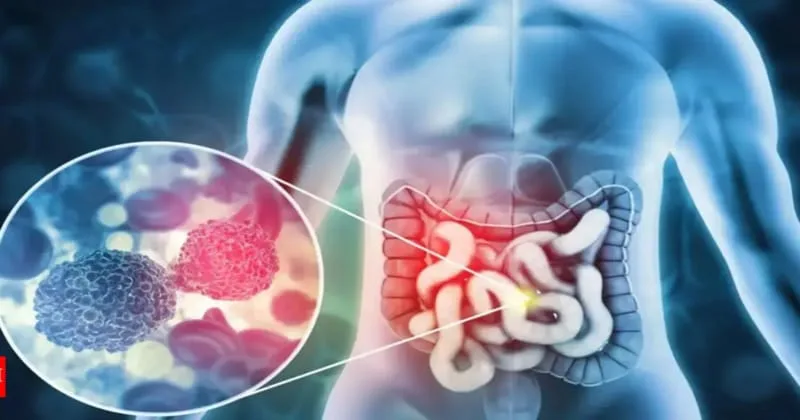
An international team of researchers has identified a potential microbial culprit behind the alarming rise in early-onset colorectal cancer: a bacterial toxin called colibactin.

Scientists report that exposure to colibactin in early childhood imprints a distinct genetic signature on the DNA of colon cells–one that could significantly increase the risk of developing colorectal cancer before the age of 50.

The study was led by an international team of researchers, headed by the University of California, San Diego. It was produced by certain strains of Escherichia coli that reside in the colon and rectum, colibactin is a toxin capable of altering DNA.

The new study, published on April 23 in Nature, analysed 981 colorectal cancer genomes from patients with both early- and late-onset disease across 11 countries with varying colorectal cancer risk levels.

The findings reveal that colibactin leaves behind specific patterns of DNA mutations that were 3.3 times more common in early-onset cases (specifically in adults under 40) than in those diagnosed after the age of 70. These mutation patterns were also particularly prevalent in countries with a high incidence of early-onset cases.

“These mutation patterns are a kind of historical record in the genome, and they point to early-life exposure to colibactin as a driving force behind early-onset disease,” said study senior author Ludmil Alexandrov, professor in the Shu Chien-Gene Lay Department of Bioengineering and the Department of Cellular and Molecular Medicine at UC San Diego.

Although previous studies, including earlier work from Alexandrov’s lab, have identified colibactin-related mutations in roughly 10 to 15 per cent of all colorectal cancer cases, those studies either focused on late-onset cases or did not distinguish between early- and late-onset disease.

This latest study is the first to demonstrate a substantial enrichment of colibactin-related mutations specifically in early-onset cases.

The implications are sobering. Once considered a disease of older adults, colorectal cancer is now on the rise among young people in at least 27 countries. Its incidence in adults under 50 has roughly doubled every decade for the past 20 years.

If current trends continue, colorectal cancer is projected to become the leading cause of cancer-related death among young adults by 2030. Until now, the reasons behind this surge have remained unknown. Young adults diagnosed with colorectal cancer often have no family history of the disease and few known risk factors, such as obesity or hypertension. That has fueled speculation about potential hidden environmental or microbial exposures–something this new study directly investigates.

(With inputs from ANI)


Topics: Bacterial ToxinDNA AlterationMicrobial ExposureCancerCancer Researchcolorectal cancerColibactin
ShareTweetSendShareSend
✮ Subscribe Organiser YouTube Channel. ✮
✮ Join Organiser's WhatsApp channel for Nationalist views beyond the news. ✮
Previous News

“We will take action in Chhattisgarh,” says CM Vishnu Deo Sai on deportation of Pakistani nationals

Next News

Tamil Nadu: Kanchi Mutt names Andhra Pradesh’s 24-years-old vedic scholar as successor to current seer

Related News

Forgotten Victims of Chagai: Cancer Cases Rise in Pakistan’s Nuclear Test Zone

Chagai’s Nuclear Curse: Balochistan still battles cancer 28 years after Pakistan conducted nuclear tests

Representative image

IIT Madras WSAI & Ohio State University researchers develop new AI framework to aid discovery of next-generation drugs

Representative image

New antibody reduces tumour growth in treatment-resistant breast, ovarian cancers: Study

Representative image

Study links coffee, tea consumption to lower risk of head, neck cancer

Representative image

Keto diet metabolite may power up CAR T cells to kill cancer: Study

Representative image

Study finds critical relationship between stem cells, mechanical signals

Load More

Latest News

Plywood workshop (Representative image)

Keralam: Nine child labourers rescued from Perumbavoor plywood factories; organised child trafficking racket suspected

Fazal-ur-Rehman and Asim Munir

Pakistan: Fazal-ur-Rehman challenges Asim Munir to ‘take off uniform & fight election’; Slams for failure in Kargil war

MEA condemns MV Golden Leo attack, death of 4 Indians; Summons Russian diplomat over maritime security

Ayodhya: Three boatmen detained after viral video shows beer drinking, mutton consumption on sacred Saryu river

Karnataka: HC refuses to quash Rs 5.3 crore fake govt job scam case against Shamshad Begum, daughter of Mansur Ahmed

Hera Panchami marks Maa Lakshmi's symbolic anger with the ceremonial breaking of Bhagwan Jagannath's Nandighosha chariot

Hera Panchami: The divine story behind Maa Lakshmi’s anger and the breaking of Nandighosha chariot

Centre's SMILE scheme to cover 295 cities by 2030-31, aims to rehabilitate 35,000 persons engaged in begging

SMILE Scheme Expansion: Government plans to make 295 cities begging-free, over 10,200 already rehabilitated

Karnataka HC pulls up Congress govt for chasing tweets instead of criminals, stays FIR probe

Viral social media posts falsely claimed that India's first hydrogen-powered train suffered a technical failure

Fact Check: Routine servicing of India’s Hydrogen train misconstrued as indigenous tech failure in viral video

ABVP demands immediate INSPIRE SHE scholarship release, flags delay affecting thousands of science students

Load More
  • Privacy
  • Terms
  • Cookie Policy
  • Refund and Cancellation
  • Delivery and Shipping

© Bharat Prakashan (Delhi) Limited.
Tech-enabled by Ananthapuri Technologies

  • Home
  • Search Organiser
  • Bharat
    • Assam
    • Bihar
    • Chhattisgarh
    • Jharkhand
    • Maharashtra
    • View All States
  • World
    • Asia
    • Africa
    • North America
    • South America
    • Europe
    • Australia
  • Editorial
  • Operation Sindoor
  • Opinion
  • Analysis
  • Defence
  • Culture
  • Sports
  • Business
  • RSS @ 100
  • Entertainment
  • More ..
    • Sci & Tech
    • Vocal4Local
    • Special Report
    • Education
    • Employment
    • Books
    • Interviews
    • Travel
    • Health
    • Politics
    • Law
    • Economy
    • Obituary
  • Subscribe Magazine
  • Read Ecopy
  • Advertise
  • Circulation
  • Careers
  • About Us
  • Contact Us
  • Policies & Terms
    • Privacy Policy
    • Cookie Policy
    • Refund and Cancellation
    • Terms of Use

© Bharat Prakashan (Delhi) Limited.
Tech-enabled by Ananthapuri Technologies