Madras HC's landmark verdict: A call for secular appointments in Govt-aided educational institutions
August 9, 2026
  • Read Ecopy
  • Circulation
  • Advertise
  • Careers
  • About Us
  • Contact Us
Android AppiPhone AppArattai
Organiser
  • ‌
  • Bharat
    • Assam
    • Bihar
    • Chhattisgarh
    • Jharkhand
    • Maharashtra
    • View All States
  • World
    • Asia
    • Europe
    • North America
    • South America
    • Africa
    • Australia
  • Editorial
  • International
  • Opinion
  • RSS @ 100
  • More
    • Op Sindoor
    • Analysis
    • Sports
    • Defence
    • Politics
    • Business
    • Economy
    • Culture
    • Special Report
    • Sci & Tech
    • Entertainment
    • G20
    • Azadi Ka Amrit Mahotsav
    • Vocal4Local
    • Web Stories
    • Education
    • Employment
    • Books
    • Interviews
    • Travel
    • Law
    • Health
    • Obituary
  • Subscribe
    • Subscribe Print Edition
    • Subscribe Ecopy
    • Read Ecopy
  • ‌
  • Bharat
    • Assam
    • Bihar
    • Chhattisgarh
    • Jharkhand
    • Maharashtra
    • View All States
  • World
    • Asia
    • Europe
    • North America
    • South America
    • Africa
    • Australia
  • Editorial
  • International
  • Opinion
  • RSS @ 100
  • More
    • Op Sindoor
    • Analysis
    • Sports
    • Defence
    • Politics
    • Business
    • Economy
    • Culture
    • Special Report
    • Sci & Tech
    • Entertainment
    • G20
    • Azadi Ka Amrit Mahotsav
    • Vocal4Local
    • Web Stories
    • Education
    • Employment
    • Books
    • Interviews
    • Travel
    • Law
    • Health
    • Obituary
  • Subscribe
    • Subscribe Print Edition
    • Subscribe Ecopy
    • Read Ecopy
Organiser
  • Home
  • Bharat
  • World
  • Operation Sindoor
  • Editorial
  • Analysis
  • Opinion
  • Culture
  • Defence
  • International Edition
  • RSS @ 100
  • Magazine
  • Read Ecopy
Home Bharat

Madras HC’s landmark verdict: A call for secular appointments in Govt-aided educational institutions

The court asserted that when schools receive financial aid from the government, the appointment of staff must reflect the secular nature of the state by including candidates from all religious backgrounds

TS VenkatesanTS Venkatesan
Aug 21, 2024, 04:45 pm IST
inBharat, Tamil Nadu
Follow on Google News
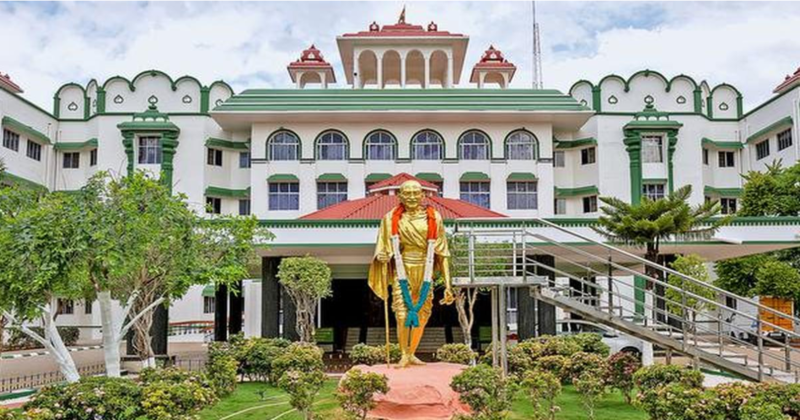
Madras High Court

Madras High Court

Facebook
Twitter
WhatsAppTelegramEmail

In a pivotal judgment, the Madurai Bench of the Madras High Court emphasized the importance of maintaining secularism in government-aided educational institutions. The court asserted that when schools receive financial aid from the government, the appointment of staff must reflect the secular nature of the state by including candidates from all religious backgrounds.

Justice G.R. Swaminathan, who delivered the judgment, highlighted the constitutional obligations of these institutions. “When the salary is paid by the state exchequer, the elementary principles of secularism demand that the process of appointment is thrown open to all eligible candidates,” he remarked. “To say that only a candidate of a particular religious denomination is entitled to apply for a post runs counter to Constitutional morality.”

The judge further suggested that it is time to introduce legislation specifically addressing this issue. He proposed the enactment of a “Transparency in Appointments of Staff in Private Aided Educational Institutions Act,” to ensure fair and secular hiring practices. This observation came during the hearing of a petition filed by C. Manohar Thangaraj, the elected treasurer of the Tirunelveli Diocese. Thangaraj had sought a court directive to prevent the Bishop from unilaterally making decisions regarding the appointment of teachers and correspondents in the educational institutions run by the diocese.

Justice Swaminathan did not mince words when addressing the alleged irregularities in the appointment process within these institutions. “One can take judicial notice of the fact that it is a publicly held belief that appointments in aided private educational institutions are governed by commercial considerations. There are a few honorable exceptions. It is reasonable to hold that the right to receive aid towards teaching grants is coupled with an obligation to appoint the best possible competent teachers,” he stated. He acknowledged the right of minority institutions to manage their appointments but insisted that vacancies must be properly advertised so that all eligible candidates, regardless of their caste, religion, or denomination, can apply.

In the specific case before the court, it was admitted that the diocese intended to appoint candidates from its own seniority list, which the judge declared unconstitutional. As a result, the court allowed the petition, setting a precedent for future cases.

The issue of religious favouritism in government-aided minority institutions has long been a contentious topic in Tamil Nadu. Groups like Hindu Munnani have frequently accused these institutions of appointing staff based on religious affiliations rather than merit, with the goal of propagating their religion under the guise of teaching. They argue that these institutions while receiving government salaries, restrict students from expressing their religious identities—such as wearing wristbands, bangles, or religious symbols—under the pretext of maintaining secularism, while not imposing similar restrictions on the use of hijabs, burqas, or rosaries.

This judgment by the Madurai Bench is not without precedent. In January 2020, the Supreme Court ruled that government-aided minority-run educational institutions do not have an absolute right to appoint teachers. A bench comprising Justice Arun Mishra and Justice U.U. Lalit upheld the West Bengal Madrasah Service Commission Act, 2008, which established a panel to appoint teachers in government-aided madrasas. The court held that the Act was not in violation of the rights of minority institutions, as it ensured a fair selection process that prioritized merit while respecting the interests of the institutions.

However, in a contrasting judgment delivered in June this year, the Delhi High Court held that government-aided minority educational institutions have absolute autonomy in appointing their staff. Justice C. Hari Shankar ruled that these institutions have the right to appoint a person of their choice, with the Directorate of Education’s role limited to prescribing qualifications and experience for key positions.


Topics: Madurai CourtSecular appointmentsReligious institutionsGovt funded institutes
Share3
Tweet
SendShareSend
✮ Subscribe Organiser YouTube Channel. ✮
✮ Join Organiser's WhatsApp channel for Nationalist views beyond the news. ✮
Previous News

Bangladesh: Dean at Dhaka University forced to resign for not allowing Quran recitation

Next News

Jharkhand: 15-year-old minor girl commits suicide after panchayat asked rape accused to compensate her with money

Related News

Representative AI image

Need for a national registry of Hindu religious institutions

Maharashtra govt’s move to abolish Devasthan Inam lands triggers debate over Temple rights & cultural heritage

Madurai Court awards death to 9 policemen, says “where there is power, there should be responsibility”

Youtuber Manish Kashyap (Npg)

Tamil Nadu: Madurai Court lifts NSA imposed against YouTuber Manish Kashyap; grants bail

Load More

Latest News

Representative Image

The significance of Shatrubodh: Bharat’s legacy of being a strong and enduring civilization

From Priyadarshini in Keralam to guarantees in Karnataka, Telangana and Himachal Pradesh, Congress-led freebie politics is raising fresh questions over the cost of populism to state finances

Indira’s Shadow over Keralam Treasury: Is Congress’ Priyadarshini Scheme fueling a freebie-driven financial emergency?

CM Yogi Adityanath announces Outsourcing Commission to Anganwadi Honorarium

Uttar Pradesh | Outsourcing Commission to Anganwadi Honorarium: ₹59,019 crore budget charts an inclusive growth map

Football’s global reach is being exploited as a vehicle for Islamic soft power, normalising religious practices and extending cultural influence far beyond the pitch.

The New Jihad: How Islam weaponises Football to impose its visibility, cultural normalisation and global influence

12 years of Prime Minister Narendra Modi and India’s growing spirit of nationalism

FCRA Amendment Bill 2026: Strengthening accountability, Protecting assets and safeguarding India’s national interests

Representative Image

Lessons from the tri-Services future warfare training course: Decoding the dynamics of battlefield tactics

Vande Mataram: The most precious social capital of India

Helicopter crashes while fighting Utah wildfire; 2 firefighters onboard dead

Utah wildfire kills 2 firefighters in helicopter crash; Catastrophic firestorm ravages 8,000sq miles across US

PoJK: The call for unfinished justice and India’s unwavering resolve to secure sovereignty

Load More
  • Privacy
  • Terms
  • Cookie Policy
  • Refund and Cancellation
  • Delivery and Shipping

© Bharat Prakashan (Delhi) Limited.
Tech-enabled by Ananthapuri Technologies

  • Home
  • Search Organiser
  • Bharat
    • Assam
    • Bihar
    • Chhattisgarh
    • Jharkhand
    • Maharashtra
    • View All States
  • World
    • Asia
    • Africa
    • North America
    • South America
    • Europe
    • Australia
  • Editorial
  • Operation Sindoor
  • Opinion
  • Analysis
  • Defence
  • Culture
  • Sports
  • Business
  • RSS @ 100
  • Entertainment
  • More ..
    • Sci & Tech
    • Vocal4Local
    • Special Report
    • Education
    • Employment
    • Books
    • Interviews
    • Travel
    • Health
    • Politics
    • Law
    • Economy
    • Obituary
  • Subscribe Magazine
  • Read Ecopy
  • Advertise
  • Circulation
  • Careers
  • About Us
  • Contact Us
  • Policies & Terms
    • Privacy Policy
    • Cookie Policy
    • Refund and Cancellation
    • Terms of Use

© Bharat Prakashan (Delhi) Limited.
Tech-enabled by Ananthapuri Technologies