Diet can be risk factor for colon cancer in younger adults, finds study
December 7, 2025
  • Read Ecopy
  • Circulation
  • Advertise
  • Careers
  • About Us
  • Contact Us
Android AppiPhone AppArattai
Organiser
  • ‌
  • Bharat
    • Assam
    • Bihar
    • Chhattisgarh
    • Jharkhand
    • Maharashtra
    • View All States
  • World
    • Asia
    • Europe
    • North America
    • South America
    • Africa
    • Australia
  • Editorial
  • International
  • Opinion
  • RSS @ 100
  • More
    • Op Sindoor
    • Analysis
    • Sports
    • Defence
    • Politics
    • Business
    • Economy
    • Culture
    • Special Report
    • Sci & Tech
    • Entertainment
    • G20
    • Azadi Ka Amrit Mahotsav
    • Vocal4Local
    • Web Stories
    • Education
    • Employment
    • Books
    • Interviews
    • Travel
    • Law
    • Health
    • Obituary
  • Subscribe
    • Subscribe Print Edition
    • Subscribe Ecopy
    • Read Ecopy
  • ‌
  • Bharat
    • Assam
    • Bihar
    • Chhattisgarh
    • Jharkhand
    • Maharashtra
    • View All States
  • World
    • Asia
    • Europe
    • North America
    • South America
    • Africa
    • Australia
  • Editorial
  • International
  • Opinion
  • RSS @ 100
  • More
    • Op Sindoor
    • Analysis
    • Sports
    • Defence
    • Politics
    • Business
    • Economy
    • Culture
    • Special Report
    • Sci & Tech
    • Entertainment
    • G20
    • Azadi Ka Amrit Mahotsav
    • Vocal4Local
    • Web Stories
    • Education
    • Employment
    • Books
    • Interviews
    • Travel
    • Law
    • Health
    • Obituary
  • Subscribe
    • Subscribe Print Edition
    • Subscribe Ecopy
    • Read Ecopy
Organiser
  • Home
  • Bharat
  • World
  • Operation Sindoor
  • Editorial
  • Analysis
  • Opinion
  • Culture
  • Defence
  • International Edition
  • RSS @ 100
  • Magazine
  • Read Ecopy
Home World

Diet can be risk factor for colon cancer in younger adults, finds study

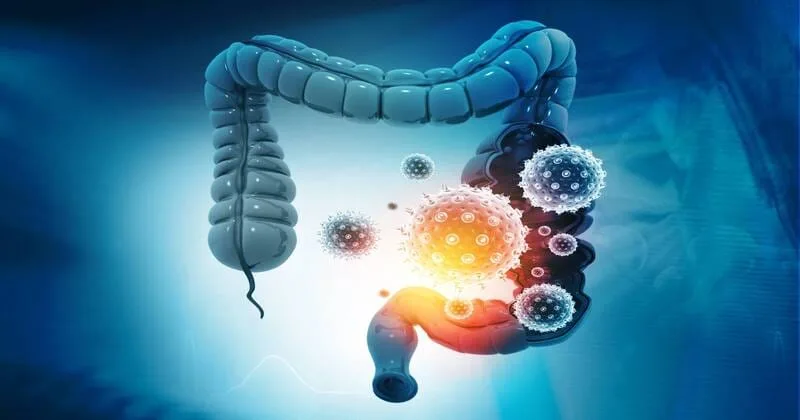
A recent study suggests that diet may be a risk factor for colon cancer in younger adults. The findings highlight the potential impact of dietary habits on cancer risk in this age group

WEBDESKWEBDESK
Aug 16, 2024, 11:00 pm IST
in World, Health
Follow on Google News
Representative image

Representative image

FacebookTwitterWhatsAppTelegramEmail

A new Cleveland Clinic study has identified diet-derived chemicals termed metabolites as the primary drivers of young-onset colorectal cancer risk, particularly those associated with red and processed meat.

The NPJ Precision Oncology paper studied metabolite and microbiome datasets and found that discussing food with a doctor is an effective method for younger adults (<60 years) to prevent colorectal cancer.

Increased monitoring and screening for colorectal cancer is a very useful tool. Senior author and gastrointestinal oncologist Suneel Kamath, MD, suggests that despite the efficacy of these approaches, physicians should approach younger patients differently.

“At the end of the day, it’s impractical to apply our care models for those over 60 to younger adults simply because we cannot give everyone in the system yearly colonoscopies,” he explains. “What is much more feasible is to give everyone in the system a simple test to measure a biomarker that determines their colorectal cancer risk. Then we can give the most at-risk individuals appropriate screening.”

Former clinical fellow Thejus Jayakrishnan, MD, and Naseer Sangwan, PhD, director of the Microbial Sequencing & Analytics Resource Core co-led the work. Researchers in Cleveland Clinic’s Center for Young-Onset Colorectal Cancer provided large-scale analyses of patient data from individuals who received care for either young- or average-onset colorectal cancer at Cleveland Clinic.

This team’s earlier work found disparities in the metabolites (diet-derived compounds) of young- and average-onset colorectal cancer, as well as differences in the gut microbiome between younger and older persons with colorectal cancer. These research suggested numerous new possibilities for exploring young-onset CRC. However, when more elements are involved in cancer risk, it becomes more difficult to grasp what’s going on and plan future study, according to Dr. Sangwan. Interactions between elements, such as gut bacteria consuming and producing metabolites, add to the complexity.

Dr Sangwan and his team then developed an artificial intelligence (AI) algorithm to combine and analyze the existing studies’ datasets and clarify what factors are most relevant for future studies. Surprisingly, Dr Sangwan’s analysis revealed that differences in diet (identified through analyzing metabolites) accounted for a significant proportion of the differences observed between the young-onset and older-onset patients.

“Researchers – ourselves included – have begun to focus on the gut microbiome as a primary contributor to colon cancer risk. But our data clearly shows that the main driver is diet,” Dr. Sangwan says. “We already know the main metabolites associated with young-onset risk, so we can now move our research forward in the correct direction.”

The team was excited to see diet play such a large role in cancer risk, because it is much easier to identify at-risk patients by counting the metabolites in their blood than it is to sequence the bacterial DNA in their stool for different microbes.

“It can actually be very complicated and difficult to change your microbiome,” explains Dr. Kamath. “While it’s not always easy, it is much simpler to change your diet to prevent colon cancer.”

Younger colon cancer patients had higher levels of metabolites associated with the production and metabolism of an amino acid called arginine, and with the urea cycle compared to their older peers. These differences may be tied to long-term consumption of red meat and processed meat. The team is now analysing national datasets to validate their Cleveland Clinic-specific findings in patients across the country.

After they show that arginine and urea cycle metabolites (and, by proxy, red and processed meat overconsumption) are elevated across younger adults with colon cancer nationwide, they plan to test whether certain diets or commercially available drugs that regulate arginine production and the urea cycle can help prevent or even treat young-onset colorectal cancer.

Dr Kamath says that even though more research is needed to understand exactly how dietary factors cause colon cancer, his current findings have already changed the way he delivers patient care.

“Even though I knew before this study that diet is an important factor in colon cancer risk, I didn’t always discuss it with my patients during their first visit. There is so much going on, it can already be so overwhelming,” says Dr. Kamath. “Now, I always make sure to bring it up to my patients, and to any healthy friends or family members they may come in with, to try and equip them with the tools they need to make informed choices about their lifestyle.”

(with inputs from ANI)
Topics: Cancercolon cancerColon cancer riskcolorectal cancer
ShareTweetSendShareSend
✮ Subscribe Organiser YouTube Channel. ✮
✮ Join Organiser's WhatsApp channel for Nationalist views beyond the news. ✮
Previous News

Karnataka: Controversy erupts as suspended police constable awarded Chief Minister’s medal

Next News

Uttar Pradesh: Sabarmati Express train derailed, no injuries reported

Related News

Representative image

Childhood exposure to bacterial toxin can trigger Colorectal cancer among the young: Study

Representative image

Study finds critical relationship between stem cells, mechanical signals

Breakthrough ‘3-in-1’ antibody offers promising new approach for targeted cancer treatment

Representative image

Cancer risk linked to p53 in ulcerative colitis: Study

Representative image

Study finds how antidepressants have potential for treating brain tumours

Representative image

Researchers discover how body’s natural killer cells protects from cancer

Load More

Comments

The comments posted here/below/in the given space are not on behalf of Organiser. The person posting the comment will be in sole ownership of its responsibility. According to the central government's IT rules, obscene or offensive statement made against a person, religion, community or nation is a punishable offense, and legal action would be taken against people who indulge in such activities.

Latest News

Representative Image

China-Japan face-off escalates across Indo-Pacific: An emerging threat to the peace & security of the maritime domain

Defence Minister Rajnath Singh(File Photo)

Defence Minister unveils Galwan War Memorial; Hails border connectivity as key to suucess in Operation Sindoor

UMEED Portal

UMEED Portal deadline ends: Logs 5.17 lakh Waqf properties, with 2.16 lakh approved, 2.13 lakh pending, 10,869 rejected

R. Sreelekha IPS (Retd.)

Kerala: Interview with R. Sreelekha IPS (Retd.) — BJP’s Thiruvananthapuram Municipal Corporation Candidate

How Nehru Torpedoed Vande Mataram: The Untold Story

Bangladeshi army officer and senior BNP leader Col Abdul Haque

A former Bangladeshi army officer & BNP leader urges youth to get army training to sever Northeast from India

PM Narendra Modi on Vande Bharat

“Removal of significant verses in Vande Mataram sowed seeds of partition”: PM Modi

West Bengal: Sanatan Sanskriti Sansad’s Gita Path Sees 6.5 Lakh Hindus Recite the Gita in Kolkata

(L) Panakkad Munavarali Shihab Thangal (R) Fathima Nargese

Kerala: Muslim League leader’s 16 years old daughter Fathima Nargese backs women entry into Mosques, father disputes

Pakistani traders protest mounting losses as prolonged border closures disrupt regional commerce and strain ties with Kabul

Taliban strike back as Pakistan border shutdown with Kabul choke trade routes and trigger protest at home

Load More
  • Privacy
  • Terms
  • Cookie Policy
  • Refund and Cancellation
  • Delivery and Shipping

© Bharat Prakashan (Delhi) Limited.
Tech-enabled by Ananthapuri Technologies

  • Home
  • Search Organiser
  • Bharat
    • Assam
    • Bihar
    • Chhattisgarh
    • Jharkhand
    • Maharashtra
    • View All States
  • World
    • Asia
    • Africa
    • North America
    • South America
    • Europe
    • Australia
  • Editorial
  • Operation Sindoor
  • Opinion
  • Analysis
  • Defence
  • Culture
  • Sports
  • Business
  • RSS @ 100
  • Entertainment
  • More ..
    • Sci & Tech
    • Vocal4Local
    • Special Report
    • Education
    • Employment
    • Books
    • Interviews
    • Travel
    • Health
    • Politics
    • Law
    • Economy
    • Obituary
  • Subscribe Magazine
  • Read Ecopy
  • Advertise
  • Circulation
  • Careers
  • About Us
  • Contact Us
  • Policies & Terms
    • Privacy Policy
    • Cookie Policy
    • Refund and Cancellation
    • Terms of Use

© Bharat Prakashan (Delhi) Limited.
Tech-enabled by Ananthapuri Technologies