December 11, 2023 marks a red-letter day in the annals of Indian Judiciary, when a 5-Judge Constitution Bench of the Supreme Court led by Chief Justice D Y Chandrachud passed a unanimous verdict running into 476 pages, upholding the constitutionality of the abrogation of Article 370. This article analyses the background of the abrogation, the case before the Court, the issues, and the findings of the Court.
BACKDROP: ABROGATION OF ARTICLE 370
Article 370 of the Constitution was introduced to serve two purposes – first, a transitional purpose, as an interim arrangement until the Constituent Assembly of the State was formed and could ratify the Constitution; and second, the temporary purpose, as an interim arrangement because of the circumstances arising out of the war being faced by the State. Due to Article 370, many provisions of the Constitution of India did not apply to the State of Jammu & Kashmir. On August 5, 2019, the Union Government under the leadership of Prime Minister Narendra Modi abrogated Article 370 and made Dr Shyama Prasad Mukherjee’s resolve of ‘One Nation, One Law and One Head of the nation’ a reality after 70 years of Independence.
During the subsistence of President’s Rule in the state, under a Proclamation under Article 356(1)(b) vesting the powers of State Legislature in Parliament, the President issued the Constitution (Application To Jammu and Kashmir) Order 272 on August 5, 2019, by virtue of which the entire Constitution of India was made applicable to the State, and ‘J&K constituent assembly’ would be read as ‘J&K Legislative Assembly’.
On the same day, the Rajya Sabha passed a statutory resolution under Article 370(3) recommending the President to scrap Article 370, which was followed by the passing of the said resolution by the Lok Sabha the next day. Pursuant to the recommendation by Parliament, on August 6, 2019, the President issued the Constitution (Application To Jammu and Kashmir) Order 273, vide which all clauses of Article 370 ceased to operate, except Clause 1 which was amended to state that the Constitution of India applies wholly to the State of Jammu and Kashmir.
Justice Kaul, in the concluding pages of his judgement, penned an emotional epilogue and recommended that the government set up a “Truth and Reconciliation Commission”
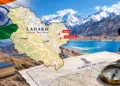
The Parliament also passed the Jammu and Kashmir Reorganisation Act, 2019, bifurcating the State of Jammu and Kashmir into two Union Territories – the UT of J&K with Legislative Assembly and UT of Ladakh without Legislative Assembly. On August 9, 2019, the Union Ministry of Home Affairs issued a notification, S.O. 2889 €, in exercise of the powers conferred by Section 2(a) of the Reorganisation Act bringing the provisions of the Act into force with effect from October 31, 2019 following Presidential assent. Pursuant to this notification, the State of Jammu and Kashmir stood bifurcated into the Union Territory of Ladakh and the Union Territory of Jammu and Kashmir.
CHALLENGE BEFORE THE COURT
Petitioners including Manohar Lal Sharma, Shah Faesal, Shakir Shabir, Mohammed Akbar Lone and Hasnain Masoodi, approached the Supreme Court by filing petitions under Article 32 challenging the constitutionality of the dilution of Article 370 and the bifurcation of the State into two Union Territories.
On August 28, 2019, a 3-Judge Bench led by former CJI Rajan Gogoi referred the case to a 5-Judge Constitution Bench. On October 1, 2019, a 5-Judge Constitution Bench of the Court comprising Justice N.V. Ramana, S.K. Kaul, R. Subhash Reddy, B.R. Gavai and Surya Kant decided to hear the case from November 14, 2019. The petitioners sought the case to be placed before a larger Bench which was rejected by the 5-judge Bench on March 2, 2020.
On July 3, 2023, the Supreme Court listed the matter to a Constitution Bench led by Chief Justice D.Y. Chandrachud. The Bench began hearing the case from August 2, 2023, and the arguments went on for 16 days until September 5, 2023 when the argument concluded and judgement was reserved.
ARGUMENTS AGAINST ABROGATION OF ARTICLE 370
The petitioners’ arguments can be broadly categorised as: first, pertaining to the constitutionality of the presidential orders abrogating Article 370, and second, challenging the bifurcation of the State of Jammu and Kashmir into two Union Territories.
The petitioners alleged that in effect the President indirectly amended Article 370 without the concurrence of the Constituent Assembly of Jammu and Kashmir, by substituting the term ‘constituent assembly’ with ‘legislative assembly’. This, according to them, invoked the ‘doctrine of colourable legislation’ which means that ‘what cannot be done directly, cannot be done indirectly’, and was thus unconstitutional and impermissible.
The validity of Jammu and Kashmir Reorganisation Act, 2019 was assailed on the basis of its unconstitutionality with respect to Article 3 of the Constitution, which empowers Parliament to create new States and alter or modify the boundaries of existing states. It was argued that Article 3 does not give the Parliament powers to downgrade a state into Union Territory. The bifurcation was also challenged with respect to autonomous self-government, which the petitioners claimed was a fundamental right which could not be taken away without due procedure established by the law.
On the other hand, the Union of India and intervenors submitted that Article 370 was a “temporary” provision inserted to ensure J&K’s integration into India. It was submitted that the President can abrogate the provisions of Article 370 without the recommendation of the Constituent Assembly because of its dissolution in 1957, and the same could not limit the President’s plenary power to abrogate the provision, since the President was vested with absolute discretion over Article 370.
Salient Points of the judgment of the Five-Judge Constitutional Bench in Re: Article 370
Jammu and Kashmir did not enjoy any shred of sovereignty
- The Instrument of Accession gave no sovereignty to the state
- Proclamation of 25 November 1949 issued by Yuvraj Karan Singh made clear that Constitution of India would prevail over the State Constitution
- Instrument of Accession lost its significance once Yuvraj Karan Singh issued the proclamation
- Relationship of the State with the Union of India was governed primarily by the Instrument of Accession and the Proclamation. State Constitution was only to further define that relationship.
- The State Constitution coupled with Article 1 of the Constitution of India indisputably shows that the State was subordinate to the Indian Constitution.
Constitutional Validity of C.O. 273
- Text and history demonstrate that Article 370 was a temporary provision. First, it was inserted for a transitional purpose of ratifying the Indian Constitution. Second, it bore a temporary purpose of laying down an interim arrangement because of the ongoing war in the State.
- President had the power to make Article 370 inoperative even after the dissolution of the State Constituent Assembly. Constituent Assembly of the State was a temporary body set up for a specific and limited purpose of framing the State Constitution. When the Constituent Assembly was dissolved, the other special circumstances (war) of the State that led to the insertion of Article 370 continued. For these reasons, President retained his powers to end Article 370
- Overall purpose of Article 370 was constitutional integration. It cannot be said that with the dissolution of the State Constituent Assembly, the process of State’s integration with the Union of India was frozen. Such an approach would be contrary to the very purpose of Article 370
- Ending Article 370 was a policy decision. Court cannot second-guess the decision of the President and the special circumstances he considered when he de-operationalised Article 370
Constitutional validity of C.O. 272
- Extension of the entire Constitution of India to the State of Jammu and Kashmir was a constitutionally valid exercise of power
- The concurrence and consultation with the State Government is not needed when the Constitution of India is extended to the State without any exception or modification. In other words, concurrence and consultation would come into the picture only when a constitutional provision is applied to the State in a modified form.
Status of the Constitution of Jammu and Kashmir
- The wholesale application of the Constitution of India to the State of Jammu and Kashmir meant that Constitution of State of Jammu and Kashmir was rendered completely inoperative.
Constitutional validity of the reorganization of State of Jammu and Kashmir
- Question left open in view of the assurance of the Central Government that statehood would be restored to Jammu and Kashmir and its status as UT is temporary.
- UT status of Ladakh to remain unaffected by the restoration of the statehood of Jammu and Kashmir.
- Status of Ladakh as a Union Territory is upheld. Article 3 permits the formation of a Union Territory.
The Presidential Order solely intended to clarify the meaning of “Constituent Assembly” to mean “Legislative Assembly”. Previously, the Article 367 route was successfully adopted to replace “Sadar-i-Riyasat” with “Governor” in Article 370. It was further stated that in the J&K historical context, the Constituent Assembly and the Legislative Assembly are synonymous. When J&K did not have a Legislative Assembly, its Constituent Assembly assumed that role. Now, as J&K does not have a Constituent Assembly, the Legislative Assembly could take on that role. The Union submitted that the reorganisation of J&K into two Union Territories was constitutional since the Union has the power to reorganise under Article 3. Further, J&K has retained its Legislative Assembly, and that the complete statehood of the region will be restored once the law-and-order situation in the region is returned to normalcy.
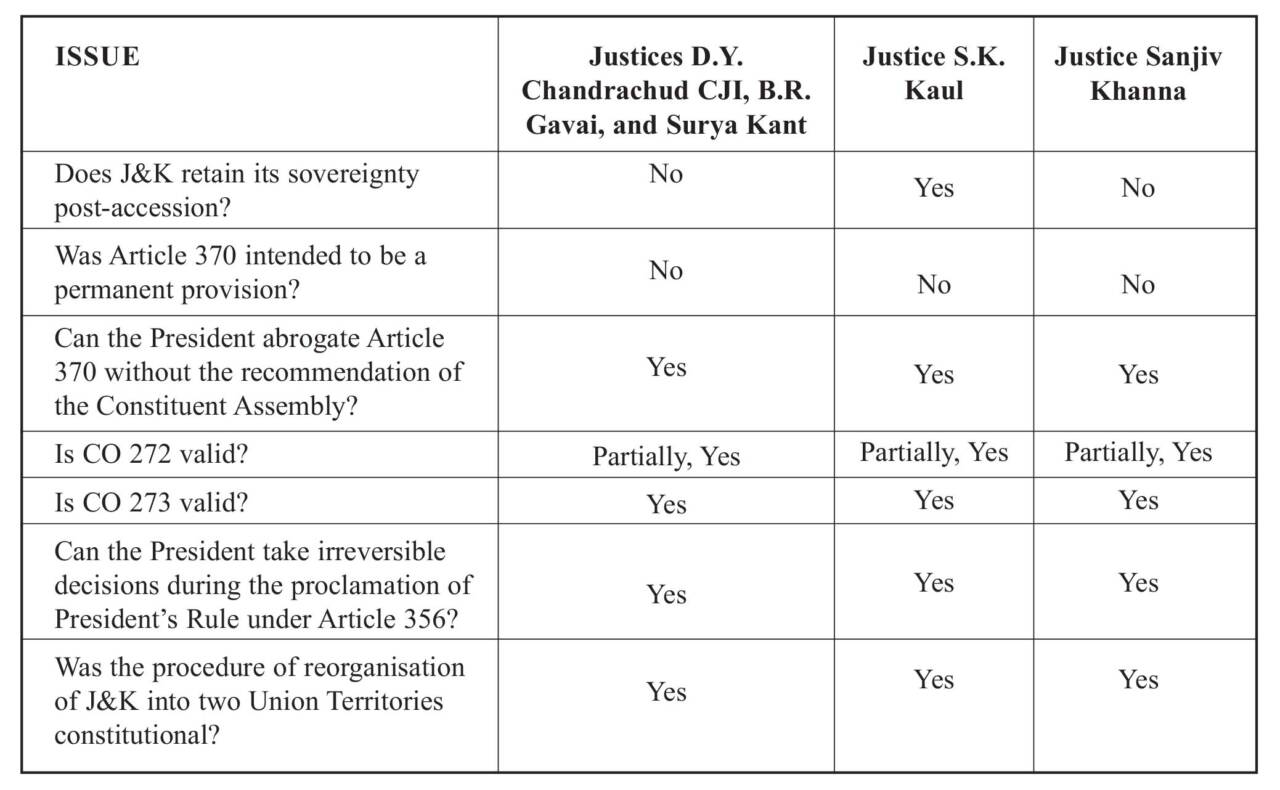
JUDGMENT MATRIX
In the verdict spanning across 476 pages, CJI Chandrachud authored his judgement for himself, for Justice B R Gavai and Justice Surya Kant. Justice Kaul penned his concurring opinion separately. Justice Sanjiv Khanna concurred with both the judgments.
The judges unanimously upheld the abrogation of Article 370 while ruling that Article 370 was a temporary provision, and the larger purpose was the complete integration of the state with the rest of India. It was additionally held that no limitations can be imposed on the President’s power under Article 356, to ensure that they can tackle the complete breakdown of constitutional machinery. They also held that the process adopted to reorganise J&K into union territories is valid.
THE EPILOGUE
On a parting note, certain key remarks and rulings in the judgement must be discussed – one by CJI Chandrachud and another by Justice Kaul. The CJI, in his judgement, directed that the statehood of Jammu and Kashmir be restored as soon as possible, and directions were given to the Election Commission of India to conduct elections to the Legislative Assembly of Jammu and Kashmir constituted under Section 14 of the Reorganisation Act by September 30, 2024.
The Bench also held that the Constitution of J&K was always subordinate to the Constitution of India. Under the Constitution of J&K, only certain provisions of the Indian Constitution applied to J&K. The implicit but necessary consequence of the application of the Constitution of India in its entirety to the State of Jammu and Kashmir is that the Constitution of the State is inoperative.
Justice Kaul began his judgement by tracing the history of Kashmir back to Rishi Kashyap who created the valley of Kashmir by draining the Satisar lake. Citing Nilamat Purana, the oldest scripture of Aryan Saraswat Brahmins of Kashmir, he referred to the Nagas as the first settlers, and that 5000 years ago Aryans originally settled on the banks of the Vedic River Saraswati, moved to the Valley when the Saraswati River dried up. The Valley has heritage and culture as a place of learning, he observed – with one of the most respected places of learning being the Sharda Peeth. He also referred to the original population of Kashmir as being Brahmin, along with other sects namely, Nishads, Khashas, Darads, Bhauttas, Bhikshas, Damaras, Tantrins, etc, also prevalent prior to the advent of Islam in the 14th century.
Justice Kaul, in the concluding pages of his judgement, penned an emotional epilogue. He recommended that the Union Government should set up a “Truth and Reconciliation Commission” just like South Africa did in its post-apartheid era. This Commission should be set up expediently before memory escapes, and the exercise should be time-bound. While acknowledging that to ask the Union to set up the Commission was beyond the scope of the Court, still he reasoned that transitional justice was a facet of transformative constitutionalism and the responsibility of both State and non-State actors concerning human rights violations. While cautioning that the Commission must not turn into a criminal court, he recommended that the Commission should follow a humanised and personalised process enabling people to share what they have been through.
CONCLUSION
The Supreme Court, through its judgement, has upheld the sovereignty and integrity of India, by recognising that Article 370 was not permanent in nature. The historical day of August 5, 2019 is etched in the hearts and minds of every Indian, when our Parliament passed the historic decision to abrogate Article 370. Since then, the people of Jammu, Kashmir and Ladakh have witnessed manifold transformation in their lives. The Constitution of India along with all Central laws now apply to the people of the J&K and Ladakh who were until now bereft of the developmental benefits and welfare provisions guaranteed by these laws.
As Justice Kaul concluded – “It is my sincere hope that much will be achieved when Kashmiris open their hearts to embracing the past and facilitate the people who were compelled to migrate to come back with dignity”.
This verdict upholding the abrogation of Article 370 is a glorious spot in the annals of Indian judiciary and will go a long way in strengthening the spirit of ‘Ek Bharat, Shreshtha Bharat’.