US intel views India-China strained relations on the brink of armed conflict
July 15, 2026
  • Read Ecopy
  • Circulation
  • Advertise
  • Careers
  • About Us
  • Contact Us
Android AppiPhone AppArattai
Organiser
  • ‌
  • Bharat
    • Assam
    • Bihar
    • Chhattisgarh
    • Jharkhand
    • Maharashtra
    • View All States
  • World
    • Asia
    • Europe
    • North America
    • South America
    • Africa
    • Australia
  • Editorial
  • International
  • Opinion
  • RSS @ 100
  • More
    • Op Sindoor
    • Analysis
    • Sports
    • Defence
    • Politics
    • Business
    • Economy
    • Culture
    • Special Report
    • Sci & Tech
    • Entertainment
    • G20
    • Azadi Ka Amrit Mahotsav
    • Vocal4Local
    • Web Stories
    • Education
    • Employment
    • Books
    • Interviews
    • Travel
    • Law
    • Health
    • Obituary
  • Subscribe
    • Subscribe Print Edition
    • Subscribe Ecopy
    • Read Ecopy
  • ‌
  • Bharat
    • Assam
    • Bihar
    • Chhattisgarh
    • Jharkhand
    • Maharashtra
    • View All States
  • World
    • Asia
    • Europe
    • North America
    • South America
    • Africa
    • Australia
  • Editorial
  • International
  • Opinion
  • RSS @ 100
  • More
    • Op Sindoor
    • Analysis
    • Sports
    • Defence
    • Politics
    • Business
    • Economy
    • Culture
    • Special Report
    • Sci & Tech
    • Entertainment
    • G20
    • Azadi Ka Amrit Mahotsav
    • Vocal4Local
    • Web Stories
    • Education
    • Employment
    • Books
    • Interviews
    • Travel
    • Law
    • Health
    • Obituary
  • Subscribe
    • Subscribe Print Edition
    • Subscribe Ecopy
    • Read Ecopy
Organiser
  • Home
  • Bharat
  • World
  • Operation Sindoor
  • Editorial
  • Analysis
  • Opinion
  • Culture
  • Defence
  • International Edition
  • RSS @ 100
  • Magazine
  • Read Ecopy
Home Bharat

US intel views India-China strained relations on the brink of armed conflict

In a significant development, the latest intelligence reports from the United States underscore a deeply concerning assessment regarding the strained relations between India and China, suggesting that the situation is precariously poised on the brink of armed conflict

Vedika ZnwarVedika Znwar
Mar 16, 2024, 06:00 pm IST
in Bharat, China
Follow on Google News
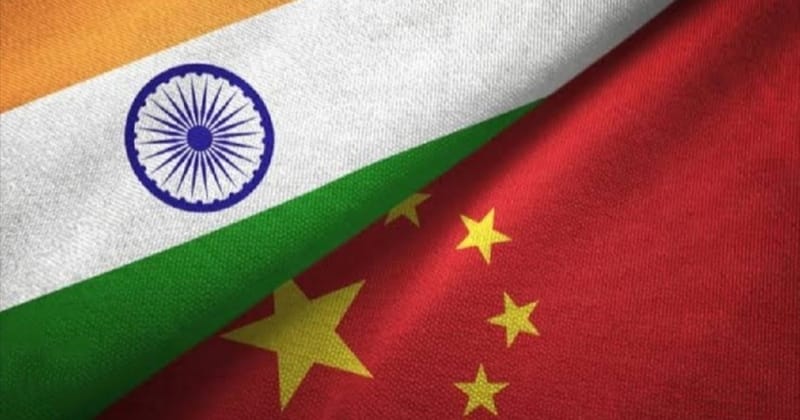
Representative image

Representative image

FacebookTwitterWhatsAppTelegramEmail

The Office of the Director of National Intelligence released the Annual Threat Assessment of the US Intelligence Community on March 12. The report takes stock of the heightened tensions between India and China since cross-border clashes in 2020 and fears miscalculation can cause escalation.

“The shared disputed border between India and China will remain a strain on their bilateral relationship. While the two sides have not engaged in significant cross-border clashes since 2020, they are maintaining large troop deployments, and sporadic encounters between opposing forces risk miscalculation and escalation into armed conflict,” the report said.

According to the 2024 Annual Threat Assessment, Beijing is described as “expanding its global covert influence posture” in alignment with the objectives of the Chinese Communist Party. The report indicates that Beijing’s intentions to maintain “large troop deployments and sporadic encounters” with India could risk “miscalculation and escalation into armed conflict.” The US intelligence community fears that as China grows confident of its nuclear deterrence, it will not hesitate from intensifying conventional conflicts.

The report comes a day after India announced the successful test-firing of a long-range ballistic missile, Agni-V, with Multiple Independently Targetable Re-entry Vehicle (MIRV) technology.

China’s strategic deployments involve the expansion of a ‘Xiaokang’ village network (moderately prosperous society) across the eastern and central sectors opposite the Line of Actual Control. One such defence village in Arunachal Pradesh, lying just 3 kilometres from the recently inaugurated Sela tunnel.

According to reports, China has 628 “Xiaokang villages on the border” in the Tibet autonomous region, built according to Chinese President Xi Jinping’s strategy of “stabilising Tibet for the governance of frontier regions” and to meet the goal of building a xiaokang – or “moderately well off” – society by 2021. In all, there are 241,835 residents and 62,160 households in these villages in 21 Himalayan border counties, from Nyingchi, Shannan and Shigatse to Ngari prefecture.

While the exact nature of these villages is unclear, the establishments are perceived to be dual-use – both for civil and military purposes – and seen as a Chinese assertion of its territorial claims along the LAC.

In a counter move, India plans to develop 663 border villages with modern amenities under the Vibrant Villages programme. Of them, 17 such villages have been selected as a pilot project under the programme along the border with China in Ladakh, Himachal Pradesh, Uttarakhand, Sikkim, and Arunachal Pradesh.

In Arunachal Pradesh, villages in the eastern part of the State and in the Tawang region have been identified as Zemithang, Taksing, Chayang tajo, Tuting, and Kibithu. Three major highways are also being developed – the Trans-Arunachal Highway, the Frontier Highway and the East-West Industrial Corridor Highway.

Tezpur is the hub of the Indian Army’s IV Corps, which monitors Assam and Western Arunachal Pradesh. Both the Balipara-Charduar-Tawang (BCT) road and Orang-Kalaktang-Shergaon-Rupa-Tenga(OKSRT) road from Tezpur and Tawang respectively, meet at Sela pass and merge into one route to Tawang.

However, the Indian experts have differed from the foreign assessment contending that bolstering of capability is bringing parity between India and China. And China will not want to enter the conflict in such a scenario.

Amidst China’s assertions that Tawang and the broader Arunachal Pradesh region form part of what it terms’ southern Tibet’, India has significantly strengthened its military presence in the area.

Additionally, India is advancing infrastructure development to enhance the logistical movement of troops in the region. Undertaken by the Border Road Organisation (BRO) at an altitude of 13,000 feet and a cost of Rs. 825 crore, the construction of the Sela tunnel was aimed at providing all-weather connectivity to Tawang across Sela pass on the Balipara-Charduar-Tawang (BCT) road, which connects Tezpur in Assam to Tawang in the Arunachal Pradesh.

Recent escalation in strains between India and China

On March 11, China said it “strongly deplores” Prime Minister Narendra Modi’s recent visit to Arunachal Pradesh and has raised concerns with India in a sharp statement. India responded back through the Ministry of External Affairs, rejecting the claims, stating that the State is an “integral and inalienable” part of India and objecting to such visits by Beijing “does not stand to reason”.

On the other hand, China on March 14 said the Sino-India boundary issue does not represent the entirety of the bilateral ties and called for enhancing mutual trust between the two countries to “avoid misunderstanding and misjudgement”. This erratic stance of the Chinese solidifies its unreliability. Meanwhile, India has been maintaining that its ties with China cannot be normal unless there is peace in the border areas.

While responding to a query from a Chinese diplomat at the ‘Express Adda’ this week, EAM Dr S Jaishankar said, I think it is in our common interest that we should not have that many forces on the Line of Actual Control. “It is in our common interest that we should observe the agreements that we have signed. And I believe that it is not just in our common interest and it is in China’s interest as well. Jaishankar said that the tension that we have seen for the last four years has not served either of us well.

When pointed out that Minister Jaishankar’s comments referred to the resolution of the present standoff in eastern Ladakh, where the two countries deployed thousands of troops, while China referred to the overall boundary issue, Chinese Foreign Ministry spokesperson Wang said, “The two things in nature are the same.”

According to the Chinese military, the two sides so far agreed to disengage from four points, namely the Galwan Valley, the Pangong Lake, Hot Springs, and Jianan Daban (Gogra).

India is pressing the PLA to disengage from the Depsang and Demchok, maintaining that there cannot be restoration of normalcy in its relations with China as long as the State of the borders remains abnormal. Thus, the deadlock remains.

Therefore, the US intelligence threat assessment seems legit but only on a superficial level. The India-Sino standoff is a convoluted affair, and the USA’s concerns might not replicate those of India. For now, this assessment seems imposed and not entirely withstanding to India’s perspective.

Topics: IndiaChinaLine of Actual ControlIndia-China relationsIndia-China Border DisputeEAM Dr S Jaishankar
ShareTweetSendShareSend
✮ Subscribe Organiser YouTube Channel. ✮
✮ Join Organiser's WhatsApp channel for Nationalist views beyond the news. ✮
Previous News

Congress, BRS shattered all dreams of Telangana: PM Modi in Nagarkurnool

Next News

Electoral Bond Purchase: Top buyer, lottery king Santiago’s son-in-law affiliated with I.N.D.I. Alliance partner VCK

Related News

“Reuters-You can do better”: US Envoy Sergio Gor slams British news agency over fake narrative on India-US trade deal

External Affairs Minister Dr. S. Jaishankar launched India's campaign for the UNSC chair

India unveils campaign for UNSC seat; EAM Jaishankar outlines SHANTI vision for secure, peaceful & just world order

Commerce and Industry Minister Piyush Goyal

Fact Check: Piyush Goyal rejects Reuters report on India-US trade deal as “false & misleading”; Reaffirms balanced pact

Great Nicobar is emerging as a strategic gateway that strengthens India's maritime reach while increasing pressure on China's Malacca Dilemma

Great Nicobar Project to boost India’s Indo-Pacific leverage, deepen China’s Malacca Dilemma: Report

As India expands its global partnerships, China grapples with growing political, military and economic challenges

Coup Fears in China? Why President Xi staying home while PM Modi expands India’s global diplomatic footprint?

PM Modi's Gifts to Albanese Blend India's Ancient Craft, Modern Music and Premium Coffee

From Dhokra Sculpture to Colonial Cousins Vinyl: PM Modi’s gifts to Australian PM Albanese showcases cultural heritage

Load More

Latest News

Bastar is emerging as a symbol of peace, education and inclusive development, transforming the lives of its tribal communities

Bastar’s Transformation: How education & development are rewriting the story of Chhattisgarh’s tribal heartland

Swami Govind Dev Giri

Ayodhya Donation Row: Swami Govind Dev Giri debunks claims of his resignation, slams Rs 14 crore theft claims

'Putin Listens to PM Modi': Polish Deputy FM Highlights India's Global Influence

PM Modi played role in stopping Russian President from using nuclear weapons in Ukraine: Polish Dy Foreign Minister

Devotees on their way to worship at Amarnath cave

Shri Amarnath Yatra registers historic footfall; 3 lakh pilgrims visit holy cave in first 12 days

India-UK Trade Deal Now Operational, PM Modi Says It Will Drive Shared Prosperity

India-UK trade deal now operational: PM Modi says FTA will give fresh momentum to farmers, entrepreneurs, MSMEs

Noida Fire: EV charging spark triggers massive inferno; 2 dead, 100 residents rescued; Building owner held

PIB organises one-day media workshop Varta

Varta: Bharat targets 15 per cent global orange economy share, IICT unveils massive creative workforce plan

India's Permanent Representative to the UN, Ambassador Harish Parvathaneni, called for urgent reform of the UN Security Council

‘UN must reflect on contemporary realities’: India renews push for security council reform

RSS functionaries with the children after the inauguration of the Mata Revati Bai Sanskar Kendra in Delhi

RSS at 100: Vidya Bharati opens Sanskar Kendra in the name of Dr Hedgewar’s mother, Mata Revati Bai in Delhi

Rudram-1

Rudram-1 in Action: Bharat’s first indigenous missile to hunt and destroy enemy radars

Load More
  • Privacy
  • Terms
  • Cookie Policy
  • Refund and Cancellation
  • Delivery and Shipping

© Bharat Prakashan (Delhi) Limited.
Tech-enabled by Ananthapuri Technologies

  • Home
  • Search Organiser
  • Bharat
    • Assam
    • Bihar
    • Chhattisgarh
    • Jharkhand
    • Maharashtra
    • View All States
  • World
    • Asia
    • Africa
    • North America
    • South America
    • Europe
    • Australia
  • Editorial
  • Operation Sindoor
  • Opinion
  • Analysis
  • Defence
  • Culture
  • Sports
  • Business
  • RSS @ 100
  • Entertainment
  • More ..
    • Sci & Tech
    • Vocal4Local
    • Special Report
    • Education
    • Employment
    • Books
    • Interviews
    • Travel
    • Health
    • Politics
    • Law
    • Economy
    • Obituary
  • Subscribe Magazine
  • Read Ecopy
  • Advertise
  • Circulation
  • Careers
  • About Us
  • Contact Us
  • Policies & Terms
    • Privacy Policy
    • Cookie Policy
    • Refund and Cancellation
    • Terms of Use

© Bharat Prakashan (Delhi) Limited.
Tech-enabled by Ananthapuri Technologies