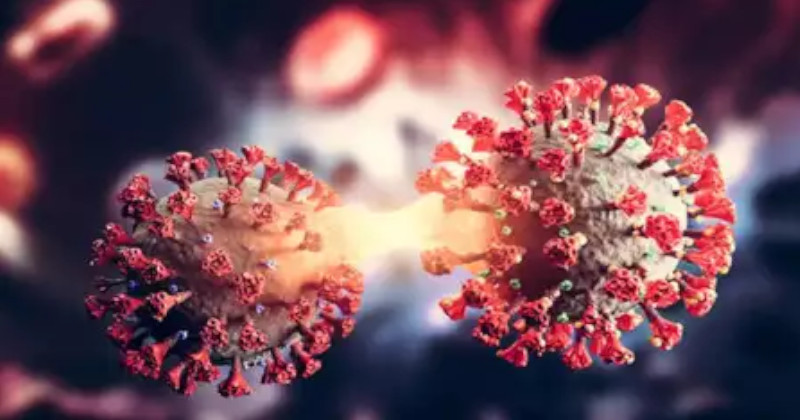
Gene mutation could explain why some don’t get sick from covid-19: Study
September 20, 2026
  • Read Ecopy
  • Circulation
  • Advertise
  • Careers
  • About Us
  • Contact Us
Android AppiPhone AppArattai
Organiser
  • ‌
  • Bharat
    • Assam
    • Bihar
    • Chhattisgarh
    • Jharkhand
    • Maharashtra
    • View All States
  • World
    • Asia
    • Europe
    • North America
    • South America
    • Africa
    • Australia
  • Editorial
  • International
  • Opinion
  • RSS @ 100
  • More
    • World Hindu Congress 2026
    • Op Sindoor
    • Analysis
    • Sports
    • Defence
    • Politics
    • Business
    • Economy
    • Culture
    • Special Report
    • Sci & Tech
    • Entertainment
    • G20
    • Azadi Ka Amrit Mahotsav
    • Vocal4Local
    • Web Stories
    • Education
    • Employment
    • Books
    • Interviews
    • Travel
    • Law
    • Health
    • Obituary
  • Subscribe
    • Subscribe Print Edition
    • Subscribe Ecopy
    • Read Ecopy
  • ‌
  • Bharat
    • Assam
    • Bihar
    • Chhattisgarh
    • Jharkhand
    • Maharashtra
    • View All States
  • World
    • Asia
    • Europe
    • North America
    • South America
    • Africa
    • Australia
  • Editorial
  • International
  • Opinion
  • RSS @ 100
  • More
    • World Hindu Congress 2026
    • Op Sindoor
    • Analysis
    • Sports
    • Defence
    • Politics
    • Business
    • Economy
    • Culture
    • Special Report
    • Sci & Tech
    • Entertainment
    • G20
    • Azadi Ka Amrit Mahotsav
    • Vocal4Local
    • Web Stories
    • Education
    • Employment
    • Books
    • Interviews
    • Travel
    • Law
    • Health
    • Obituary
  • Subscribe
    • Subscribe Print Edition
    • Subscribe Ecopy
    • Read Ecopy
Organiser
  • Home
  • Bharat
  • World
  • Operation Sindoor
  • Editorial
  • Analysis
  • Opinion
  • Culture
  • Defence
  • International Edition
  • RSS @ 100
  • Magazine
  • Read Ecopy
Home World

Gene mutation could explain why some don’t get sick from covid-19: Study

The research offers the first evidence that there is a genetic basis for asymptomatic SARS-CoV-2, it helps to solve the mystery of why some people can be infected without ever getting sick from COVID-19

WEBDESKWEBDESK
Jul 21, 2023, 08:00 am IST
inWorld, Health
Follow on Google News
Facebook
Twitter
WhatsAppTelegramEmail

People who get COVID-19 but never develop symptoms, known as super dodgers, may have a hereditary advantage. According to a new study headed by UC San Francisco researchers, they are more than twice as likely as individuals who become symptomatic to contain a specific gene variation that aids in virus eradication.

The paper, published July, 19, 2023 in Nature, offers the first evidence that there is a genetic basis for asymptomatic SARS-CoV-2. The research helps to solve the mystery of why some people can be infected without ever getting sick from COVID-19.

The secret lies with the human leukocyte antigen (HLA), or protein markers that signal the immune system. A mutation in one of the genes coding for HLA appears to help virus-killing T cells identify SARS-CoV-2 and launch a lighting attack. The T cells of some people who carry this variant can identify the novel coronavirus, even if they have never encountered it before, thanks to its resemblance to the seasonal cold viruses they already know. The discovery points to new targets for drugs and vaccines.

“If you have an army that’s able to recognize the enemy early, that’s a huge advantage,” explained the study’s lead researcher, Jill Hollenbach, PhD, MPH, professor of neurology, as well as epidemiology and biostatistics, and a member of the Weill Institute for Neurosciences at UCSF. “It’s like having soldiers that are prepared for battle and already know what to look for, and that these are the bad guys.”

The mutation – HLA-B*15:01 – is quite common, carried by about 10 per cent of the study’s population. It doesn’t prevent the virus from infecting cells but, rather, prevents people from developing any symptoms. That includes a runny nose or even a barely noticeable sore throat.

UCSF researchers found that 20 per cent of people in the study who remained asymptomatic after infection carried at least one copy of the HLA-B*15:01 variant, compared to 9% of those who reported symptoms. Those who carried two copies of the variant were far more likely – more than eight times – to avoid feeling sick.

Leveraging a national marrow donor database

Researchers suspected early on that HLA was involved, and fortunately a national registry existed that contained the data they were looking for. The National Marrow Donor Program/Be The Match, the largest registry of HLA-typed volunteer donors in the US, matches donors with people who need bone marrow transplants.

But they still needed to know how the donors fared against COVID-19. So, they turned to a mobile app developed at UCSF, called the COVID-19 Citizen Science Study. They recruited nearly 30,000 people who were also in the bone marrow registry and tracked through the first year of the pandemic. At that time, vaccines were not yet available, and many people were undergoing routine COVID testing for work or whenever they were potentially exposed.

“We did not set out to study genetics, but we were thrilled to see this result come from our multidisciplinary collaboration with Dr. Hollenbach and the National Marrow Donor Program,” said Mark Pletcher, MD, MPH, a professor of epidemiology and biostatistics at UCSF.

The primary study group was limited to those who self-identified as white because the final set of study respondents did not have enough people in it from other ethnic and racial groups to analyze.

Researchers identified 1,428 unvaccinated donors who tested positive between February 2020 and the end of April 2021, before the vaccines were widely available and when it still took many days to get back test results.

Of these, 136 individuals remained asymptomatic for at least two weeks before and after testing positive. Only one of the HLA variants – HLA-B*15:01 – had a strong association with asymptomatic COVID-19 infection, and this was reproduced in two independent cohorts. Risk factors for severe COVID-19, like being older, overweight and having chronic diseases like diabetes did not appear to play a role in who remained asymptomatic.

“We are proud to partner on research that has the potential to leverage a long-term public investment in building the national registry to help cure diseases and improve our ability to avoid future pandemics,” said Martin Maiers, vice president of research at the National Marrow Donor Program/Be The Match.

To figure out how HLA-B15 managed to quash the virus, Hollenbach’s team collaborated with researchers from La Trobe University in Australia. They homed in on the concept of T-cell memory, which is how the immune system remembers previous infections.

The researchers looked at T cells from people who carried HLA-B15 but had never been exposed to the SARS-CoV-2 virus, and found these cells still responded to a part of the novel coronavirus called the NQK-Q8 peptide. They concluded that exposure to some seasonal coronaviruses, which have a very similar peptide, called NQK-A8, enabled T cells in these individuals to quickly recognize SARS-CoV-2 and mount a faster, more effective immune response.

“By studying their immune response, this might enable us to identify new ways of promoting immune protection against SARS-CoV-2 that could be used in future development of vaccine or drugs,” said Stephanie Gras, a professor and laboratory head at La Trobe University.

(with inputs from ANI)

Topics: asymptomaticCOVID-19HealthSARS-CoV-2Gene MutationSick
Share
Tweet
SendShareSend
✮ Subscribe Organiser YouTube Channel. ✮
✮ Join Organiser's WhatsApp channel for Nationalist views beyond the news. ✮
Previous News

Tata Steel reaffirms commitment towards India’s technological advancement; Know Chandrayaan-3’s Jamshedpur connection

Next News

Chinese hackers breach email accounts of US Ambassador to China

Related News

PM Narendra Modi addressing the gathering at SRCC

“Homeopathic pill exposed Dimagi Naxals”: PM Modi addresses SRCC centenary celebrations

Evergrande’s collapse and Alibaba’s profit shock highlight mounting pressure across China’s corporate sector.

China’s Corporate Sector Under Strain? Evergrande founder Xu Jiayin gets life term; Alibaba profit plunges 75 per cent

PM POSHAN Model: Serving nutrition, strengthening the nation and the roadmap for inclusive governance

Unmasking the Deep State & Thakur Foundation: How foreign funding and Saurav Das fuelled the Pharma Mafia network

Dr Suresh Hanagavadi conferred with Padmashri

Dr Suresh Hanagavadi: The remarkable journey of a doctor who revolutionised haemophilia care & patient advocacy

Representative Image

Loneliness: A social problem or a cultural challenge?

Load More

Latest News

Rashtriya Swayamsevak Sangh (RSS) Sarkaryawah Dattatreya Hosabale in Bhopal (Left)

Not caste, but harmony; not division, but fraternity — Hosabale’s message as an opportunity for introspection to Hindus

Self-reliance in shipping technology: A roadmap to strategic technological independence

Asaduddin Owaisi; Revanth Reddy; Raja Singh (Left to Right) - Inset-Proposed Osmania Hospital

Goshamahal under siege: Is Osmania Hospital project a ‘Trojan horse’ for Congress-MIM to reshape Hyderabad politics?

Suhail, T.N. Reena, Vivek Vijayan and Subramanian (Left to Right)

Keralam: Police arrested four persons, including guest lecturer of a Muslim Educational Society college in Malappuram

Deen Dayal Upadhyaya Grameen Kaushalya Yojana 2026

Deen Dayal Upadhyaya Grameen Kaushalya Yojana to train 34,920 rural youth from October

BJP Leaders Slam PM Modi Mimicry at Rahul Gandhi’s Indore Event

‘Congress is a party of jokers’: BJP slams PM Modi mimicry at Rahul Gandhi’s ‘Chhatron Ki Goonj’ event

RSS voluneterss distributing food during Assam flood

RSS: When SEWA is dharma

An India-born female cheetah with her four cubs at Kuno National Park in Madhya Pradesh

India-born Cheetah gives birth to four cubs at Kuno national park

AI Generated Representative Image

Resolve to Return to Their Roots: Majhis, Gaitas and Patels take historic decision in Koylibeda, Kanker

Gorakhpur is emerging as manufacturing hub

From a shut fertiliser plant to 500 industries: How Gorakhpur is emerging as Purvanchal’s manufacturing hub

Load More
  • Privacy
  • Terms
  • Cookie Policy
  • Refund and Cancellation
  • Delivery and Shipping

© Bharat Prakashan (Delhi) Limited.
Tech-enabled by Ananthapuri Technologies

  • Home
  • Search Organiser
  • Bharat
    • Assam
    • Bihar
    • Chhattisgarh
    • Jharkhand
    • Maharashtra
    • View All States
  • World
    • Asia
    • Africa
    • North America
    • South America
    • Europe
    • Australia
  • Editorial
  • Operation Sindoor
  • Opinion
  • Analysis
  • Defence
  • Culture
  • Sports
  • Business
  • RSS @ 100
  • Entertainment
  • More ..
    • Sci & Tech
    • Vocal4Local
    • Special Report
    • Education
    • Employment
    • Books
    • Interviews
    • Travel
    • Health
    • Politics
    • Law
    • Economy
    • Obituary
  • Subscribe Magazine
  • Read Ecopy
  • Advertise
  • Circulation
  • Careers
  • About Us
  • Contact Us
  • Policies & Terms
    • Privacy Policy
    • Cookie Policy
    • Refund and Cancellation
    • Terms of Use

© Bharat Prakashan (Delhi) Limited.
Tech-enabled by Ananthapuri Technologies