Madhya Pradesh: Conspiracy to challenge tribal religious identity on the pretext of Pandit Dhirendra Shastri
June 23, 2026
  • Read Ecopy
  • Circulation
  • Advertise
  • Careers
  • About Us
  • Contact Us
Android AppiPhone AppArattai
Organiser
  • ‌
  • Bharat
    • Assam
    • Bihar
    • Chhattisgarh
    • Jharkhand
    • Maharashtra
    • View All States
  • World
    • Asia
    • Europe
    • North America
    • South America
    • Africa
    • Australia
  • Editorial
  • International
  • Opinion
  • RSS @ 100
  • More
    • Op Sindoor
    • Analysis
    • Sports
    • Defence
    • Politics
    • Business
    • Economy
    • Culture
    • Special Report
    • Sci & Tech
    • Entertainment
    • G20
    • Azadi Ka Amrit Mahotsav
    • Vocal4Local
    • Web Stories
    • Education
    • Employment
    • Books
    • Interviews
    • Travel
    • Law
    • Health
    • Obituary
  • Subscribe
    • Subscribe Print Edition
    • Subscribe Ecopy
    • Read Ecopy
  • ‌
  • Bharat
    • Assam
    • Bihar
    • Chhattisgarh
    • Jharkhand
    • Maharashtra
    • View All States
  • World
    • Asia
    • Europe
    • North America
    • South America
    • Africa
    • Australia
  • Editorial
  • International
  • Opinion
  • RSS @ 100
  • More
    • Op Sindoor
    • Analysis
    • Sports
    • Defence
    • Politics
    • Business
    • Economy
    • Culture
    • Special Report
    • Sci & Tech
    • Entertainment
    • G20
    • Azadi Ka Amrit Mahotsav
    • Vocal4Local
    • Web Stories
    • Education
    • Employment
    • Books
    • Interviews
    • Travel
    • Law
    • Health
    • Obituary
  • Subscribe
    • Subscribe Print Edition
    • Subscribe Ecopy
    • Read Ecopy
Organiser
  • Home
  • Bharat
  • World
  • Operation Sindoor
  • Editorial
  • Analysis
  • Opinion
  • Culture
  • Defence
  • International Edition
  • RSS @ 100
  • Magazine
  • Read Ecopy
Home Opinion

Madhya Pradesh: Conspiracy to challenge tribal religious identity on the pretext of Pandit Dhirendra Shastri

Not allowing Pandit Dhirendra Shastri's Ram Katha to take place in Balaghat, that too in the name of a tribal deity, in an attempt to somehow stop the culture from progressing is sufficient to tell that there are immense challenges in front of the oldest Sanatan culture

Mayank ChaturvediMayank Chaturvedi
May 29, 2023, 08:00 pm IST
in Opinion
Follow on Google News
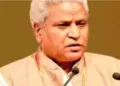
Peethadhishwar Pandit Dhirendra Shastri

Peethadhishwar Pandit Dhirendra Shastri

FacebookTwitterWhatsAppTelegramEmail

The Madhya Pradesh court rejected the petition filed against Ram Katha by Peethadhishwar Pandit Dhirendra Shastri of Bageshwar Dham in Bhadu Kota, Balaghat district of Madhya Pradesh, along with which the judge reprimanded the petitioner’s lawyer. We all have this information today, but how did this situation arise? Who are those people who did not want Pandit Dhirendra Shastri’s Ram Katha to happen here? How is this society being tricked in the name of tribal religious identity? In fact, we all should know the answer to this as well.

In this case, the whole episode has been such that on May 22, a petition was filed in the Madhya Pradesh High Court to change the site of Ram Katha. The petitioner argued before the judge, Justice Vivek Agarwal, that the place where the Ram Katha is being organised is the place of worship of Badadev, the deity of the tribal society, and the sentiments of the tribals will be hurt by organising the Ram Katha at this place.

Getting hurt Justice Vivek Aggarwal asked the counsel for the petitioner to explain how Pandit Dhirendra Shastri’s Ram Katha hurt the sentiments of the tribals. There is no exact answer to this matter. Udve didn’t have it. How could it happen? Because in Indian tribal society, the deity Badadev is worshipped in the form of Bhagwa Shiva in Sanatan Dharma. This popular belief is not something created today and has been created according to one’s convenience. In fact, strong proofs of this are present at many places in the ancient traditional religious literature.

Shri Ram is in front of us as the biggest saviour of Aranya culture. Then, on the basis of scientific studies, Vedas, inscriptions, fossils, shrutis, genetic studies, and DNA relations, the fact has emerged that the ancestors of all the people living in India are equally common. Life first developed on the banks of the Narmada, which is also the world’s first river. Dinosaur eggs and fossils have been found here. On the basis of this theory, those who remained in the forests and those who are living in rural life or city culture are all the same. Therefore, on this basis, every person living in India is a tribal. On a religious basis, the basic religion of all the tribals is Shaivism, Bhairav, Shakta, and Sarna. Basically, all of them are Shaivites. In these, worship has been prevalent since ancient times by placing a shivling or stone under the tree. Along with this, they worship all the natural elements.

The remains associated with Shiva and Shivalinga in the ancient civilization of India today are sufficient to tell us that the people of ancient India worshipped animals and trees along with Shiva. Like Nagvanshi tribals and their sub-tribes, they worship snakes. But it is being seen that an attempt is being made to separate the tribal culture from the Hindu Sanatan culture. This illusion is being spread among the tribes that their culture is different from the original Sanatan culture of India. While those who are confused today also need to think about the many examples of inter-marriage that have been found since ancient times, if the cultures were different, then why would these marriages happen at all?

There are many such examples in Shrimad Bhagwat, Mahabharata, where people of urban culture go to village and forest culture and humbly ask for a suitable groom for their daughter, and this system is seen in reverse form, from forests and village life to cities. This tradition of marriage is still going on in many places. The example of Simdega district in Jharkhand with a Christian majority population is in front; here also, the people of the Gond tribe have immense commitment towards their religion, culture, and tradition. Despite all the adverse circumstances and conflicts, the people of this tribe have been successful in preserving their traditional values. When the reasons behind their being so attached to their roots were discovered, it was found that all these Gonds considered Mahadev, i.e., Lord Shiva, adorable. The people of society worship him in the form of Badadev. Devdekha Puja is organised every five years to worship nature.

It can be said that the Gond tradition of Madhya Pradesh is no different from the Gond tradition of other states. Now you think about who was troubled by the Ram Katha of Pandit Dhirendra Shastri in Bhadu Kota of Balaghat district. It is sad that the conspiracy hatched by the British to break India still exists today, and some people, organisations, and voluntary organisations are victims of that conspiracy for their own benefit. See also these facts of history: Bartholomeus Ziegenbach, a German missionary who lived in South India during the 17th century, writes that in India ‘official and political activities, such as being councillors, teachers, priests, poets, and even kings, were held by a particular group. had no right but was open to all. It means to say that the one who is eligible will get the opportunity. This is also the reason that Indian history is full of tribal warriors. Whose stories fill us with excitement and pride even today. From Rani Durgavati to Shankar Shah, Tantya Mama, and beyond, we have many such examples in front of us. In fact, we can understand how the distance increased between the Sanatan Hindu society and the tribal society. First of all, in the 1891 census, the British officials divided innumerable castes. An attempt was made to separate them from the Sanatan Samaj by systematically classifying them by using the word tribe. In the next two decades, the British administrator Herbert Risley further expanded his differentiation by mentioning 2378 castes and 43 races.
Risley tried to establish that every caste in India is an independent race with its own language and customs. There is no relationship between them. In this way, the task of creating the narrative was done by the British administrator Herbert Risley and his other associates. It is sad that many people here have not been able to come out of their conspiracy until now. In this way, hundreds of castes and dozens of ‘breeds’ were created by British officials, and we are still following them.

Overall, it can be said that many conspiracies are going on across the country to separate the tribal society from the eternal culture. Wherever the Sanatan culture weakens in the country, separatist-minded people become strong there. In such a situation, we need to be very careful. Not allowing Pandit Dhirendra Shastri’s Ram Katha to take place in Balaghat, that too in the name of a tribal deity, in an attempt to somehow stop the culture from progressing is sufficient to tell that there are immense challenges in front of the oldest Sanatan culture. I don’t know how many foreigners we have chased away: English, French, Dutch, Portuguese, and Turks. Now it is our turn to end the mentality that prevents Indians from being a harmonious society.


Topics: Sanatan cultureBageshwar DhamMP HIgh CourtRam KathaPeethadhishwar Pandit Dhirendra ShastriTribal societyBalaghatMadhya Pradesh
Share12TweetSendShareSend
✮ Subscribe Organiser YouTube Channel. ✮
✮ Join Organiser's WhatsApp channel for Nationalist views beyond the news. ✮
Previous News

Chattisgarh Shocker: Government health official advised tribal woman to visit Church for treatment

Next News

Iran, Taliban exchange gunfire at border — Here are detail

Related News

Barkatullah University to be renamed as Vagdevi Bhojpal University

MP: Barkatullah University to be renamed as Vagdevi Bhojpal University; Varsity’s executive council approves proposal

Madhya Pradesh committee report on missionary activities and vanvasi conversions

MP committee report on missionary activities, vanvasi conversions & post-independence socio-political unrest

Compliant filed against the accused in the love-jihad case

Love-Jihad in Madhya Pradesh: Three minor Hindu girls converted & repeatedly raped; Victims return home wearing burqas

Healing meeting and feast in MP's Guna

MP Conversion Case: Alleged missionary activity in Guna exposed over faith healing claims & vanvasi targeting

51-foot-tall statue of Bajrangbali unveiled in Madhya Pradesh's Chhatarpur

Madhya Pradesh: 51-foot-tall Bajrangbali statue unveiled in Chhatarpur on Hanuman Janmotsav

RSS at 100: Panch Parivartan initiatives of RSS have given new direction to social tranformation in Madhya Pradesh

Load More

Latest News

Tamil Nadu: Assembly Speaker directs all bureaucrats to strictly follow warrant of precedence after Mayor-MLA row

Kamakhya Mandir

Kamakhya Mandir’s Ambubachi Mela: The ancient tradition that honours the menstruation of mother Earth

Amazon in dock for mocking Hindu Gods

Amazon File: From Ganesha to Aryabhata-Has Amazon India become a platform for Anti-Hindu narratives?

The West Bengal Budget 2026–27 aims to drive growth through infrastructure, industry, innovation and welfare

Reimagining Bengal: How the West Bengal Budget 2026–27 seeks to balance growth, welfare & economic transformation

Pratiraksha is Gujarat Police's Aadhaar-based verification platform designed to identify illegal workers and prevent identity fraud in industrial sectors

Pratiraksha: How Gujarat police uses Aadhaar verification to secure industrial workforce against identity fraud

Israel-Iran crisis has highlighted not only shifting dynamics of West Asia but also growing confidence of India's foreign policy

India, Israel and the rise of strategic autonomy in an era of global geopolitical realignment

Saleem and Jaleel arrested in forced religious conversion case

Karnataka Conversion Case: Forced conversion of Hindu woman and minor son sparks outrage; Saleem and Jaleel arrested

Bareilly Cantonment Emerges as Model for Sustainable Urban Development in India (Image Source X)

Uttar Pradesh: Bareilly Cantonment becomes India’s first carbon-negative cantonment

CM Yogi Adityanath making industry, investment and the connectivity revolution in Eastern Uttar Pradesh

The Purvanchal Growth Story: How industry, infrastructure, tourism & exports are fueling development in eastern UP

(Left) Fire at the coaching centre in Lucknow (Right) Members of ABVP extending all possible help

Lucknow Coaching Centre Fire tragedy is heartbreaking and deeply unfortunate: ABVP seeks action against culprits

Load More
  • Privacy
  • Terms
  • Cookie Policy
  • Refund and Cancellation
  • Delivery and Shipping

© Bharat Prakashan (Delhi) Limited.
Tech-enabled by Ananthapuri Technologies

  • Home
  • Search Organiser
  • Bharat
    • Assam
    • Bihar
    • Chhattisgarh
    • Jharkhand
    • Maharashtra
    • View All States
  • World
    • Asia
    • Africa
    • North America
    • South America
    • Europe
    • Australia
  • Editorial
  • Operation Sindoor
  • Opinion
  • Analysis
  • Defence
  • Culture
  • Sports
  • Business
  • RSS @ 100
  • Entertainment
  • More ..
    • Sci & Tech
    • Vocal4Local
    • Special Report
    • Education
    • Employment
    • Books
    • Interviews
    • Travel
    • Health
    • Politics
    • Law
    • Economy
    • Obituary
  • Subscribe Magazine
  • Read Ecopy
  • Advertise
  • Circulation
  • Careers
  • About Us
  • Contact Us
  • Policies & Terms
    • Privacy Policy
    • Cookie Policy
    • Refund and Cancellation
    • Terms of Use

© Bharat Prakashan (Delhi) Limited.
Tech-enabled by Ananthapuri Technologies