Significance of Bandi Chhor Divas in Sikh History
July 3, 2026
  • Read Ecopy
  • Circulation
  • Advertise
  • Careers
  • About Us
  • Contact Us
Android AppiPhone AppArattai
Organiser
  • ‌
  • Bharat
    • Assam
    • Bihar
    • Chhattisgarh
    • Jharkhand
    • Maharashtra
    • View All States
  • World
    • Asia
    • Europe
    • North America
    • South America
    • Africa
    • Australia
  • Editorial
  • International
  • Opinion
  • RSS @ 100
  • More
    • Op Sindoor
    • Analysis
    • Sports
    • Defence
    • Politics
    • Business
    • Economy
    • Culture
    • Special Report
    • Sci & Tech
    • Entertainment
    • G20
    • Azadi Ka Amrit Mahotsav
    • Vocal4Local
    • Web Stories
    • Education
    • Employment
    • Books
    • Interviews
    • Travel
    • Law
    • Health
    • Obituary
  • Subscribe
    • Subscribe Print Edition
    • Subscribe Ecopy
    • Read Ecopy
  • ‌
  • Bharat
    • Assam
    • Bihar
    • Chhattisgarh
    • Jharkhand
    • Maharashtra
    • View All States
  • World
    • Asia
    • Europe
    • North America
    • South America
    • Africa
    • Australia
  • Editorial
  • International
  • Opinion
  • RSS @ 100
  • More
    • Op Sindoor
    • Analysis
    • Sports
    • Defence
    • Politics
    • Business
    • Economy
    • Culture
    • Special Report
    • Sci & Tech
    • Entertainment
    • G20
    • Azadi Ka Amrit Mahotsav
    • Vocal4Local
    • Web Stories
    • Education
    • Employment
    • Books
    • Interviews
    • Travel
    • Law
    • Health
    • Obituary
  • Subscribe
    • Subscribe Print Edition
    • Subscribe Ecopy
    • Read Ecopy
Organiser
  • Home
  • Bharat
  • World
  • Operation Sindoor
  • Editorial
  • Analysis
  • Opinion
  • Culture
  • Defence
  • International Edition
  • RSS @ 100
  • Magazine
  • Read Ecopy
Home Culture

Significance of Bandi Chhor Divas in Sikh History

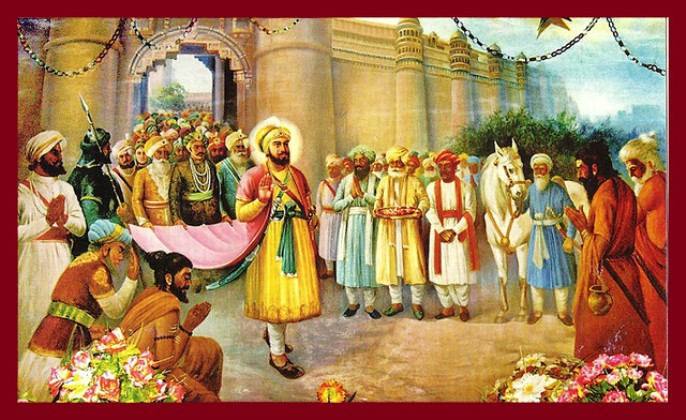
The day holds a great significance for the Sikhs since it was on this day in 1619 that the sixth Guru of the Sikhs, Guru Hargobind,  returned to Amritsar from Gwalior where he had been imprisoned by the Mughals

COL(RETD) Jaibans SinghCOL(RETD) Jaibans Singh
Oct 18, 2022, 09:41 am IST
in Culture
Follow on Google News
FacebookTwitterWhatsAppTelegramEmail

Diwali and its associated festivals are celebrated by Indians across the world with great joy and enthusiasm. The festival is celebrated by Hindus to commemorate the return to Ayodhya of Lord Ram from his 14 years exile and after successfully defeating and killing the demon King Ravana who has kidnapped Devi Sita, the wife of Lord Ram.

The day also holds a great significance for the Sikhs since it was on this day in 1619 that the sixth Guru of the Sikhs, Guru Hargobind,  returned to Amritsar from Gwalior where he had been imprisoned by the Mughals. In Sikh history and culture, it is the second most important day after Baisaikhi in the month of April that signifies the creation of the Khalsa by Guru Gobind Singh JI.

Guru Hargobind had been imprisoned in the Gwalior Fort on orders of the Mughal Emperor Jehangir. The reason for the young Guru’s imprisonment was no more than religious bigotry and  apprehension of the Emperor and the Mughals about the popularity of the Sikh religion and its growing military power. The Guru’s father, and fifth Guru of the Sikhs, Guru Arjan Dev, had been martyred for similar reasons of religious bigotry.

While in Gwalior Fort Jail, Guru Hargobind came into the acquaintance of 52 Hindu Princes imprisoned there due to evident cases of political persecution and exploitation. They were interned under deplorable conditions by the oppressive Mughal regime.  The Guru spent his time in prison looking after them and became their spiritual mentor.

The release of the Guru was negotiated with Emperor Jahangir by two Muslims, Sain Mian Mir, an old loyalist of the Sikh faith and a friend of Guru Arjan Dev Ji and Wazir Khan, the Governor of Lahore and another admirer of the Guru. They convinced the Emperor that the Guru and the Sikhs held no ill will towards the Mughals and as such were not a threat to the Mughal Court as they were made out to be by some with a vested interest. The Emperor realised his folly and agreed to free the Guru.

The Guru agreed to be freed only if the other Hindu Princes were also freed along with him. Jehangir,  already under pressure, relented grudgingly and ordained, “Let those Rajah’s be freed who can hold on to the hem of the Guru’s dress and walk out of prison.” Jehangir thought that only a few of the prisoners would be able to come out.

The Guru, however, outmanoeuvred the Mughal Emperor by getting a special dress with a large hemline made. Ultimately, all 52 princes who had been wrongly incarcerated managed to get freedom along with the Guru. Guru Hargobind is also referred to as “Bandi Chor Baba.”

The Sikhs celebrate the auspicious  occasion as “Bandi Chor”(release of prisoners) Diwas.   The arrival of the Guru at the holy city of Amritsar on Diwali Day was celebrated by lighting of hundreds of lamps. The Sikhs received their Guru in  a manner similar to the one adopted by the people of Ayodhya when their beloved Prince came back from exile.

Another important Sikh event associated with Diwali and Bandhi Chor Divas is the martyrdom in 1734 of the elderly Sikh scholar and strategist Bhai Mani Singh. Bhai Mani Singh was the Granthi (Head Priest) and Jathedar (community leader)of Akal Takth as appointed by Guru Gobind Singh. He was  killed brutally by the Mughals for refusing to pay them a special tax for a meeting in the Gurdwara to commemorate Bandi Chor Divas.

In 1737 Bhai Mani Singh promised a tribute of Rs 5000/- to the Governor of Lahore, Zakaria Khan, for permission to hold a Sikh congregation in Harmandir Sahib for the Bandhi Chor Divas. The evil Zakaria Khan gave permission but also planned to attack the Sikhs when they congregated. Bhai Mani Singh came to know of the plan and he sent messages stopping the Sikhs from coming for the congregation. Then Bhai Mani Singh told Governor Zakaria Khan that he would not pay the tribute since the congregation had not taken place due to the perfidy of the Mughals. Zakaria Khan got infuriated and ordered the arrest of Bhai Mani Singh. At that old age Bhai Mani Singh was told to convert to Islam or accept death by dismemberment. Bhai Mani Singh refused to accept Islam and was executed at Nakhaas Chowk, Lahore which is now known as Shaheed Ganj (place of martyrdom).


Topics: DeepavaliGuru HargobindKhalsaSikhismGuru Gobind SinghdiwaliBandi Chhor DivasBaisaikhi
Share24TweetSendShareSend
✮ Subscribe Organiser YouTube Channel. ✮
✮ Join Organiser's WhatsApp channel for Nationalist views beyond the news. ✮
Previous News

Chinese authorities detain five Tibetans including musicians for song praising Dalai Lama

Next News

Targeting gangs-terror nexus: NIA raids multiple places in northern India

Related News

Nihang Sikhs

The Nihang Tradition: A legacy of courage that must be preserved

Banda Singh Bahadur

Banda Singh Bahadur Martyrdom Day: Betrayal of Guru Gobind Singh Ji by Mughals and the rise of Madho Das

Scheduled Caste status to be revoked upon conversion to any religion other than Hindu, Sikh and Buddha dharma

Representative image

Unaccounted 328 Saroops of Sri Guru Granth Sahib explained: Why FIR has sparked clash between SGPC & Punjab government

Representative Image

Veer Bal Diwas: An unforgettable chapter of valour and sacrifice

Veer Bal Diwas 2025: When Christmas celebration replaces remembrance: Punjab at a civilisational crossroads

Load More

Latest News

80 Years of Organiser: VP C.P. Radhakrishnan hails resilience as “great historical recorder of independent India”

Morungs of the Konyak community: from the private papers of WG Archer, ADC of Mokokchang, Naga Hills

Decoding Northeast: Before the colonial classrooms, know the intellectual traditions of northeastern Bharat

Amid ongoing attack against Hindus and their faith, massive torchlight procession was held in protest by Hindus against the insult to Bhagwan Ram, in Dhaka

Bangladesh: Unprecedented assertion for dignity and security

ATS investigation into foreign funding of 4,000 Uttar Pradesh madrasas set to accelerate after HC order

Allahabad High Court clears way for ATS probe into foreign funding of 4,000 Uttar Pradesh madrasas

80 years of Organiser: Synonym to nationalistic views, survived emergency censor & shaping Bharat perspective

The Semiconductor State: Uttar Pradesh's Next Industrial Leap

96 lakh MSMEs, one semiconductor push: Uttar Pradesh bets big on Aatmanirbhar Bharat

Tamil Nadu: Governor Arlekar urges youth to preserve Netaji’s legacy through in-depth study of INA history

Raja Raghuvanshi Murder Case: Supreme Court refuses to stay bail granted to Sonam Raghuvanshi

The Madras HC dismisses DMK leader Ponmudi plea in hate speech case

Tamil Nadu: Madras HC refuses to hear Ponmudi’s plea over disparaging remarks on saivite, vaishnavite religious symbols

Tamil Nadu: Nilgiris’ Swayambhu Mahalingeswarar temple preserves centuries-old Badaga traditions

Load More
  • Privacy
  • Terms
  • Cookie Policy
  • Refund and Cancellation
  • Delivery and Shipping

© Bharat Prakashan (Delhi) Limited.
Tech-enabled by Ananthapuri Technologies

  • Home
  • Search Organiser
  • Bharat
    • Assam
    • Bihar
    • Chhattisgarh
    • Jharkhand
    • Maharashtra
    • View All States
  • World
    • Asia
    • Africa
    • North America
    • South America
    • Europe
    • Australia
  • Editorial
  • Operation Sindoor
  • Opinion
  • Analysis
  • Defence
  • Culture
  • Sports
  • Business
  • RSS @ 100
  • Entertainment
  • More ..
    • Sci & Tech
    • Vocal4Local
    • Special Report
    • Education
    • Employment
    • Books
    • Interviews
    • Travel
    • Health
    • Politics
    • Law
    • Economy
    • Obituary
  • Subscribe Magazine
  • Read Ecopy
  • Advertise
  • Circulation
  • Careers
  • About Us
  • Contact Us
  • Policies & Terms
    • Privacy Policy
    • Cookie Policy
    • Refund and Cancellation
    • Terms of Use

© Bharat Prakashan (Delhi) Limited.
Tech-enabled by Ananthapuri Technologies