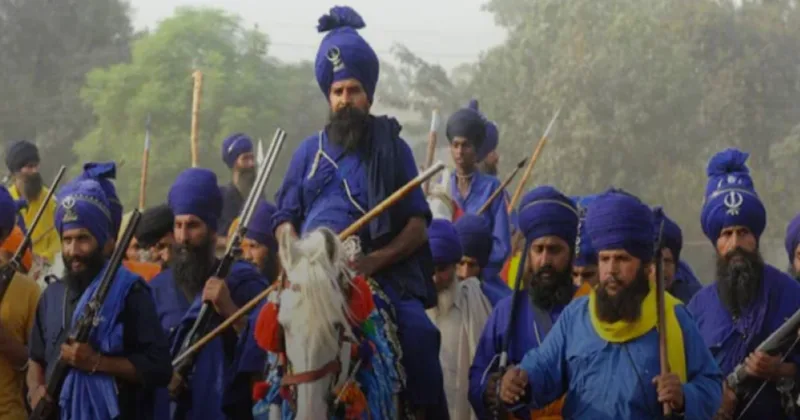
Punjab has produced many great traditions, but few command as much respect as the Nihang Sikhs. Their blue robes, towering dumalas (turban) and traditional weapons are not merely symbols of martial pride. They remind us of a time when the survival of the Sikh community depended on extraordinary courage and sacrifice.
For over three centuries, the Nihangs have represented the ideal of the sant sipahi the saint who is also a soldier. They prayed before they fought. They carried weapons not to frighten ordinary people but to protect them. Their history deserves respect, especially at a time when isolated incidents risk overshadowing their true legacy.
The eighteenth century was one of the most difficult periods in Sikh history. The Mughal Empire and repeated Afghan invasions subjected the Sikhs to relentless persecution. Many were forced into forests and deserts, yet they refused to abandon their faith.
It was during these difficult years that the Dal Khalsa and later the Sikh Misls emerged. Among the bravest warriors were the Nihangs. They defended gurdwaras, protected innocent families, rescued captives and fought to ensure that people could live with dignity and freedom. Without their courage, the rise of Sikh power in Punjab would have been far more difficult.
History also remembers great Nihang leaders for their discipline. Akali Phula Singh, one of the most respected Nihang commanders, was fearless in battle but deeply committed to Sikh principles. The strength of the Khalsa did not come from anger. It came from discipline, self-control and obedience to the Guru’s teachings.
This is an important lesson for our times.
In recent years, some individuals dressed as Nihangs have been linked with acts of violence that shocked society. Such incidents naturally receive widespread attention. However, it would be unfair to judge an entire centuries-old tradition by the actions of a few people. Every community has individuals whose conduct falls short of its ideals.
At the same time, these incidents cannot simply be ignored. Whenever violence is committed in the name of religion, it raises difficult questions. The answer, however, does not lie in blaming a whole tradition. It lies in returning to the values that made that tradition respected in the first place.
Sikh history itself provides many examples of restraint. Guru Gobind Singh created the Khalsa to stand against tyranny, not to take the law into one’s own hands. Even during the Misl period, military action was directed against oppressive rulers and invading armies, not against ordinary people. The kirpan was regarded as a sacred responsibility, to be used only when every peaceful option had failed. That principle remains as relevant today as it was three hundred years ago.
The Nihang tradition has survived because it has always been bigger than any one individual. It has preserved ancient martial arts, traditional weapons, horse-riding skills, seva and devotion to Gurbani. During major religious gatherings, Nihang dals continue to serve thousands of devotees through langar and voluntary service. These contributions deserve recognition.
Those who genuinely inherit this tradition have an opportunity to strengthen it further by continuing to uphold discipline, humility and respect for the law. Equally, society and the media must avoid painting all Nihangs with the same brush because of the actions of a few.
Punjab does not need less respect for the Nihang tradition; it needs a better understanding of it. The real identity of a Nihang is not defined by the weapons he carries but by the responsibility with which he carries them.
The legacy left by the great Nihang warriors is one of courage without cruelty, strength without arrogance and faith without hatred. That is the tradition future generations should remember, preserve and proudly carry forward.