James M. Dorsey
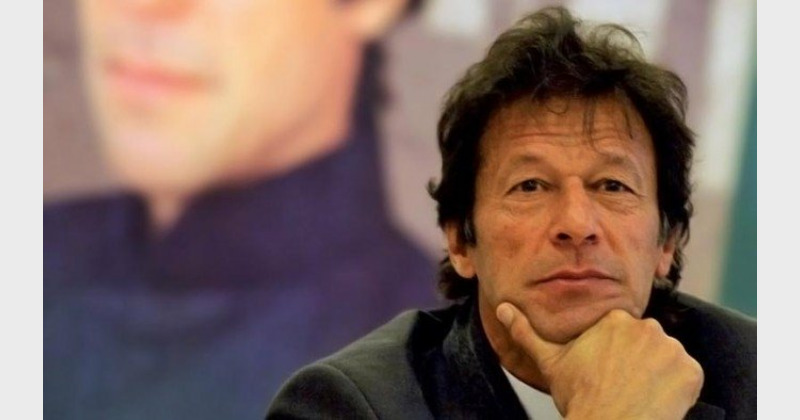
Widely seen as a populist with ultra-conservative leanings, Pakistani PM Imran Khan increasingly appears to reinforce widespread traditionalist attitudes that reject religious tolerance and the rights of women and minorities.
Pakistani PM Imran Khan is aligning his country, in religious and social terms, closer to Turkey than to his country’s traditional allies, Saudi Arabia and the UAE. Turkish President Recep Tayyip Erdoğan has bolstered religious education at home and Turkish schools abroad and recently withdrew from an international women’s rights convention.
Khan’s FM, Shah Mahmood Qureshi, reportedly was scheduled to meet recently in Islamabad with Saudi Minister of State for Foreign Affairs Adel Jubeir amid concern about regional security as US forces withdraw from Afghanistan and the Taliban rapidly gain ground.
Saudi Arabia, once a bulwark of religious ultra-conservatism, has, like the UAE, sought to sand down the raw edges of its longstanding austere interpretation of Islam, liberalize social mores, enhance women’s mobility and professional opportunities, and position the kingdom as a proponent of a moderate form of Islam that highlights religious tolerance and interfaith dialogue while supporting the autocratic rule.
Except for his empathy with authoritarianism, Khan appears to be going in the opposite direction. In doing so, he can dip into a deep reservoir of ultra-conservatism in Pakistan that was fueled in part, until the rise in 2015 of Saudi Crown Prince Muhammad bin Salman, by decades of Saudi financial, material, and religious support.
Last month, the PM pushed the implementation of educational reform that would Islamicize syllabi across the board from primary schools to universities. Arabic would be mandatory for the first 12 years of a child’s schooling. Critics charge that religion would account for up to 30% of the new syllabus.
Fueling controversy, Khan recently blamed increased sexual violence in Pakistan on women who fail to dress properly. “If a woman is wearing very few clothes, it will have an impact on the men, unless they are robots. It’s just common sense,” Khan said.
The PM went on to say that the practice of wearing a veil existed so “that there is no temptation in society.”
Earlier, Qureshi, the foreign minister, told CNN that Israel had “deep pockets” and was home to “very influential people” who “control media.”
When accused by the interviewer of employing antisemitic tropes and asked to condemn antisemitism, Qureshi sidestepped the question by saying: “I will not justify any rocket attacks…and I cannot condone the aerial bombardment that is taking place.” Qureishi was speaking in May as Israel was responding to rockets fired by Hamas, the Islamist group that controls Gaza, at Israeli civilian communities and cities.
A recent explosion in Lahore that killed three people and wounded 27 others appeared to suggest that there could be regional consequences to the ultra-conservative moves. The explosion was seen by analysts and officials as India’s warning to the government not to ease a crackdown on Islamic militants who have long done Pakistan’s bidding in disputed Kashmir.
Khan’s national security advisor, Moeed Yousuf, said an investigation had concluded that the explosion was a car bomb planted by Indian intelligence near the home of Hafiz Saeed, a leader of the outlawed Jamat ud-Dawa and founder of Lashkar-e-Taiba, a Kashmir-focused group banned as a terrorist organization.
It was not immediately clear whether Saeed was at home at the time of the explosion. According to several sources, sentenced to multiple prison terms on terrorism-related charges, he might have been allowed to serve time under house arrest.
Without identifying India by name, Pakistan’s Punjab province police chief, Inam Ghani, said a UAE-based Pakistani national had recruited local Pakistanis to place the bomb.
Earlier this year, the UAE mediated a revival of a lapsed ceasefire between India and Pakistan along the Line of Control that divides Kashmir into Indian and Pakistani-controlled areas. The line was often a flashpoint along which Pakistani-backed militants operated.
A UN-designated terrorist, Saeed has had a $10 million bounty put on his head by the US Department of Justice. Saeed is believed to have masterminded the 2008 attacks on multiple targets in Mumbai that killed 165 people.
The Financial Action Task Force (FATF), an international anti-money- laundering and terrorism finance watchdog, recently refused to remove Pakistan from its grey watchlist because the country had not been vigorous enough to prosecute UN-designated terrorists.
Greylisting carries no legal sanctions but restricts a country’s access to international loans. Qureshi, the Pakistani FM, estimated that the greylisting cost his country’s economy $10 billion a year.
PM Khan’s ultra-conservative leanings suggest that Saudi and US hope that Pakistan, the world’s second-most populous Muslim-majority country, might pave the way for the kingdom’s establishment of diplomatic relations with Israel is a figment of the imagination.
A former senior adviser to Khan, Sayed Zulfi Bukhari, denied days before the reported talks with Jubeir, the Saudi minister, who secretly visited Israel for meetings with senior government officials.
Bukhari tweeted, “DIDNOT go to Israel. Funny bit is Pakistani paper says I went to Israel based on ‘Israeli news source’ & Israeli paper says I went to Israel based on a ‘Pakistani source’-wonder who this imaginative Pakistani source is. Apparently, I’m the only one who was kept out of the loop.” Bukhari resigned weeks before the tweet after being accused of abuse of power in a government report.
Saudi recognition of Israel was likely a topic in talks in Washington two weeks ago between US officials and visiting Saudi Deputy DM Prince Khalid bin Salman.
In a move primarily targeting the UAE, Saudi Arabia, which last year established diplomatic relations with Israel, signalled its refusal to follow suit by altering its application of Gulf Cooperation Council (GCC) customs tariffs.
The kingdom said it was exempting from GCC preferential treatment goods that include components manufactured in Israel or made by companies fully or partially owned by entities on the Arab League boycott list because of their commercial relations with Israel.
The writer is a non-resident Senior Associate at the BESA Center, a senior fellow at the S. Rajaratnam School of International Studies at Singapore’s Nanyang Technological University and co-director of the University of Würzburg’s Institute for Fan Culture.
Courtesy: Weekly Blitz