KIDS ORG
August 5, 2026
  • Read Ecopy
  • Circulation
  • Advertise
  • Careers
  • About Us
  • Contact Us
Android AppiPhone AppArattai
Organiser
  • ‌
  • Bharat
    • Assam
    • Bihar
    • Chhattisgarh
    • Jharkhand
    • Maharashtra
    • View All States
  • World
    • Asia
    • Europe
    • North America
    • South America
    • Africa
    • Australia
  • Editorial
  • International
  • Opinion
  • RSS @ 100
  • More
    • Op Sindoor
    • Analysis
    • Sports
    • Defence
    • Politics
    • Business
    • Economy
    • Culture
    • Special Report
    • Sci & Tech
    • Entertainment
    • G20
    • Azadi Ka Amrit Mahotsav
    • Vocal4Local
    • Web Stories
    • Education
    • Employment
    • Books
    • Interviews
    • Travel
    • Law
    • Health
    • Obituary
  • Subscribe
    • Subscribe Print Edition
    • Subscribe Ecopy
    • Read Ecopy
  • ‌
  • Bharat
    • Assam
    • Bihar
    • Chhattisgarh
    • Jharkhand
    • Maharashtra
    • View All States
  • World
    • Asia
    • Europe
    • North America
    • South America
    • Africa
    • Australia
  • Editorial
  • International
  • Opinion
  • RSS @ 100
  • More
    • Op Sindoor
    • Analysis
    • Sports
    • Defence
    • Politics
    • Business
    • Economy
    • Culture
    • Special Report
    • Sci & Tech
    • Entertainment
    • G20
    • Azadi Ka Amrit Mahotsav
    • Vocal4Local
    • Web Stories
    • Education
    • Employment
    • Books
    • Interviews
    • Travel
    • Law
    • Health
    • Obituary
  • Subscribe
    • Subscribe Print Edition
    • Subscribe Ecopy
    • Read Ecopy
Organiser
  • Home
  • Bharat
  • World
  • Operation Sindoor
  • Editorial
  • Analysis
  • Opinion
  • Culture
  • Defence
  • International Edition
  • RSS @ 100
  • Magazine
  • Read Ecopy
Home Bharat

KIDS ORG

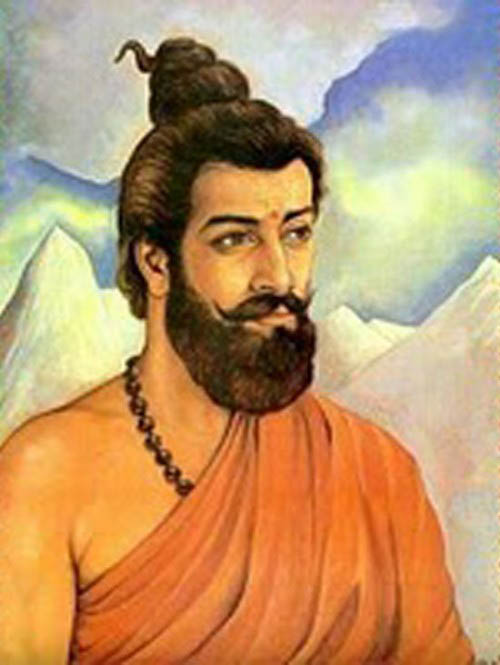
The ?Samkhya System? of Kapila?: One of the most deified sages of Hinduism, Kapila is the great embodiment of national consciousness.

Archive ManagerArchive Manager
Nov 19, 2011, 10:38 pm IST
inBharat
Follow on Google News
Facebook
Twitter
WhatsAppTelegramEmail

-The ‘Samkhya System’ of Kapila?

By Anoop Verma?

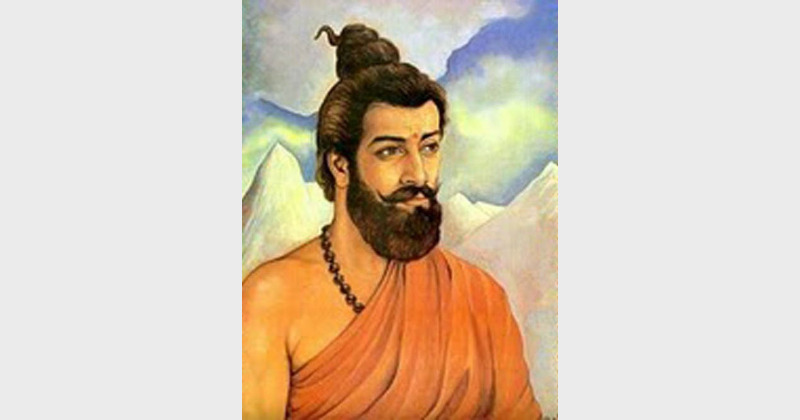
One of the most deified sages of Hinduism, Kapila is the great embodiment of national consciousness. In some traditional accounts he is identified with Lord Vishnu; he is also depicted as a direct descendant of the primal human being, Manu, and a grandson of the Creator-God, Brahma. According to the Bhagvata Puran, the names of Kapila’s parents were Kardama Muni and Devahuti. Kapila was not a mild mannered sage; he was reclusive and wrathful. His name Kapila has also been translated as raudra, or angry. He was an ascetic God, whose matted hair was so thick that his face was scarcely visible.

Kapila was indirectly responsible for bringing River Ganga to earth. The ancestor of Sri Ram, King Sagara of Ayodhya, had performed the Ashwamedha yajna 99 times. In this yajna a horse is released and an army follows it. All the areas that the horse passes through must be subjugated. When King Sagara was performing the hundredth Ashwamedha, the Lord of heaven, Indra, became jealous and he hid the horse. Eventually the 60,000 sons of King Sagara found the holy horse in Kapila’s hermitage. But they made such a ruckus that Kapila, who had been meditating for several years, woke up. Kapila’s hermit regimen had produced in him an inner store of such intense heat that his glance reduced the 60,000 sons to ashes. As their last rites had not been performed, their souls wandered as ghosts. The great grandson of Sagara, Anshuman, prayed to Kapila for the redemption of the souls of his ancestors. Kapila replied that the 60,000 souls could be redeemed only  if the River Ganga descended from heaven and its waters washed over the ashes of their bodies. Ultimately it was Bhagiratha, another descendent of King Sagara, who brought Ganga to the earth.

The Samkhya philosophy, which Kapila has preached, is the great fountain-head from which almost every other philosophical system of India has emerged. In a literal sense Samkhya means buddhi, or mind, and this is indicative of the fact that the system prefers rationalistic explanation. The ‘Yoga System’ of Patanjali is built to a large extent on Kapila’s Samkhya system. Aksapada Gautama’s Nyaya Sutras are also inspired by the Samkhya system. Chanakya, in his Arthashastra, has dwelled on Samkhya system at many places. The Ayur Veda, works of Caraka and Susruta known as Caraka Samhita and Susruta Samhita respectively, also deal with Samkhya.

The metaphysics of Kapila’s Samkhya philosophy is frankly dualistic; it recognises the existence of two ultimate entities, Prakriti, or nature, and Purusa, or soul. Neither Prakriti nor Purusa can be derived from each other. Prakriti is the name of the principle or entity out of which the objective universe gets evolved in its infinite diversity. The Prakriti, or the primal entity, is unknowable through human senses, and its existence can only be inferred. Even though Prakriti is always harmonious, it constitutes of three gunas – sattva (pure and sublime), rajas (active) and tamas (stolid and offering resistance). The dominance of the three gunas varies in various manifestations of nature – the sattva rules in highest manifestations, while the tamas rules when manifestation reaches its nadir.

Purusa is the element that leads to awareness or sentience. According to Samkhya, a truly empirical evidence of Purusa is impossible to find, and hence like in case of Prakriti, the existence of Purusa must also be derived through reason. If Prakriti is postulated on the belief that if there is an effect there must be an underlying cause, then the doctrine of Purusa is derived from the principle that objects must point to a subject. In other words, the existence of a non-sentient implies a sentient. According to Samkhya, all the living organisms are by themselves a proof of the existence of Purusa.  Every living organism’s body is made out of many parts, which work in perfect harmony so that the needs of the sentient entity, the Purusa, residing in the body, are fully met.

Both Purusa and Prakriti are eternal and independent of each other. In fact, Samkhya system preaches that the conception of the Purusa is the opposite of Prakriti. Prakriti is dynamic and complex, whereas Purusa is static and simple. Purusa is passive, whereas Prakriti is active. Even though Purusa is also omnipresent like Prakriti, its manifestations are confined to limits of the bodies and the internal organs in which it is based. However, creation as we know it, happens when Purusa and Prakriti can come together. Prakriti is the medium in which Purusa can manifest itself, but it is not its source. As different people perceive the world in different ways, it follows that they must be having separate Purusas, or souls.

Kapila’s Samkhya system is a complete work; it dwells on all aspects of philosophy. Along with metaphysics, it also offers a most comprehensive view of epistemology and ethics. The most amazing thing is that these landmark ideas had been preached for many centuries, or even millennia, before the ancient Greek thinkers or the medieval European thinkers could develop their doctrines.?

Share
Tweet
SendShareSend
✮ Subscribe Organiser YouTube Channel. ✮
✮ Join Organiser's WhatsApp channel for Nationalist views beyond the news. ✮
Previous News

Youth tied, beaten, stoned to death

Next News

READERS’ FORUM

Related News

A viral social media post claiming a WHO warning about milk adulteration causing cancer in 87 per cent of Indians by 2035 has been debunked as fake by PIB.

Fact Check: PIB debunks fake post claiming WHO warned 87 per cent of Indians will get Cancer from milk adulteration

‘Who brought a 12 year old to protest?’: POCSO complaint slams CJP organisers over Jantar Mantar NEET agitation

Former Bangladesh Prime Minister Sheikh Hasina's son Sajeeb Wazed

‘August 5 was a conspiracy’: Sheikh Hasina’s son vows Awami League will reclaim Bangladesh’s democratic path

India gets 101st Ramsar Site in Arunachal Pradesh's Glaw Lake

India Crosses 100 Ramsar Sites: Arunachal Pradesh’s Glaw Lake becomes country’s 101st wetland of global importance

Centre proposes drug-free campuses, 500-metre zones and consent-based student screening under its 2026–2029 narcotics roadmap

Drug-Free Campuses in Focus: Centre proposes 500-metre safety zone and consent-based screening for students

MSV Faize Noore Oliya, sank off Yemen after being hit by a projectile, but all 13 Indian nationals aboard were safely rescued

“All 13 Indian nationals have been rescued”: MEA after Indian vessel sinks off Yemen after attack

Load More

Latest News

A viral social media post claiming a WHO warning about milk adulteration causing cancer in 87 per cent of Indians by 2035 has been debunked as fake by PIB.

Fact Check: PIB debunks fake post claiming WHO warned 87 per cent of Indians will get Cancer from milk adulteration

‘Who brought a 12 year old to protest?’: POCSO complaint slams CJP organisers over Jantar Mantar NEET agitation

Former Bangladesh Prime Minister Sheikh Hasina's son Sajeeb Wazed

‘August 5 was a conspiracy’: Sheikh Hasina’s son vows Awami League will reclaim Bangladesh’s democratic path

India gets 101st Ramsar Site in Arunachal Pradesh's Glaw Lake

India Crosses 100 Ramsar Sites: Arunachal Pradesh’s Glaw Lake becomes country’s 101st wetland of global importance

Centre proposes drug-free campuses, 500-metre zones and consent-based student screening under its 2026–2029 narcotics roadmap

Drug-Free Campuses in Focus: Centre proposes 500-metre safety zone and consent-based screening for students

MSV Faize Noore Oliya, sank off Yemen after being hit by a projectile, but all 13 Indian nationals aboard were safely rescued

“All 13 Indian nationals have been rescued”: MEA after Indian vessel sinks off Yemen after attack

Ex-JNU Prof Nivedita Menon continues her anti-Bharat rant

Bharat is a “manhus desh”: Ex-JNU Professor Nivedita Menon continues her anti-India rants, sparking massive outrage

August 5 Milestones: Article 370 revocation and Ram Mandir Bhoomi Pujan

Kashmir Unbound: A New Dawn After Article 370

Representative Image

Pakistan’s UNSC push on Indus Waters Treaty faces legal dead end as India stands firm on bilateral framework

Load More
  • Privacy
  • Terms
  • Cookie Policy
  • Refund and Cancellation
  • Delivery and Shipping

© Bharat Prakashan (Delhi) Limited.
Tech-enabled by Ananthapuri Technologies

  • Home
  • Search Organiser
  • Bharat
    • Assam
    • Bihar
    • Chhattisgarh
    • Jharkhand
    • Maharashtra
    • View All States
  • World
    • Asia
    • Africa
    • North America
    • South America
    • Europe
    • Australia
  • Editorial
  • Operation Sindoor
  • Opinion
  • Analysis
  • Defence
  • Culture
  • Sports
  • Business
  • RSS @ 100
  • Entertainment
  • More ..
    • Sci & Tech
    • Vocal4Local
    • Special Report
    • Education
    • Employment
    • Books
    • Interviews
    • Travel
    • Health
    • Politics
    • Law
    • Economy
    • Obituary
  • Subscribe Magazine
  • Read Ecopy
  • Advertise
  • Circulation
  • Careers
  • About Us
  • Contact Us
  • Policies & Terms
    • Privacy Policy
    • Cookie Policy
    • Refund and Cancellation
    • Terms of Use

© Bharat Prakashan (Delhi) Limited.
Tech-enabled by Ananthapuri Technologies