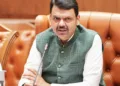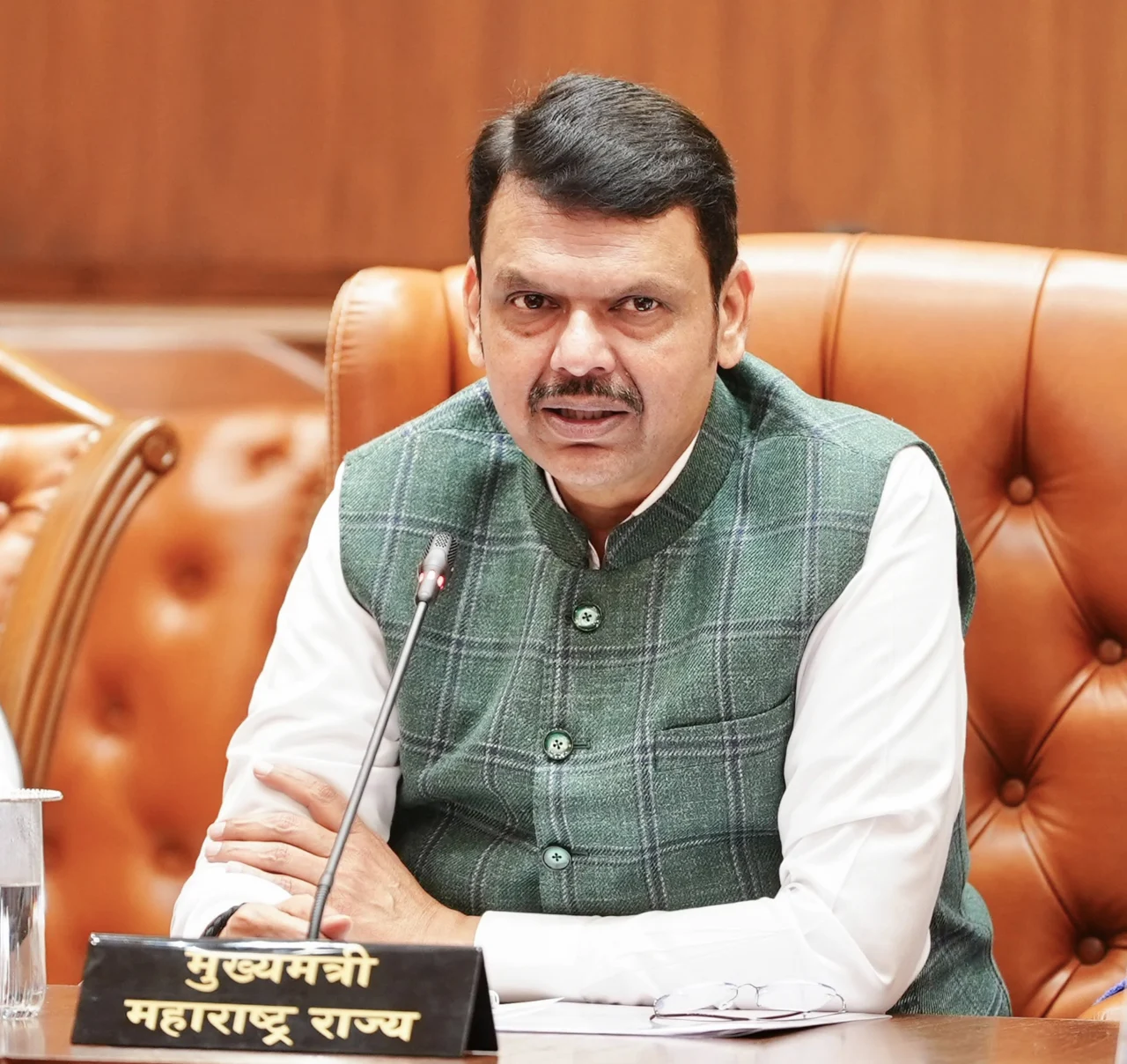
Mumbai, July 9, 2026: Maharashtra Chief Minister Devendra Fadnavis announced in the State Assembly the constitution of a high-level seven-member committee to draft rules and recommendations for the implementation of a Uniform Civil Code (UCC) across the state.
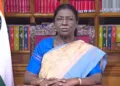
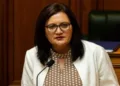
The committee is chaired by former Supreme Court Justice Smt. Ranjana Prakash Desai.
It will conduct a comprehensive study of all legal, social, and administrative aspects related to the UCC and submit its detailed report with recommendations within six months.
Following the report, the government intends to finalise a draft bill and introduce it in both Houses of the Maharashtra Legislature during the Winter Session in Nagpur.
This development marks a structured advancement by the Mahayuti government towards realising the objectives outlined in Article 44 of the Indian Constitution.
A committee has been constituted for the Uniform Civil Code. Based on the committee's report, a Bill is expected to be introduced during the upcoming Winter Session in Nagpur.
समान नागरी कायद्यासंदर्भात समिती गठित केली असून, या समितीच्या अहवालाच्या आधारे संबंधित विधेयक नागपूर… pic.twitter.com/P6ktvrgAkb
— Devendra Fadnavis (@Dev_Fadnavis) July 9, 2026
Composition of the Committee
The seven-member committee brings together extensive expertise from the judiciary, administration, law, and social sectors:
Chairperson: Former Supreme Court Justice Ranjana Prakash Desai. She previously served as Chairperson of the 8th Central Pay Commission, becoming the first woman to hold the position, and took charge for a second term as Chairperson of the Press Council of India on April 24, 2026.
Members:
Former High Court Justice R. C. Chavan
Former High Court Justice S. G. Mehere
Former Chief Secretary of Maharashtra D. K. Jain
Former Advocate General of Maharashtra Birendra Saraf
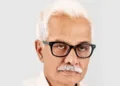
Padma Shri awardee and social activist Shri Ramesh Patange
Educationalist Dr. Suvarna Rawal
The panel includes three former judges, senior bureaucratic and legal experts, and representatives from social and educational fields.
#WATCH | Mumbai: On Uniform Civil Code (UCC), Maharashtra Minister Nitesh Rane says, “The provision for a Uniform Civil Code exists within our Constitution. Anyone who respects the Constitution of Dr Babasaheb Ambedkar should have no objection to UCC. The Bharatiya Janata Party… pic.twitter.com/4iNjg00PVk
— ANI (@ANI) July 9, 2026
Know the Members of the UCC Committee:
Here is more information about the seven members of the Maharashtra Uniform Civil Code (UCC) Committee that highlight their experience and credentials.
Justice Ranjana Prakash Desai (Chairperson)
Justice Ranjana Prakash Desai is among India’s most respected former Supreme Court judges, with decades of judicial experience spanning constitutional law, civil matters and public administration. She made history as the first woman to chair the 8th Central Pay Commission, demonstrating the Union government’s confidence in her administrative abilities. In April 2026, she assumed a second term as Chairperson of the Press Council of India, reflecting continued trust in her leadership and commitment to institutional integrity. Her long judicial career is marked by an emphasis on fairness, constitutional values and consensus-building.
Justice R. C. Chavan
Justice R. C. Chavan is widely regarded for his extensive experience in criminal and civil jurisprudence during his tenure at the Bombay High Court. Known for his balanced approach and deep understanding of legal procedure, he has also contributed to legal education and judicial reforms after retirement. His practical courtroom experience is expected to provide valuable insights into how any proposed legal reforms may function on the ground.
Justice S. G. Mehere
Justice S. G. Mehere served as a judge of the Bombay High Court, where he handled a broad spectrum of cases across constitutional, civil and criminal law. His judicial career has been recognised for adherence to due process and careful interpretation of statutes. His inclusion adds another experienced judicial perspective to the committee’s deliberations.
D. K. Jain
As a former Chief Secretary of Maharashtra, D. K. Jain brings decades of administrative and governance experience. Having worked across multiple departments and coordinated policymaking at the highest level of the state government, he understands both the legal and practical challenges of implementing major reforms. His expertise in public administration is likely to help assess how any recommendations could be translated into effective governance.
Birendra Saraf
Birendra Saraf served as the Advocate General of Maharashtra, the state’s highest law officer. A distinguished senior advocate, he has argued numerous constitutional, commercial and public law matters before the Bombay High Court and the Supreme Court. His experience in advising the state on complex legal questions equips the committee with high-level constitutional and legislative expertise.
Ramesh Patange
Padma Shri awardee and noted Constitutional expert Ramesh Patange is a noted social thinker, author and activist who has worked extensively on issues concerning social harmony, social justice and the upliftment of marginalised communities. He has written widely on social reform and public policy and has been associated with efforts to promote dialogue across different sections of society. His grassroots experience offers the committee an important social perspective alongside its legal expertise.
Dr. Suvarna Rawal
Dr. Suvarna Rawal is an accomplished academic and educationist with long experience in higher education and educational administration. She has been associated with curriculum development, academic leadership and initiatives aimed at improving educational standards. Her presence broadens the committee’s expertise beyond law and administration by bringing an academic and societal perspective to policy discussions.
Overall strength of the committee
Collectively, the committee represents a blend of judicial, constitutional, administrative, legal, academic and social sector expertise. It includes:
A former Supreme Court judge as chairperson.
Two former High Court judges with extensive judicial experience.
A former Chief Secretary familiar with governance and policy implementation.
A former Advocate General with deep constitutional and legislative expertise.
A Padma Shri award-winning social activist (who is also an expert on the country’s Constitution) representing grassroots concerns.
An experienced educationist contributing an academic and societal perspective.
This diverse composition gives the committee a broad range of expertise to examine legal, administrative and social aspects of a Uniform Civil Code for Maharashtra.
The committee will examine current personal laws, consult with relevant stakeholders, and develop a suitable framework for Maharashtra that addresses the state’s diverse society.
Understanding the Uniform Civil Code
The Uniform Civil Code is a common set of laws that governs personal matters, including marriage, divorce, inheritance, adoption, maintenance, and succession, and applies equally to all citizens regardless of religion, caste, or community.
At present, different religious communities in India follow their respective personal laws based on religious scriptures and traditions.
Article 44 of the Indian Constitution, under the Directive Principles of State Policy, states: “The State shall endeavour to secure for the citizens a uniform civil code throughout the territory of India.”
The Union Government has encouraged states to prepare their own UCC frameworks, recognising India’s federal structure.
Maharashtra’s initiative follows this approach
Uttarakhand became the first state to enact a Uniform Civil Code in 2024. The Uttarakhand UCC includes uniform provisions on marriage, divorce, inheritance, and live-in relationships, and prohibits polygamy.
Other states, including Gujarat, are also advancing work on similar measures.
UCC in Other Democracies
Many democratic countries maintain uniform civil codes that apply the same family and personal laws to all citizens irrespective of religion. This is the standard practice in most secular and functional democracies.
France operates under a single civil code originating from the Napoleonic Code of 1804. The principle of laïcité ensures that personal laws are uniform for all citizens, with religious practices observed privately.
Germany follows the German Civil Code (Bürgerliches Gesetzbuch or BGB) of 1900, which provides a unified legal framework for family matters applicable to all residents.
Turkey, a secular democracy with a Muslim-majority population, adopted a uniform civil code in the 1920s based on Swiss models, replacing earlier religious laws with a single secular code for all citizens.
Brazil, a large federal democracy with diverse religious communities, implements its 2002 Civil Code uniformly across the country regardless of religion.
Similar uniform approaches exist in Japan, South Korea, and several European countries. Tunisia also established a modernised personal status code in the 1950s that emphasises uniformity and equal application.
In the United Kingdom, family law in England and Wales is largely uniform and secular, with core civil provisions applying equally.
In the United States, family law operates at the state level on a secular basis without religion-specific personal laws.
The Goa Model of UCC:
Goa has India’s only longstanding Uniform Civil Code because it was once a Portuguese colony for nearly 450 years before its liberation in 1961 and seubsequent inclusion into the Indian Union. The Portuguese Civil Code (1867/1870) continued after liberation in 1961, applying the same family laws (marriage, divorce, inheritance) to all residents regardless of religion, unlike the religion-specific personal laws in the rest of India. While Uttarakhand passed a UCC law in 2024, Goa’s version is the longstanding, colonial-era one that has been in force for over 150 years. It is often cited as a model, though not perfectly uniform in every provision.
The Committee’s Mandate and Timeline
The Maharashtra committee will study existing personal laws, international models where applicable, and the specific requirements of the state.
It will prepare recommendations for a framework that covers marriage, divorce, inheritance, adoption, and related matters under one set of rules.
The six-month period for submitting the report allows time for detailed examination and stakeholder inputs.
Once the report is received, the government will prepare the draft legislation for presentation in the Winter Session.
This schedule provides a clear pathway from expert recommendations to legislative consideration.
Justice Ranjana Prakash Desai, Former Justices Chavan and Mehere, D.K. Jain, Birendra Saraf, Ramesh Patange, and Dr. Suvarna Rawal together offer a wide range of experience in constitutional law, judicial interpretation, public administration, and social sectors.
Their combined input is expected to produce a robust and practical set of recommendations.
Next Steps and Broader Context
Maharashtra’s move positions the state as an important participant in the implementation of Article 44 at the state level.
As one of India’s largest and most diverse states, the framework developed here will address the application of uniform laws across urban, rural, and varied community settings.
The process includes examination of legal provisions, administrative requirements, and preparation of rules for smooth implementation.
The government has indicated that the committee’s work will support the introduction of a comprehensive bill in the upcoming Winter Session.
This initiative builds on the Uttarakhand model and aligns with efforts in other states. It reflects continued focus on bringing uniformity to personal laws as per constitutional guidance.
The formation of the committee under the leadership of Justice Ranjana Prakash Desai is a concrete step in the ongoing process. All eyes will now be on the committee’s deliberations and the eventual draft bill as Maharashtra advances its UCC preparations.