Kurds remain a strategic ally of the USA
July 9, 2026
  • Read Ecopy
  • Circulation
  • Advertise
  • Careers
  • About Us
  • Contact Us
Android AppiPhone AppArattai
Organiser
  • ‌
  • Bharat
    • Assam
    • Bihar
    • Chhattisgarh
    • Jharkhand
    • Maharashtra
    • View All States
  • World
    • Asia
    • Europe
    • North America
    • South America
    • Africa
    • Australia
  • Editorial
  • International
  • Opinion
  • RSS @ 100
  • More
    • Op Sindoor
    • Analysis
    • Sports
    • Defence
    • Politics
    • Business
    • Economy
    • Culture
    • Special Report
    • Sci & Tech
    • Entertainment
    • G20
    • Azadi Ka Amrit Mahotsav
    • Vocal4Local
    • Web Stories
    • Education
    • Employment
    • Books
    • Interviews
    • Travel
    • Law
    • Health
    • Obituary
  • Subscribe
    • Subscribe Print Edition
    • Subscribe Ecopy
    • Read Ecopy
  • ‌
  • Bharat
    • Assam
    • Bihar
    • Chhattisgarh
    • Jharkhand
    • Maharashtra
    • View All States
  • World
    • Asia
    • Europe
    • North America
    • South America
    • Africa
    • Australia
  • Editorial
  • International
  • Opinion
  • RSS @ 100
  • More
    • Op Sindoor
    • Analysis
    • Sports
    • Defence
    • Politics
    • Business
    • Economy
    • Culture
    • Special Report
    • Sci & Tech
    • Entertainment
    • G20
    • Azadi Ka Amrit Mahotsav
    • Vocal4Local
    • Web Stories
    • Education
    • Employment
    • Books
    • Interviews
    • Travel
    • Law
    • Health
    • Obituary
  • Subscribe
    • Subscribe Print Edition
    • Subscribe Ecopy
    • Read Ecopy
Organiser
  • Home
  • Bharat
  • World
  • Operation Sindoor
  • Editorial
  • Analysis
  • Opinion
  • Culture
  • Defence
  • International Edition
  • RSS @ 100
  • Magazine
  • Read Ecopy
Home World

Kurds remain strategic ally of USA despite being neglected

Iraqi Kurdistan became the primary battleground for the PMF to target U.S. troops, interests, and partners, especially since the United States pulled out of northeast Syria. Senior U.S. officials already acknowledge that Iraq has become a “major proxy battleground” between Washington and Tehran.

Manish RaiManish Rai
Jul 9, 2026, 10:00 pm IST
in World, West Asia
Follow on Google News
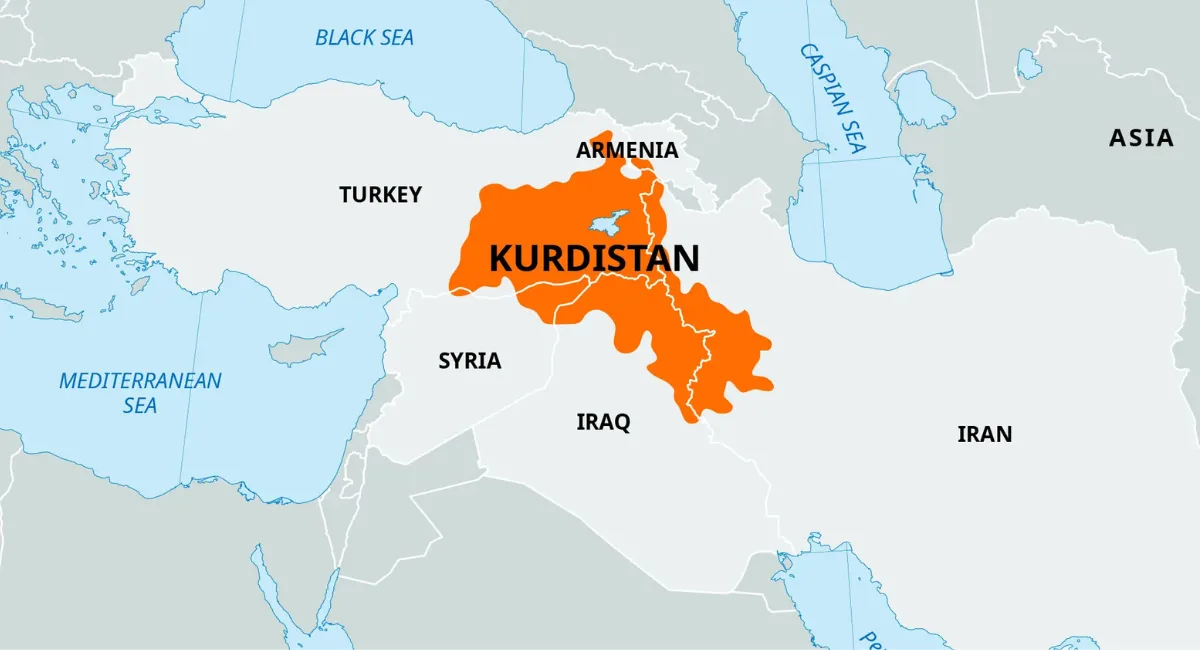
Kurdistan region - Courtesy: Britannica

Kurdistan region - Courtesy: Britannica

FacebookTwitterWhatsAppTelegramEmail

During the recently partially concluded US-Iran war, Iran and its proxies in Iraq have conducted over 850 missile and drone attacks in the Kurdistan Region of Iraq (KRI). Iran launched thousands of projectiles at Israel and the Gulf states, which received wider international attention. However, the attacks in the Kurdistan Region of Iraq (KRI) by Iranians and their proxies have received less attention. Compared to Iranian reprisals against other U.S. partners, these attacks against Iraqi Kurdistan have been qualitatively distinct.

In Kurdistan, Iranian projectiles have largely gone unchallenged due to the absence of comparable air defence capabilities, unlike in other parts of the region where the vast majority have been intercepted. These attacks are not intended to undermine the American war effort by inducing global economic damage, as we witness in the case of Iranian attacks on Gulf energy infrastructure. And unlike the barrages directed at Israel, they are not reprisals for their involvement in the conflict either. Instead, Iranian attacks on the KRI are an effort to compel one of America’s closest partners in the region to abandon it, to oust the United States from its final remaining foothold in Iraq, and to strengthen Iranian influence over its immediate neighbours.

Also Read: Kurds have every reason to be cautious

Iran’s strikes against the Iranian Kurdish groups based in KRI should not be interpreted as a pre-emptive containment of these dissident groups. The KRI’s ongoing targeting, even after the ceasefire brokered by Qatar, suggests a deeper agenda.

Kurdistan is the most prosperous and stable region of Iraq. Kurdistan’s strong ties with the United States and its assistance in counterterrorism have sustained this situation. The region now hosts all 2,500 U.S.-led coalition forces deployed at Harir Air Base and Erbil International Airport, following Iraq’s declaration of the complete withdrawal of U.S. forces from its federal territory. Additionally, with the Kurdistan Regional Government (KRG) announcing a $100 billion energy deal with two additional American companies, i.e., Chevron and ExxonMobil, in 2025, they hold substantial stakes in the region. Moreover, Kurdistan is the sole region in Iraq in which Iran and its affiliated militias have been unable to establish a substantial political and economic presence.

Since October 7, 2023, Iran’s proxy groups in the Middle East have significantly diminished. As a result of Israeli operations that have significantly damaged Hamas and Hezbollah, Tehran has become increasingly dependent on its allies within Iraq’s PMF, who have remained relatively unscathed.

Also Read: Kurds: The victims of international betrayal

Iraqi Kurdistan became the primary battleground for the PMF to target U.S. troops, interests, and partners, especially since the United States pulled out of northeast Syria. Senior U.S. officials already acknowledge that Iraq has become a “major proxy battleground” between Washington and Tehran.

The Iranian objective is regrettably being facilitated by the absence of a substantive American response and support for the KRG in the wake of these attacks. In its policy toward the Kurds, the United States has been motivated by strategic considerations, supporting Kurdish aspirations only when they are consistent with its objectives. It has been a recurring pattern of Kurdish empowerment that is fleeting, followed by instability and a reversal of autonomy.

The KRG has been one of Washington’s most reliable partners in the Middle East. It has helped with counterterrorism efforts and made the region more stable. By permitting it to become vulnerable in the aftermath of this conflict, the United States would erode its credibility and impair one of the few functional Western-aligned governance models in the region.

In Iraq, there should be no existential hazards associated with a commitment to partnership with the United States. A proven partner in promoting regional stability, the Kurds are one of the last viable pillars of U.S. influence in Iraq. By permitting its weakening, Tehran would achieve a strategic victory that would be exceedingly challenging, if not impossible, to reverse.

KRI-US relations are currently at a critical juncture. Tensions are increasing because of the changing priorities of the United States, although a shared history fosters a bond. This precarious situation has the potential to result in violence, instability, and humanitarian crises or to reverse the political, economic, and security gains that the Kurds have achieved. This setback would not only remove a key security partner for the West, but it would also hinder the spread of democracy in a region ruled by authoritarian regimes. It could also have a substantial impact on America’s global reputation as a dependable ally.

Consequently, the United States must demonstrate more dedication to the KRI’s defence. The first step in this direction will be to equip the region with air defence systems that can intercept drones and missiles launched by Iran and its proxies. The KRG officials have been seeking such support for a long time, but they are frequently frustrated by bureaucratic constraints that necessitate approval from the federal government in Baghdad, even for defensive capabilities.

Additionally, Washington should take a proactive approach towards establishing a long-term agreement between Baghdad and Erbil regarding the management and exportation of oil, budget allocation, and power sharing. Since the United States has substantial diplomatic, political, and financial influence over the Iraqi government, the US can put pressure on Baghdad to accept the legitimate demands of the KRG. To guarantee the KRG’s stability and its capacity to function as a regional security partner, it is imperative to resolve its chronic financial issues.

Topics: Israeli operationsIraqBaghdadKurdistanIran-US warHarir Air Base
Manish Rai
Manish Rai
The writer is a Political Analyst for West Asia and Af-Pak Region. [Read more]
ShareTweetSendShareSend
✮ Subscribe Organiser YouTube Channel. ✮
✮ Join Organiser's WhatsApp channel for Nationalist views beyond the news. ✮
Previous News

Central Sanskrit University launches NEET-PA, opening BAMS path for Sanskrit students

Related News

Popular Mobilization Forces (PMF) of Iraq who favours Tehran: An obstacle to West Asia strategy of the US

Iran’s Shadow Army: How Hashd al-Shaabi’s Drone War Unmasks Tehran’s Grip on Iraq | PMF

American journalist Shelly Kittleson

American journalist Shelly Kittleson kidnapped in Baghdad; Iraqi forces launch massive hunt, one suspect arrested

Massive US troop build-up and plans to capture Iran’s uranium stockpile signal a dangerous shift from diplomacy to potential conflict.

US eyes Iran ground raid as 57,000 troops mass in Gulf, fueling fears of major war escalation

A representative image (Source: Getty Images)

Iraq grants more power to Sharia courts: Controversial law legalises marriage for girls at nine

Protesters take part in a demonstration against the draft of the "Al-Jafaari" Personal Status Law

Iraq’s barbaric law proposing to lower the marriage age of girls to 9 years sparks massive controversy

Load More

Latest News

Kurdistan region - Courtesy: Britannica

Kurds remain strategic ally of USA despite being neglected

Central Sanskrit University paves way for Sanskrit students get admission in BAMS

Central Sanskrit University launches NEET-PA, opening BAMS path for Sanskrit students

New Zealand MP Parmjeet Kaur Parmar

New Zealand MP Parmjeet Kaur Parmar hails proposed FTA as ‘historic achievement’ ahead of PM visit

Uttarakhand Nihang Sikh Row: Mediator Jasdeep Singh Faces Fresh Allegations

Uttarakhand Nihang Sikh Controversy: Mediator Jasdeep Singh faces allegations after objectionable photo leak

An ASSOCHAM report says India is emerging as the biggest beneficiary of global supply chain shifts amid the China+1 strategy

ASSOCHAM Report: How India is emerging as the biggest beneficiary amidst shifts in global supply chains!

former VHP Keralam State General Secretary R Raveendran

Keralam: Senior Sangh Karyakartha and former VHP Keralam State General Secretary R Raveendran passes away

Representative Image

Failure of the US–Iran Peace Process: Why lasting peace in West Asia remains elusive

Seva Bharati Purvanchal, Barpeta District Committee has launched the district's first completely free coaching programme for the National Eligibility-cum-Entrance Test (NEET)

Barpeta witnesses’ landmark in educational inclusion: Seva Bharati launches 1st completely free NEET coaching programme

Representatives of the civil society members addressing the media

14 Manipur civil society groups demand NRC update before 2027 Census; Meet top MHA officials in Delhi

Dignitaries on the stage on the occasion of 90 years of Rashtra Sevika Samiti and celebration of birth anniversary of its founder Lakshmibai Kelkar

Lakshmibai Kelkar Birth Anniversary | The need is not to give strength to women but to awaken it: Alka Inamdar

Load More
  • Privacy
  • Terms
  • Cookie Policy
  • Refund and Cancellation
  • Delivery and Shipping

© Bharat Prakashan (Delhi) Limited.
Tech-enabled by Ananthapuri Technologies

  • Home
  • Search Organiser
  • Bharat
    • Assam
    • Bihar
    • Chhattisgarh
    • Jharkhand
    • Maharashtra
    • View All States
  • World
    • Asia
    • Africa
    • North America
    • South America
    • Europe
    • Australia
  • Editorial
  • Operation Sindoor
  • Opinion
  • Analysis
  • Defence
  • Culture
  • Sports
  • Business
  • RSS @ 100
  • Entertainment
  • More ..
    • Sci & Tech
    • Vocal4Local
    • Special Report
    • Education
    • Employment
    • Books
    • Interviews
    • Travel
    • Health
    • Politics
    • Law
    • Economy
    • Obituary
  • Subscribe Magazine
  • Read Ecopy
  • Advertise
  • Circulation
  • Careers
  • About Us
  • Contact Us
  • Policies & Terms
    • Privacy Policy
    • Cookie Policy
    • Refund and Cancellation
    • Terms of Use

© Bharat Prakashan (Delhi) Limited.
Tech-enabled by Ananthapuri Technologies