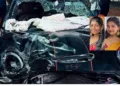
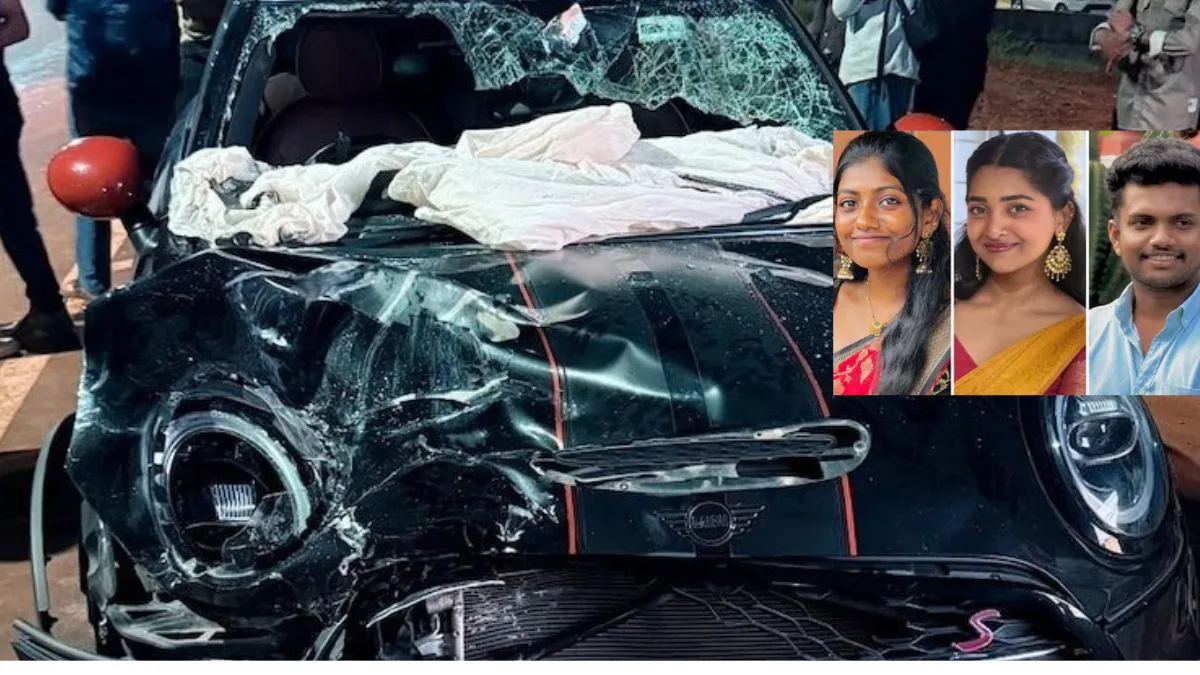
The Mini Cooper accident that occurred in the early hours of October 11 at Nedumbasserry, near Kochi International Airport, which claimed the lives of three young people, raises questions that go beyond the accident itself. It brings attention to a larger issue in society: the lack of civic responsibility, respect for the law and a sense of accountability for one’s actions.
Families of the victims have alleged that there are attempts to weaken the case and protect the accused, Suhail Sajeev (19). They have raised concerns over the police investigation and suspect that influential people may be trying to help him. These allegations have added to the grief of families who have lost their loved ones.
Reports suggest that Suhail was heavily drunk when he drove his luxury Mini Cooper on the night of the accident. He had reportedly visited three bars and was accompanied by three friends, Ninav, Ameer and Joyal, who were also said to be heavily drunk. The car hit a scooter carrying three people, killing Ijaz (21), Devika (21) and Gopika (22) on the spot.
A young man’s mistake of driving under the influence of alcohol, overspeeding and putting other people’s lives at risk has had irreversible consequences. The three young people who died were not responsible for the decisions made by the person behind the wheel. They lost their lives because someone else’s actions reportedly placed them in danger.
The incident also raises a question about the attitude towards the law. Suhail, the son of a wealthy business couple from Alappuzha, allegedly told people who gathered at the scene to help that his father would take care of the matter. If the statement was made as reported, it reflects an attitude that needs serious introspection: the belief that money and influence can manage the consequences of one’s actions.
Rules governing road safety are not complicated. Do not drive after drinking. Do not overspeed. Follow traffic laws. These are basic responsibilities expected of every citizen. Yet, when such rules are ignored, the consequences can extend far beyond the individual who breaks them.
Civic responsibility cannot be created merely through police action or government orders. Laws and enforcement are necessary, but responsible behaviour must also come from within. A person must understand that the road is a shared public space, not a place to display wealth, power or disregard for others. Every driver has a responsibility towards passengers, pedestrians and other road users.
The concerns raised by the victims’ families about the investigation have further complicated the matter. They have questioned why Suhail’s name and address were not mentioned in the initial FIR, which reportedly referred to him only as the driver of car number KL 07 CR-1001. They have also questioned why the FIR did not mention drunken driving, despite the incident reportedly occurring at 1.45 am and the FIR being registered at 6.59 am.
Aluva Rural Superintendent of Police K.S. Sudarshan IPS reportedly said that the deceased’s friends did not know Suhail’s name, which was why it was not mentioned in the FIR. However, the explanation has raised another question: could the police not have verified the driver’s identity through his driving licence and other documents?
Gopika’s father, Pradeepkumar from Palakkad, alleged that a blood sample was collected from his daughter’s body again after the post-mortem procedures had been completed. He claimed that the Circle Inspector of Police told him this was done on the instructions of senior officers. Devika’s family has also protested over the handling of the case. There have been further complaints about derogatory social media posts targeting the deceased young women.
The Excise Department has reportedly registered a case against Suhail for consuming alcohol at the age of 19, while cases have also been registered against three bars for allegedly serving alcohol to a person below the permitted age.
The families have also questioned the circumstances surrounding Suhail’s placement in a Borstal school while in remand, citing provisions governing the treatment of young offenders. These concerns, along with the questions about the FIR and the collection of blood samples, require clear explanations from the authorities. The investigation must be transparent enough to establish the facts and address the doubts raised by the families.
Home Minister Ramesh Chennithala has stated that no one would be allowed to protect the accused and that the government stands with the victims’ families. The public will expect these assurances to be reflected in the investigation and in the course of the legal proceedings.
However, the larger lesson from the accident must not be lost amid the questions surrounding the investigation. Alcohol consumption, reckless driving and disregard for traffic rules are not merely personal choices when they put the lives of others at risk. They become matters of public safety and social responsibility.
The accident also reminds us that civic sense cannot depend entirely on the fear of punishment. A person should follow the law not simply because the police may be watching, but because other people’s lives and safety matter. Wealth, social status and influence cannot restore a life lost on the road.
Observers say the investigation should go beyond establishing the immediate cause of the accident and examine the wider social issues behind it, including the lack of civic responsibility, disregard for traffic laws and the growing tendency to treat overspeeding and drunken driving as manageable risks rather than serious offences. Civic duties are one of the elements of Panch Parivartan being propagated by the RSS.
They argue that preventing such tragedies requires not only effective law enforcement but also a sense of responsibility among drivers, parents and society, as civic consciousness cannot be imposed through laws alone but must develop within every individual.