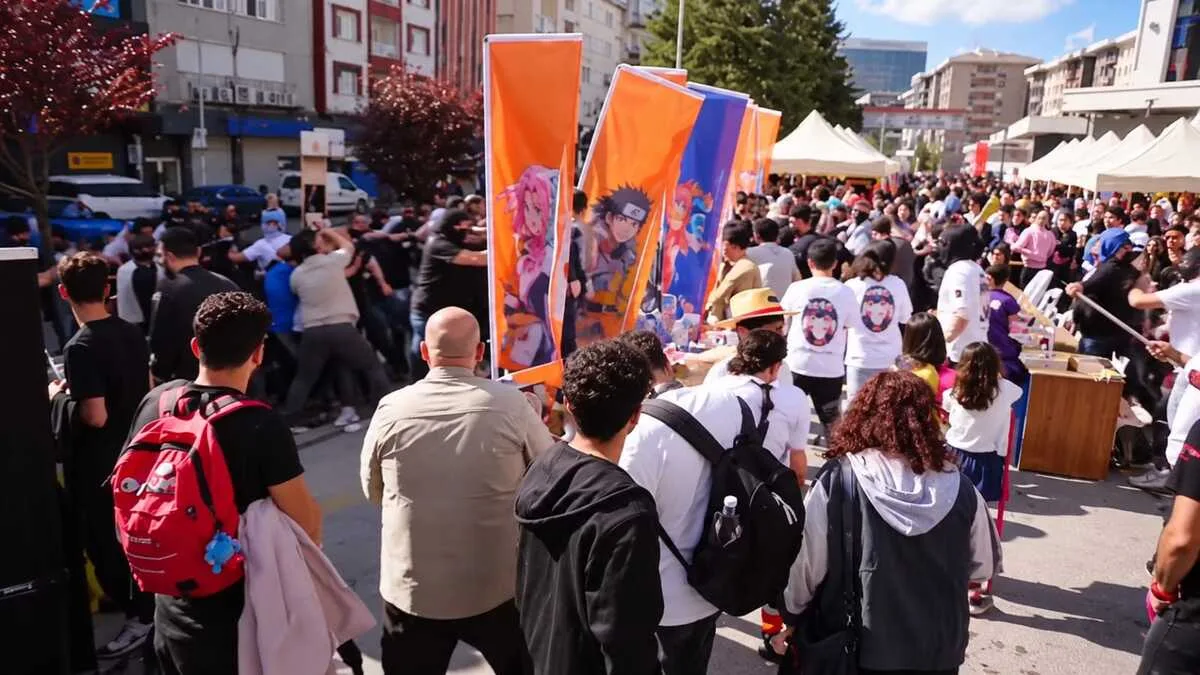
A Japanese cultural festival in Istanbul was forced to close prematurely on October 4 after a group of Islamist demonstrators stormed the event, attacked participants and damaged stalls and equipment while chanting “Allahu Akbar”.
The incident occurred during KonohaFest, a two-day celebration of Japanese anime, manga, food and popular culture held in the Umraniye district on October 3 and 4. Families and children attending the event were caught up in the disruption, with some participants reportedly suffering minor injuries.
Police intervened to disperse the group after the violence had damaged festival infrastructure. The attack followed weeks of online opposition to the event from individuals identifying themselves with the Umraniye NGOs Platform, who had demanded its cancellation on grounds of protecting Turkish family values and national traditions.
Islamist demonstrators target Japanese cultural celebration
KonohaFest brought together enthusiasts of Japanese popular culture, including anime, manga, video games, traditional food and cosplay competitions featuring characters from well-known Japanese series. Its name derives from Konoha, the fictional “Village of the Leaf” featured in the anime series Naruto.
The event attracted a large number of visitors, including families and children, before the disruption forced organisers to bring the festival to an early end.
The demonstrators had opposed the festival before it began, circulating posters on social media under the name Umraniye NGOs Platform. The posters urged families to attend a rally and sign a statement demanding that the event be stopped. “We will not remain silent! We call on all families,” the posters stated, arguing that the festival set a bad example for children and threatened their values.
The group subsequently gathered near the festival venue and read out a statement objecting to the cultural event. Its members argued that the festival’s costumes, performances and associated lifestyle were incompatible with what they described as Turkey’s traditional family structure and national and spiritual values.
The demonstrators also accused the festival of distancing young people from Turkish culture and creating what they called “identity confusion”. They called on local authorities and public institutions to prevent the event from taking place and to block future editions.
Banners displayed during the protest included slogans such as “If you’re looking for a role model, look to your own history”, “Our hero is Sultan Mehmed the Conqueror”, “No to exhibitionism, yes to decency” and “We will not hand our youth over to imitation”.
The group also invoked the Turkish government’s “Decade of the Family and Population” initiative, which promotes family-centred policies and traditional social values. Demonstrators expressed support for the “My Family is Safe” operations conducted across 15 provinces in September, which targeted LGBTI+ groups and individuals campaigning for inclusion and equal rights, according to the account of the incident.
After reading their statement, the protesters moved towards the festival area, chanting “Allahu Akbar”. They then attacked participants and targeted stalls, causing panic among visitors and damaging equipment. Some people reportedly sustained minor injuries during the assaults.
Police eventually intervened and dispersed the demonstrators, preventing further escalation. However, the damage and disruption forced the organisers to terminate the festival before its scheduled conclusion.
Erdogan government faces questions over response
The incident has renewed attention to the role of Islamic religious conservatism in Turkey’s public life under President Recep Tayyip Erdogan. The government has promoted policies emphasising traditional family structures and national identity, positions that critics say have contributed to an increasingly hostile environment for some cultural and social groups.
The opposition to KonohaFest was framed by the demonstrators as a defence of Turkish and Islamic values. The attack, however, extended beyond the protest itself, with festival participants and their equipment becoming targets of physical aggression.
The incident also highlights tensions surrounding cultural events that bring international influences into public spaces. Anime, manga and cosplay have developed substantial audiences among young people in Turkey, where Japanese popular culture attracts fans through conventions, themed gatherings and community events.
The reported attack on KonohaFest is part of wider concerns about the treatment of groups and communities whose activities are considered incompatible with conservative religious or nationalist views. Religious minorities, including Christians, have also faced hostility in Turkey.
Erdogan’s decisions to convert historic Christian buildings, including Hagia Sophia and the Chora complex, into mosques have previously generated international debate over the country’s religious and cultural heritage.
Despite the disruption at KonohaFest, the authorities had not issued an official statement on the incident in the account provided. No arrests or formal investigative developments had been reported at the time of that account.
The absence of a publicly reported response has raised questions about the authorities’ handling of an incident in which a cultural gathering attended by families and children was disrupted by a violent Islamic group.
For the organisers and participants, the immediate consequence was the premature closure of an event celebrating Japanese culture. The attack has raised questions about the tolerance of Islamist hardliners towards cultural diversity and their willingness to coexist with communities whose traditions and lifestyles differ from their religious beliefs.
The targeting of families and children at a peaceful cultural gathering highlights how religious intolerance, when reinforced by extremist interpretations of Islam, can undermine peaceful coexistence and freedom of cultural expression.