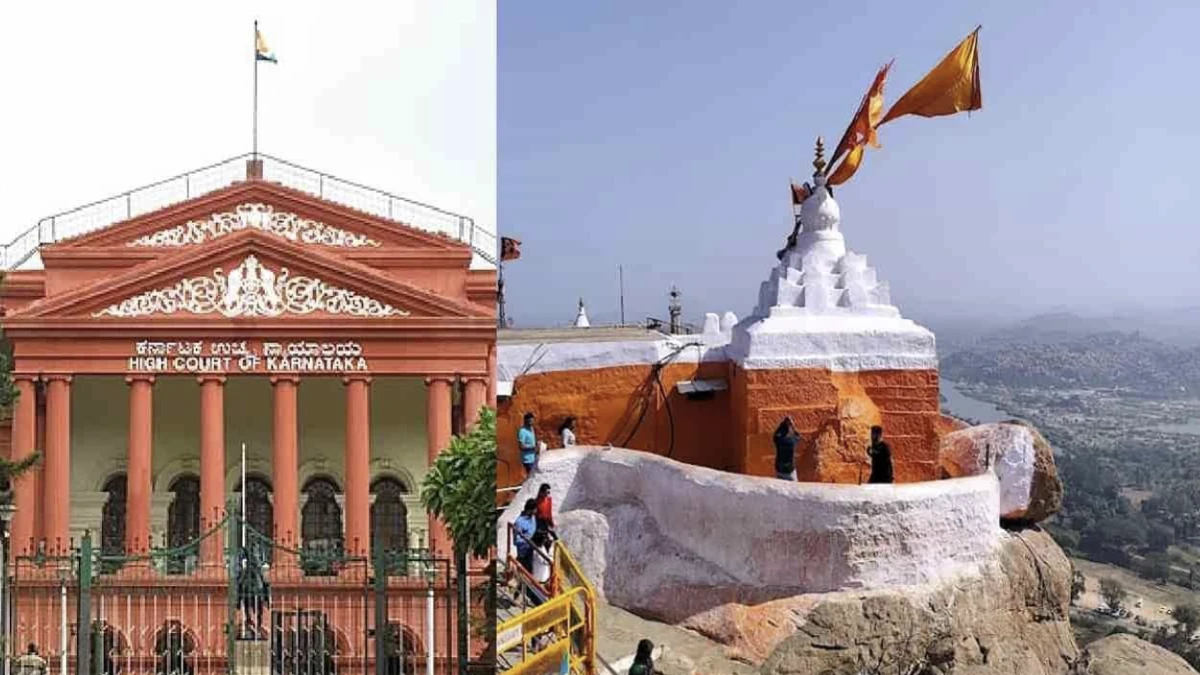
KOPPAL: The Karnataka High Court has quashed the state government’s notifications bringing the famous Anjanadri Mandir in Koppal district under the Hindu Religious Institutions and Charitable Endowments Act, setting aside key administrative orders issued in 2018. The court held that the notifications had been issued without following the required procedure of giving the concerned parties an adequate opportunity to present their case.
The ruling, delivered by a bench headed by Justice M. Nagaprasanna, has reopened the debate over the administration of the Mandir, which is widely revered as the birthplace of Lord Hanuman. The hill attracts devotees from across India and abroad, many of whom climb approximately 575 steps to reach the shrine and offer prayers.
The court cancelled the September 24, 2018, notification declaring the Mandir a notified religious institution and the subsequent order dated December 15, 2018, appointing an administrator and an executive officer to oversee its affairs. The validity of these decisions was challenged on the ground that the government had not followed the prescribed legal procedure before assuming administrative control.
A central issue before the court was whether the persons concerned had received proper notice before the Mandir was brought under the statutory framework and whether their objections had been considered. The bench found that failing to hear the affected parties violated the principles of natural justice. On this basis, it set aside both the notification and the order appointing the officials.
The judgment is significant because the government’s earlier orders altered the Mandir’s administrative arrangements. However, the court’s decision does not finally declare that the state has no authority over the shrine. Instead, it leaves open the possibility of fresh government action, provided the relevant statutory requirements and legal procedures are followed.
The court also referred to an earlier order issued by the Koppal Deputy Commissioner on July 18, 2018. The state government had withdrawn that order on June 26, 2019. Since the order had already been withdrawn, the court observed that the petition relating to it had become infructuous and no longer required adjudication on its merits.
Another important aspect of the ruling concerns Vidyadasa Baba, who has been at the centre of the dispute over performing religious duties at the Mandir. The court clarified that he is entitled to perform puja and carry out the duties of an archaka in accordance with earlier orders of the Supreme Court and the High Court.
The clarification is significant for the immediate arrangements for worship at the shrine. The dispute had brought into focus the question of who should perform religious rituals and under what authority, particularly after administrative changes were introduced by the government. The latest ruling provides relief to Vidyadasa Baba regarding his right to perform puja under the protection of the earlier court orders.
However, the judgment should not be interpreted as granting him ownership of the Mandir or conclusively settling every question concerning its management. The court’s decision is specifically linked to the legality of the notifications and administrative orders it reviewed, as well as earlier judicial directions governing the performance of religious duties.
The bench made it clear that the state government could initiate fresh proceedings and issue a new notification if required, provided it complied with the law. This means the government can revisit the issue through a legally valid process. Any fresh action would have to consider the applicable provisions and allow those affected to present their views.
The state government’s position, as conveyed by the district administration, is that the court’s order permits Vidyadasa Baba to perform puja but does not necessarily remove the Mandir from the jurisdiction of the religious endowments department. The distinction between the right to perform rituals and the authority to administer the institution remains central to the controversy.
Anjanadri Hill holds a prominent place in Karnataka’s religious landscape, and the Mandir draws large numbers of devotees, especially during important religious occasions. Its association with Lord Hanuman has made it a major pilgrimage destination, while questions about its administration have periodically sparked legal and public debate.
The High Court’s latest ruling has set aside the two major government orders issued in 2018 on procedural grounds and reaffirmed Vidyadasa Baba’s right to perform puja in accordance with earlier judicial directions. At the same time, it has left the door open for the government to pursue a fresh course of action under the law.