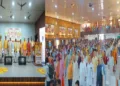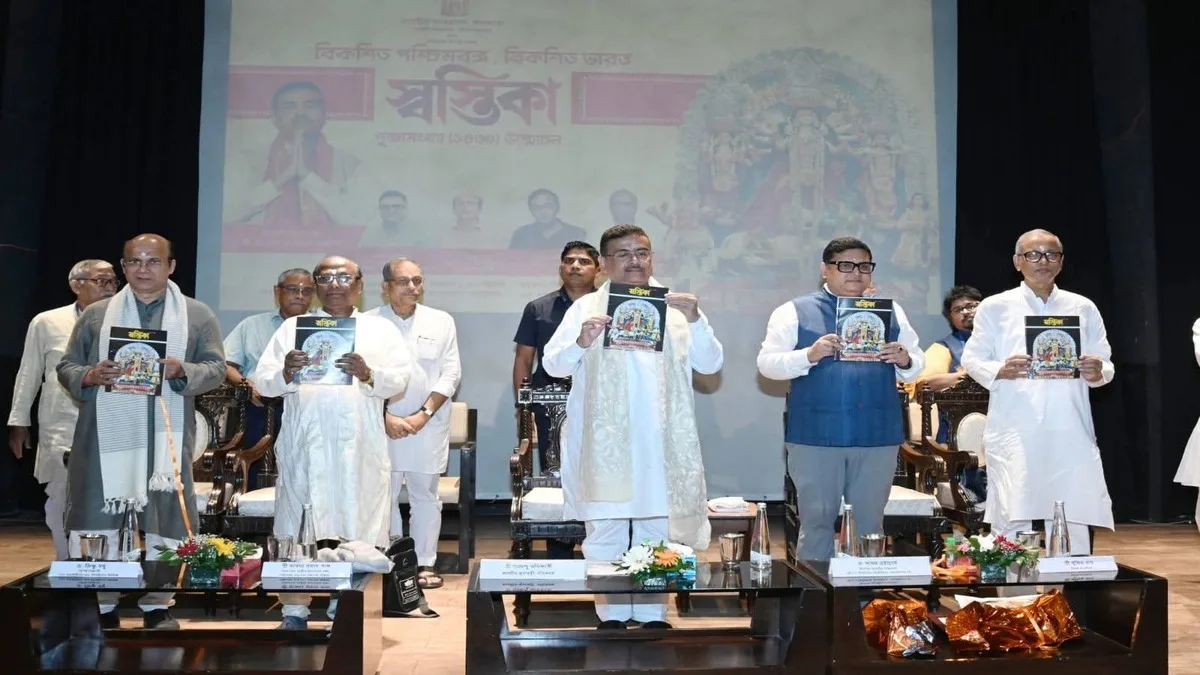
KOLKATA: On a languid autumn afternoon, the auditorium of the Ashutosh Birth Centenary Hall at the Indian Museum was filled with the fragrance of incense and the soothing notes of Agamani songs. Even before the traditional drumsticks struck the dhak, a distinct melody resonated in this historic auditorium of the city—a seamless blend of patriotism, self-respect, and uncompromised literary devotion. The eternal flame of nationalist thought, ignited in the heart of Bengal on the auspicious occasion of Shri Krishna Janmashtami in 1948, remains equally radiant after seven decades. On Saturday afternoon, a new golden chapter was written in this historic legacy with the release of the Sharadiya Puja Edition of the nationalist Bengali news weekly ‘Swastika’ for the Bengali Year 1433.
Thorny history and the bloody backdrop of partition
India, having newly gained independence, was gripped by the agonising violence of Partition, the cries of millions of displaced refugees, and the audacity of anti-national forces. It was precisely at this confluence of political and social turmoil that ‘Swastika’ was born. Under the far-sighted leadership of Eknathji Ranade, the then Sarkaryavah of the Rashtriya Swayamsevak Sangh (RSS), and propelled by a group of determined, patriotic journalists and writers, the path ‘Swastika’ embarked upon was by no means smooth. Later, during the dark days of Emergency imposed by Indira Gandhi, government wrath descended repeatedly upon the publication as it voiced opposition against the suppression of free speech. Yet, neither going underground, nor financial crises, nor the intimidation of rulers could ever stray ‘Swastika’ from its tenets of fearless and objective journalism.
To immortalise the memory of Dr Syama Prasad Mookerjee’s supreme sacrifice on June 23, 1953, the ‘Syama Prasad Commemoration Edition’ has been published annually since 1954. From the Emergency to the social dangers of cross-border infiltration, to national awakenings like the Ram Janmabhoomi movement, ‘Swastika’ has established itself as an authentic document of contemporary social history.
Confluence of epic literary traditions and intellectual thought in Bengali literature
Since 1951, the Sharadiya Puja Edition of ‘Swastika’ has been published uninterruptedly. Over the past seven and a half decades, this Puja edition has not merely remained a special issue of a magazine, but has transformed into a grand confluence for Bengali literature and intellect. Doyen literary luminaries and poets—such as Bibhutibhushan Bandyopadhyay, Tarasankar Bandyopadhyay, Gajendra Kumar Mitra, Manoj Basu, Bibhutibhushan Mukhopadhyay, Bhabendu Bhattacharya, and later Sanjib Chattopadhyay, Nabakumar Basu, and poet Alokeranjan Dasgupta—have enriched the pages of this publication with their wisdom.
Similarly, the writings of eminent essayists like historian Dr Ramesh Chandra Majumdar, Pabitra Kumar Ghosh, Santosh Kumar Ghosh, Radheshyam Brahmachari, Tathagata Roy, and Dr Mohit Roy have critically analysed various national crises and solutions. The magazine served as a sanctuary and an open forum for intellectual thought during the era of revolutionary freedom fighters. Personal memoirs from Shobhana Nandi (daughter of Bipin Chandra Pal), revolutionary Panchanan Chakraborty, and revolutionary leaders Bhupati Majumdar and Trailokyanath Chakraborty (associates of Dr Hedgewar in Anushilan Samiti) have endowed ‘Swastika’s legacy with profound historical reverence.
Emotional moments and tributes of memory at Ashutosh Hall
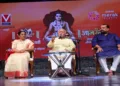
The grand release ceremony was presided over by senior journalist Sujit Roy. The welcome address was delivered by Sarada Prasad Pal, publisher of ‘Swastika’, and the entire program was moderated by Sukesh Chandra Mondal. The event commenced with floral tributes offered to the portrait of Bharat Mata. The Agamani musical performances by Soma Chakraborty and Sunita Roy Karmakar, along with narration by Smt. Reena Bandyopadhyay, created a deeply patriotic aura inside the hall.
Delivering his address as the guest of honour, eminent scientist Dr Jishnu Basu became visibly emotional. Reflecting on his childhood memories as a child of a refugee family from East Bengal, he remarked: “My parents came from across the border like hunted animals. Today, the fact that we stand tall and speak with dignity in Bengal is due to the single-handed contribution of one man—Dr Syama Prasad Mookerjee.” He further noted that the historic decision taken by the present government after coming to power regarding the transfer of land for erecting barbed-wire fencing along the international border is a crucial step toward stopping infiltration and safeguarding national security.
Chief Minister’s Address: ‘Nation first’ and cultural renaissance
As the chief guest of the ceremony, West Bengal Chief Minister Suvendu Adhikari presented a clear roadmap on nationalism, administrative philosophy, and social reform in his significant speech. Recalling his long-standing personal bond with ‘Swastika’, he shared that after assuming office as Chief Minister, the first comprehensive interview highlighting his government’s initial 100 days was published in a special edition of this very publication.
In resolute terms, the Chief Minister declared: “Our sole mantra should be—Nation First (Rashtra Sarvopari). This transformation is not the singular victory of any regional party or family, but the collective victory of patriotic forces.” He outlined several historic steps undertaken by the current administration toward educational and social reforms:
Educational & Heritage Revival: The singing of the complete ‘Vande Mataram’ prayer has been made compulsory in primary and secondary schools across the state. June 20 has been re-established as ‘West Bengal Day’, an occasion that had been politically obscured in the past.
Curriculum Reform & Historical Truths: A new syllabus committee has been formed to present the history of Matangini Hazra, legendary revolutionary Khudiram Bose, and the Anti-Partition Movement with historical objectivity and neutrality.
Renaming & De-colonisation: A process has been initiated to rename roads and public places named after colonial or tyrannical foreign rulers, replacing them with the names of Indian visionaries and revolutionaries.
Preservation of Culture: Stating that disrespect toward sadhus, saints, and national symbols will not be tolerated, he called upon the youth to draw inspiration from Indian culture and nationalist values.
Concluding his address, the Chief Minister requested the ‘Swastika’ family to organize a comprehensive 5 to 6-hour conclave on the future roadmap and reconstruction of West Bengal, where the government and conscious citizens can exchange constructive perspectives. The Chief Minister also felicitated Ajit Bhakat for his long-time technical and creative contributions to ‘Swastika’ publication and expressed his aspiration for ‘Swastika’ to evolve from a weekly into a daily newspaper.
Strains of devotion and autumnal ambience
During the event, musical artist Kalyan Bhattacharya’s rendition of the song “Tomar Bhuban Bhara Rupti Ekbar Dekhe Loi Ma Nayane” (Let me behold your universe-filling form with my eyes, O Mother) immersed the auditorium in profound emotional resonance. Present on stage and in the audience were Dr Sayan Bhattacharya (Director of the Indian Museum), MLAs Rudranil Ghosh, Ministers Tapas Roy and Dr Kalyan Chakraborty, advocate Ajay Nandi, veteran journalist Rathindramohan Bandyopadhyay, alongside numerous distinguished personalities from the spheres of society, literature, and culture. The gathering concluded with a collective chorus of ‘Vande Mataram’ and the National Anthem.
As the attendees descended the steps of the Ashutosh Birth Centenary Hall onto the avenue, each held a copy of the newly released Sharadiya Edition of ‘Swastika’ for 1433. In the crisp autumn breeze, alongside the notes of Maa Durga’s arrival, lingered the essence of a seven-decade-long relentless struggle—a struggle for truth, self-respect, and national consciousness.